I wrote some criticism about season 3 of Ted Lasso, but it was focused on a specific element of the show that I thought needed to be addressed. But the entire season was a mess for a lot of reasons, many of which were addressed by other critics. One of the biggest problems was one I only hinted at in that article: The show simply kept too much of the advancement of the plot, and particularly important scenes, offscreen, despite the episodes being longer than ever.
Well, the good news is, it’s better than season 3, that’s for sure. And the writers seem aware of how faulty some of their season-3 decisions were. Unfortunately, some of the biggest faults persisted, and in many ways the season felt like a missed opportunity.
Beyond this point there be SPOILERS.1
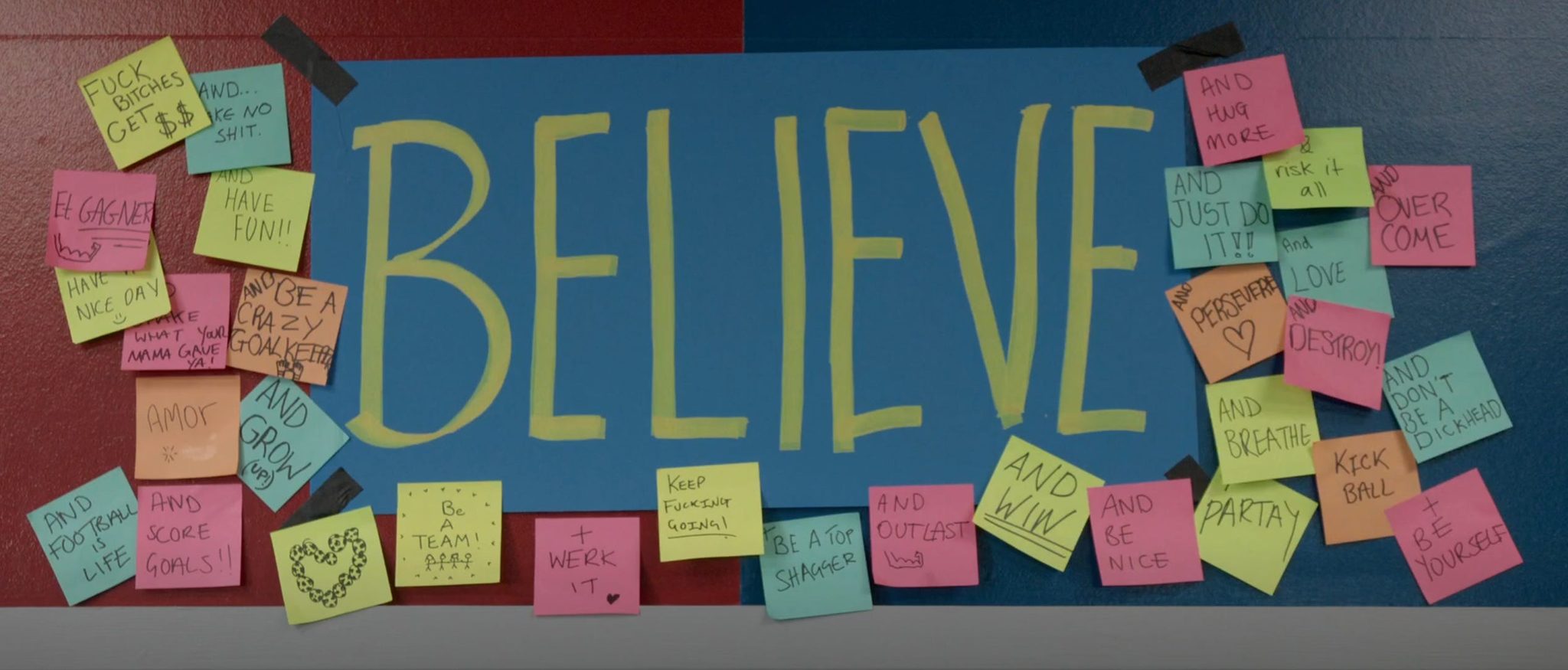
(Apple TV)
Let’s start with the good parts.
Addressing some of the season 3 faults. The relationship storylines of season 3 were all wildly unhealthy and inappropriate. Roy and Keeley were broken up for stupid reasons, so Keeley started dating her startup PR firm’s VC funder. Michelle is dating the Lasso couples therapist. You may remember Rebecca and Sam in season 2 as well. And of course, there’s Beard and Jane, which long ago crossed the line from “quirky and passionate” into “abusive.”
The show can’t undo all of those decisions, but the writers seem to have a much better idea of how they were received than they did when they wrote them. Ted has a funny line about how coworkers dating “sure seems to happen a lot around here.” And he has a serious discussion with Michelle about her relationship with Dr. Jacob. It doesn’t really make any of those things okay, but it is an acknowledgement from the writers that these things were a little messed up.
Beard and Jane are broken up when the season starts. (“When I thought I was going to be a dad, I got more excited with each passing day, until I finally realized that Jane had been pregnant for 11 months.”) Unfortunately, we still have to interact with her a couple of times, and she bizarrely has an extremely successful one-woman show about her relationship with Beard that is completely disconnected from reality to the point of being libelous toward Ted and Beard (at least). Completely unearned, completely nonsensical. Jane should be institutionalized.
A lot of great actors in the new cast. More on the rest later, but the highlight, and the central focus of the women’s team, is coach2 Alice Chilton3, buoyed by a tremendous performance from Tanya Reynolds. She’s the interim coach when Rebecca rehires Ted; she submits her resignation, but Ted convinces her over the course of the final week to stay on and assist him (and it’s honestly an effective moment when he gives her final pitch). Alice is easily the most three-dimensional of the new characters. She is very blunt, reserved, and can be severe as a coach. (She’s the kind of person who leads Roy Kent to say “Most people think she’s rude as shit. Personally, I think she’s hilarious.”)
Her journey to warming up to Ted and his methods, and adjusting her own approach where it has failed, is one of the better stories of the season.
One other positive is that this is still a funny show. One of my favorite bits came in the second episode, when the news broadcasts and morning shows set the progression of time for us, and always include some bonkers line or story. (“Do you ever wish your weekend could last forever? Well, one man tried that using AI, and now he’s dead.”) I won’t put them all in here, but there are plenty of other one-liners that are effective, and plenty moments of good character comedy as well. Just on a comedy level, this season largely succeeds.
Reynolds as Alice provides many great character moments. An oddball from the first time we meet her (“Good morning.” “Based on what?”), the humor and the story of her character comes first with her blunt and standoffish resistance to Ted and his methods, then to how she embraces them without losing her essential character or personality. Effective both as comedy and drama. (With her height, Alice’s vulnerability just under the surface, her features that can make her look like a fashion model from one angle and like nobody else on Earth from another, and especially the huge eyes that seem to naturally bulge out a little, Reynolds perhaps calls to mind no one so much as Shelley Duvall.)
While I’ll have criticisms of the story later, one aspect of Alice’s journey I did like was in “Yes And Baby.” Alice is making the effort to say “yes” more often, including to anything the players ask. Ted and Beard introduce her to the improv concept of “Yes and”— don’t just say yes, add something of your own to keep it going. She takes to it immediately: “Coach, can we have a water break?” “Yes, and… last five back on the pitch have to run sprints.” Great example of Alice getting actually good advice and tailoring it such that she can change her approach to the team while still being the same person. It’s the kind of change and adaptation we saw from many of the men’s team players in season 1— not a total overhaul of her personality, but learning to be better for the team in a way that also suits who she is.
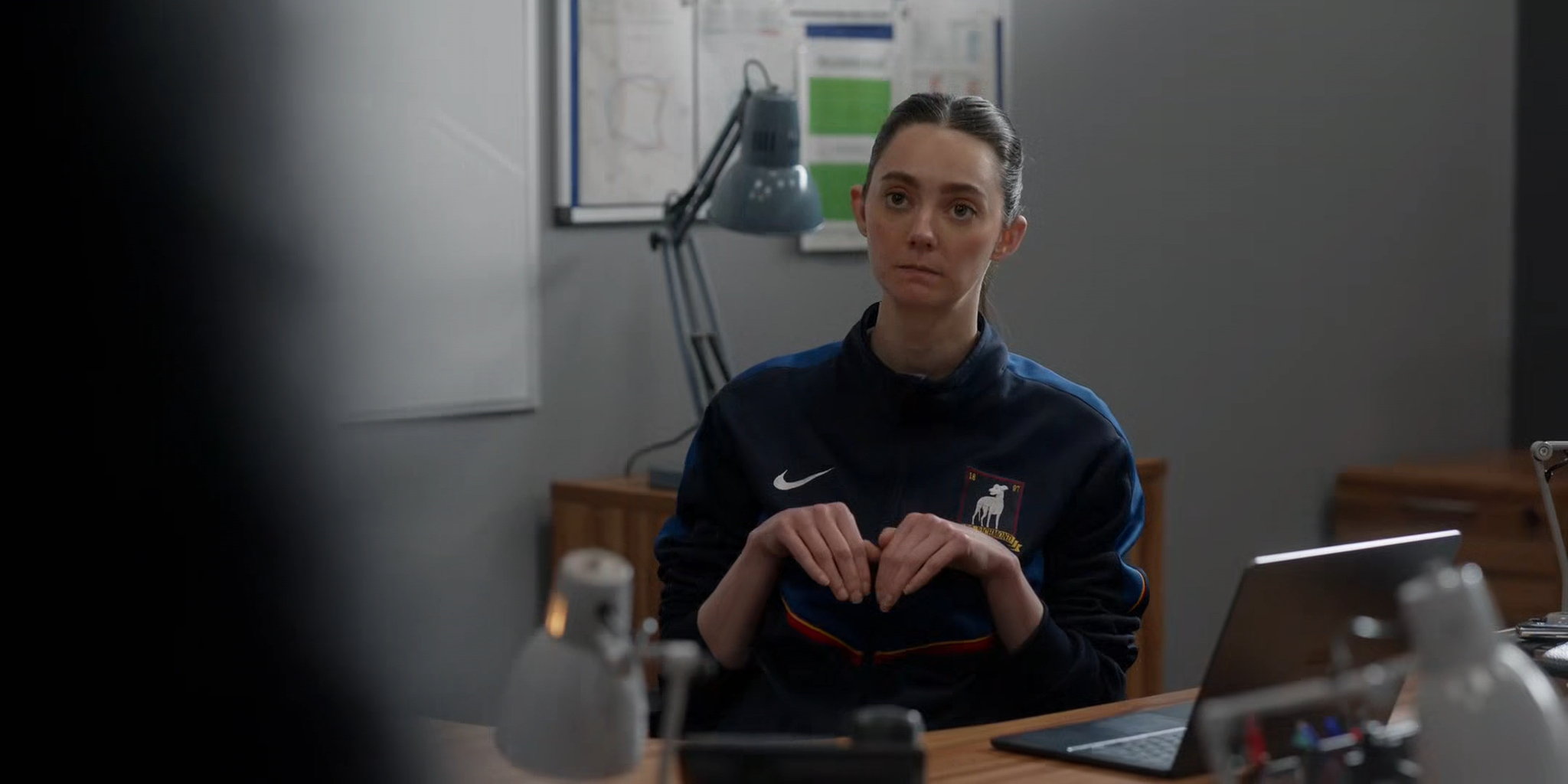
(Apple TV)
On a second watch, I noticed some of the points in the finale were set up, somewhat subtly, rather than not being set up at all. (Rebecca and Higgins revealing they knew what Zelda was doing, and were putting on a performance for her benefit, was set up by a quick moment in the opening scene. The dialogue before kickoff suggests that Shannon didn’t just become the best player on the team overnight; she’s starting in part because it’s her last chance in front of her home crowd, and Gemma is expressly letting her take the starting striker position so she can get that personal triumph (as we know the results don’t matter and Richmond has secured promotion).)
There are also some moments in the finale that are good callbacks to earlier parts of the show, and I appreciated that. Ted introducing a returning Nate to Alice: “Congratulations. You both just met a cool person.” A hokey line, but a callback to when he said the same thing in the show’s third episode, introducing Trent Crimm and Ollie. When it’s time for Beard to get rid of his ridiculous “attempting to look young” look, he calls on Isaac for his haircut, a callback to season 2 with Isaac as the team’s hairstylist virtuoso (and his haircuts being events, something a teammate can only ask for once a year).
After the Diamond Dogs (and Cat People4, see the above photo of Alice) give father-to-be Roy advice on parenting, Ted’s final sendoff (Roy is also leaving Richmond to coach Chelsea, the club where he was a star for so many years) is a brief note for him and one of Henry’s army men— the same things he sends Jamie in the season 1 finale.
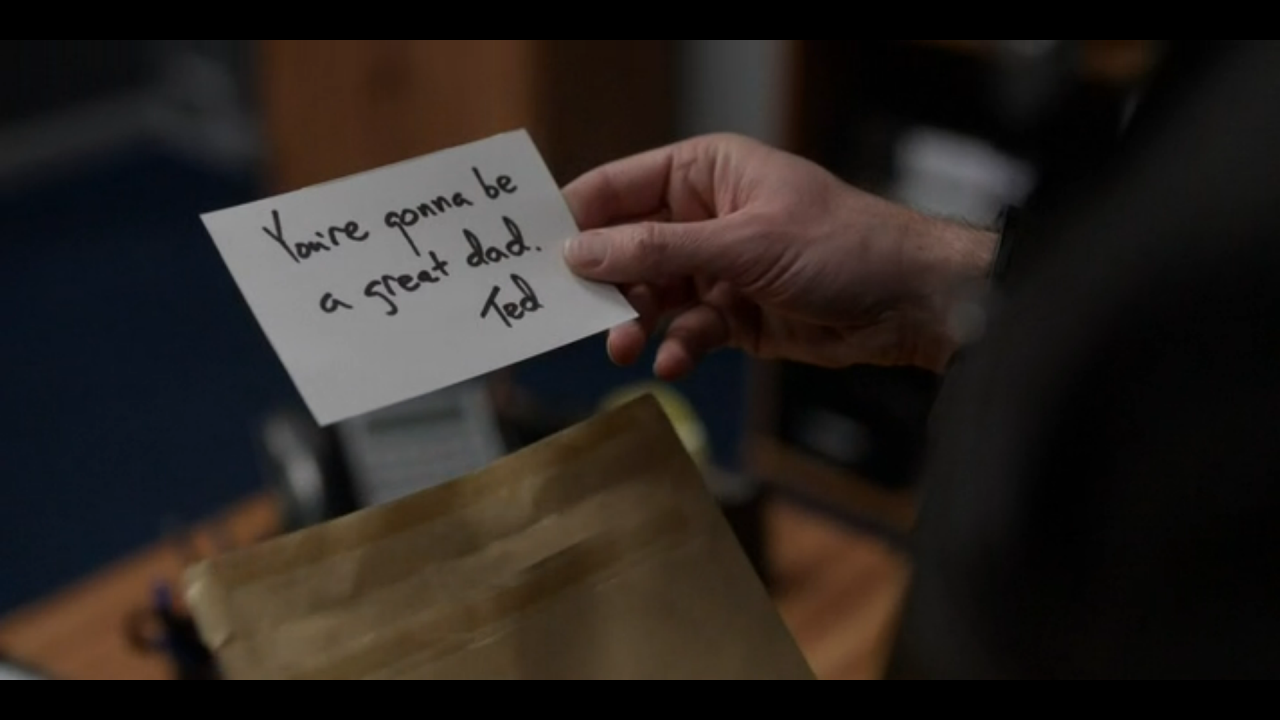
(Apple TV)
Now, to the criticisms.
First, that finale. For the elements I liked, the ending seemed like diabetic levels of sap. There’s a real emphasis on bringing back old characters and having tons of hug-filled reunions. (See the above return of Nate for the most egregious example.) The running throughline of Mae’s death at the end of episode 9 hangs over the finale, but it feels kind of forced, like they wanted the emotional impact of a character death but didn’t want it to happen to anyone too important (and, to be honest, Mae seemed too feisty to me to ever die). She also leaves the pub to the three Greek-chorus regulars we’ve seen since the beginning of the show, in a moment that’s supposed to come off as heartwarming until you think for a second and realize there’s no reason to think they know anything about running a pub.
The ending is fair in that it sets up Rebecca and Higgins’ advance knowledge of Zelda’s scheme enough that we can believe it when they spin it bcak on her, but this is another plot that didn’t feel necessary or as interesting as what could have been done. Zelda (Tracey Ullman) is a cartoonishly over-the-top character, and Rebecca’s attitude toward her seems to change for no reason at all (something that sure happens a lot this season generally). She goes from warning Keeley about working with Zelda for a couple of episodes (for reasons she oddly can’t articulate, even though they become quite obvious to us over the course of the season), to completely changing her mind and welcoming Zelda in as a special advisor to AFC Richmond. Why?
It feels like there’s no continuity among these behaviors, a problem that shows up fairly consistently across the season. And, as I’ve been saying about focusing on a women’s team: Aren’t there enough challenges involved in running a women’s team already, without having to invent a cartoon antagonist?5
The great irony of Ted Lasso season 4 is that women’s teams are often underserved and out of focus compared to men’s teams… and then the show left the Richmond women’s team underserved and out of focus compared to the men’s team.
The biggest problem with the season is something I think comes with the conception of what the writers wanted to focus on. Rather than giving the women’s team more focus and developing the characters the way they did the men’s team, they were relegated to secondary status while the season mostly focused on the personal lives of the main returning characters.
Star striker Gemma Jay (Abbie Hern) is the only other women’s team character given any significant focus, largely due to a pre-existing relationship with Alice— Gemma found Alice’s methods so harsh and critical that she quit pursuing pro soccer and enrolled in law school. So a running storyline is Alice first having to convince Gemma to play again, that her passion for soccer is what really matters in life and she should play it while she’s still able, and then also having to navigate not running her off again, or whether an eventual injury will convince Gemma to give it up and return to law school.
Jamie Tartt returns for one episode, and his return really throws into relief just how much better developed the men’s team was as characters than the women. Jamie’s growth was one of the best and most consistent stories of the first three seasons, even when other aspects of the show’s writing crumbled. He managed to slowly, steadily, and plausibly become a better person without losing his essential dopey bro-ness. The women’s team, by comparison, has potentially interesting characters who largely aren’t really developed aside from a couple of traits, and whose character journeys, such as they are, are largely short and resolved in an episode. Jamie just comes off as so much more three-dimensional than any of the players we meet this season.
But there are some really great actors on the team and I’m sure they could have done great work if they were given more to do. Faye Marsay, fresh off Andor, certainly proved she can handle a three-dimensional character there. But her Lizzie basically gets two traits: Team Mom and actual mom. (Single mom, as her ex sucks, which is no surprise either.) Jude Mack as the goalie “Boots” gave one of my favorite performances, although Boots’ personality is mostly reduced to “intense,” and one unusual trait, in that she6 doesn’t use gloves when playing goalkeeper.7 Other than that, there’s Shannon, who was school-aged when the show started and now has joined the team; two redheaded twins who fight a lot, and a couple that seems to be constantly breaking up and getting back together. And that’s about all the traits they have.
At times, the show felt like it only used the women’s team as an excuse to make another season, being under the impression that what they were really writing, what the audience really cared about, were “hangout” scenes with Ted, Rebecca (and sometimes their respective number twos, Beard and Higgins), Roy, and Keeley. Not in any actual plot or story, and not very much in the women’s team.
That latter point is really emphasized by how little even Rebecca and Keeley involve themselves with the women’s team. This is supposed to be their team! What do they do for the work of managing it, promoting it, etc.? How does Rebecca balance her desire to give the women’s team a fair shot at success, with the realities of the fiscal needs of the Richmond club and the likelihood a women’s team will be a loss leader to start? How does Keeley rise up to this new challenge in her role with the women’s team?
Well, mostly, who knows? The management of the club isn’t entirely ignored, but 80% of the time Rebecca or Keeley is on screen, they’re in inane romance plots. Rebecca’s romance with her Dutch pilot Matthjis just isn’t that interesting. There’s nothing particularly new, deep, or funny here, and no real stakes because the outcome seems predetermined.
And speaking of predetermined outcome, Keeley gets served up with a rehash of the stupidest plotline Sports Night ever did, for no apparent reason other than so her inevitable reunion with Roy could be dragged out over the course of the season. It would have been much more interesting to have them already back together and working through the challenges of a genuinely serious relationship. Keeley has generally been increasingly poorly served by the writing; what in season 1 was a smart, intuitive, emotionally intelligent character in a cute-as-a-button package wrapped in a lot of pink is now closer to the kind of mentally cracked flibbertigibbet one might expect from said package. (Not entirely, and Juno Temple is still great, but it’s jarring to see a character apparently become less mature over the course of the story.)
Similarly, Rebecca hiring Alice over Ted, and her reluctance to give the women’s team the money they need for a locker room, give us in the first couple of episodes a couple of plot points that could give her an opportunity to interrogate her own feminism, and whether she’s more paying the idea of uplifting other women lip service. But it never really comes up again; it’s resolved with a speech she gives Alice at the end of an episode which is about 95% her own projection about feeling judged.
This speaks to another problem the show’s increasingly had with time; some of the potentially best or even most important scenes just get handled offscreen. For example, Ted talking to Henry about how Ted’s father died would have been the kind of thing I would have really liked to see. And much as I liked Reynolds’ performance as Alice, some of her journey was equally haphazard and lacking in continuity.
She won’t soften her approach to the players even as Ted tries to get her to dial back her criticalness (fairly; she often crosses the line from accurate into demoralizing and demotivating). When she doesn’t, Ted suspends her for a match— the last match of the year before winter break. Do we see how she deals with being suspended or any efforts she makes to change as a result? Nope! We skip straight to winter break, where she’s trying to socialize with the team again at the New Year’s Eve party, though she’s worried they don’t really like her as a person. Gemma picks up on this and talks to her, later offscreen sneaking in some suggestions to the team to reassure her. Alice figures this out and snaps at her at the end of the episode. But then, the episode after that resumes with everything more or less back to normal between Alice and Gemma, with no apparent further conflict over this or resolution.
And, once again: For a TV show about a soccer team, post-season 1 Ted Lasso has been remarkably light on the actual soccer action.
All put together, it makes me feel like the writers thought the most important thing for us was to feel good about our characters and where they are, but that isn’t it. The journey to get there has to be satisfying— plausible and steady rather than in fits and offscreen spurts— has to make the end feel earned, has to make it feel like some effort was really required and some challenge overcome, and has to feel like the pain and trouble it took to get to the end was worth it. There’s just been little effort put into making us care. The ethos seems to be, “We know you like our characters and will care about them no matter what, so we’re not going to try to make you care like we would with a new show. And we know you want to see them happy and don’t like seeing them sad, so their conflicts will never rise to a level that could risk that, and everything will be safe.” (“You can’t build arcs about triumphs over adversity if the adversity doesn’t feel like it has any teeth.“)
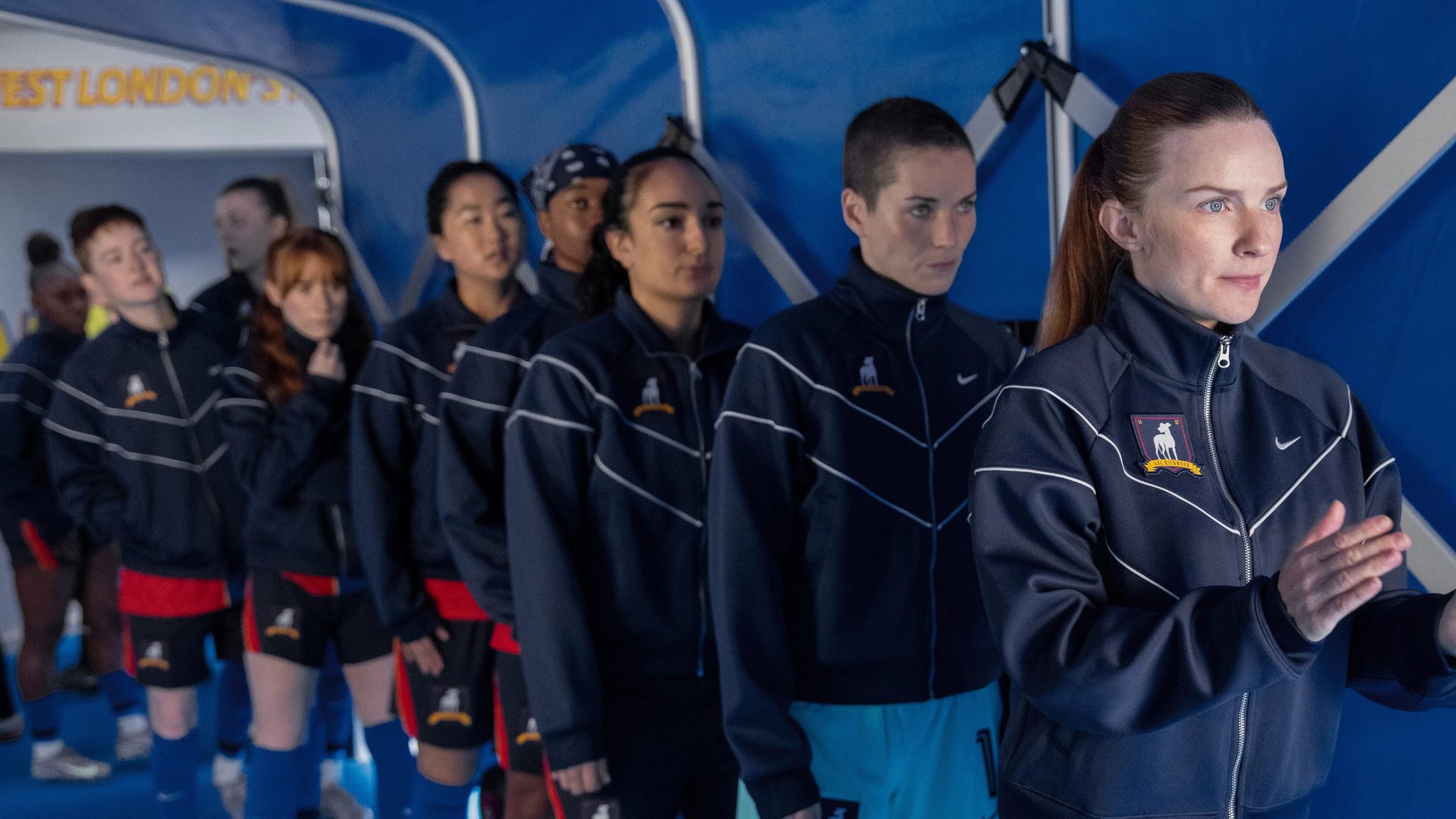
(Apple TV)
The great thing about season 1 of the show was the steady step-by-step plotting. We saw every step A to B to C to D. Last season, it was more like A to 45 minutes unrelated to the plot to F. This season it’s been more like A to C to E, but maybe back to C again, but now we’re at E again, to H… It makes the story and the character journeys feel haphazard and disjointed.
The great irony of Ted Lasso season 4 is that Sudeikis and the other writers decided to focus on a women’s team, giving them the spotlight in a world (both real and entertainment) that often gives them short shrift and leaves them underserved and out of focus compared to men’s teams. And then season 4… often gave the women’s team short shrift and left them underserved and out of focus compared to the men’s team in previous seasons.
Both last season and this season had a lack of discipline in the structure of events and in showing us the work of moving through the plot and resolving conflicts. The show did fix season 3’s problem of a complete misconception (or even lack of conception) about its problematic relationships and how they, and the apparent character ignorance about them, would be received. That’s a bigger problem than the new problem, but the new problem seems to tie into the lack of discipline more than the old problem did: The writers don’t seem to have the confidence that they can develop new characters and we’ll stick with them and care about them and believe in them. The confidence to take risks and tell us stories where we don’t know in advance what the ending will be.
The writing wants to play it safe and serve us more of the characters they know we like having fun and being happy. It’s an improvement over season 3, but still some distance from how good the show was in season 1, its best.
While I don’t really like talking about shows in terms of their goals for the audience, that’s the best way I can sum up how the show has changed:
Season 1 wanted to make us grow. Seasons 3 and 4 wanted to make us comfortable.
In the final analysis, if you like the show, Ted Lasso season 4 will give you plenty to like. If you held out hope it could ever again be as good as season 1 was, many aspects of the season will leave you frustrated. It’s worth watching if you’re into it already. If you’re not, watch season 1, and then if you want any more, talk to me and I’ll fill you in on the key episodes and scenes from seasons 2 and 3.
Other TV News
There isn’t much to really update about the already-running shows, although last week’s Best Medicine (no new episode this week; preempted for World Series Game 4) was one of the best episodes of the series, I’m pretty sure. (I’m only pretty sure because I have to make sure I’m not conflating the previous episode with it as well, since I had to watch them back-to-back with the Mrs.)
I forgot in last week’s writeup to include a couple of shows. Hulu reminded me that Solar Opposites and The Great North each have two Halloween episodes. And Those Who Can’t has two episodes that I don’t think are technically Halloween but are sort of their own self-contained horror shorts (the ninth episodes of seasons 1 and 2, “K-Pop Goes the Weasel” and “Normal Activity”). I don’t feel as bad about forgetting that one, though, since you don’t have a way to watch it anyway.
I finally started The Four Seasons season 2. It’s fine. The quality is in line with season 1. If you are old enough or married enough to relate to these couples in their fifties and what they’re going through, and you like this cast, you’ll probably like it.
Monday brings us the returns of St. Denis Medical and The Fall and Rise of Reggie Dinkins.
As always, happy to take guest column submissions from people, especially through the rest of this year. I have lists to make and money to take.
What did you watch?
- Using pirate talk doesn’t make much sense, but I couldn’t think of good soccer talk to use. “Beyond here, spoilers are no longer offsides”? Does that even work on any level? ↩︎
- I think they’ve just given up trying to use “manager” even when that would be more appropriate. ↩︎
- If they wanted to sneak any “Alex Chilton” jokes into the show with this name, I sure missed them, and I’d like to think I’d be someone who’d catch them. ↩︎
- I for one was delighted that Alice stuck with the David Bowie theme. ↩︎
- I had a similar complaint about The Paper‘s first season. ↩︎
- “She” referring to Boots, as Mack uses they/them pronouns, but I don’t believe Boots does. ↩︎
- I wrote a joke I was expecting to show up in the season that never did. “So why do they call you Boots?” “Well, they can’t call me Gloves.” I should have a job punching up scripts. ↩︎
What did we watch?
M*A*S*H, Season Five, Episode Three, “Margaret’s Engagement”
“And Major.”
“Yes?”
“Try and cheer up.”
“Frank’s right. You shouldn’t mention Hot Lips’s chest when it’s not here to stand up for itself.”
“They’re rich. But they try not to flaunt it.”
“They’re succeeding.”
“I will brook no babbling!”
Oh man. This is probably the show at its most blazingly original and creative; it’s based entirely around the spectacularly peculiar mindset created for Frank Burns. There’s a lot of little details that are magnificent here; it’s hard to pick between Frank’s initial completely kind and polite response to Margaret’s announcement of her engagement (before, of course, ripping the doors off the mess tent) or his complete shift in demeanour afterwards. Frank is fundamentally a child; famously, it ends with Radar calling Frank’s mother to calm him down from a psychotic break.
It’s also a great little detail that Margaret is too happy and pleased with herself to notice Frank falling apart; not that she’s obligated to care that much, but it’s interesting to me that the camp (and the show) values Frank’s feelings as a human being here. I love that you immediately pick up the kind of guy Donald Penobscott just from the size of the ring he gave Margaret.
“This friend just pretended to like me. You know, the way Dad used to?”
I love how Frank’s initial response + breakdown here mirrors his reaction when he found out Potter was taking over.
“This friend just pretended to like me. You know, the way Dad used to?”
I enjoy Frank’s casually horrifying/tragic revelations about his childhood.
Larry Linville is so good at delivering those lines with complete innocence. You never get the sense Frank is ignoring things about his past – he genuinely has no idea how strange his childhood was.
Something Wild – I was keen to revisit this after rewatching After Hours and Miracle Mile recently, I put those three together in a sort of “mid-80s romcom gone wrong” bucket and love them all very much – I guess Into the Night fits too, although I don’t remember that one being as good. Anyway this one feels very much indebted to After Hours early on, it has the same “somewhat conservative guy takes a walk on the wild side, regrets it” vibe. But the road trip elements give it a different vibe, and the pivot when Ray Liotta turns up goes into darker territory in a distinct way – it’s almost a horror film at times. Liotta is amazing and terrifying, but it’s probably the sunnier elements of this film that I love the most – the way the cinematography mirrors Lulu / Audrey’s quirky dress sense and the array of charmingly odd characters that pop up along their journey. The soundtrack is also exceptional, good old Jonathan Demme.
The color turning when Liotta pops into the movie is great. I think the way he said he played it was that the ex never sees himself as the bad guy and this plays out in his last scene.
Crazy that it was his first major role. I started watching an interview with Demme afterwards and he was talking about how the other two lead roles were easy to cast but he wanted a guy who genuinely scared him for Ray which was much more difficult. Apparently Melanie Griffith recommended Liotta in the end as they’d met in acting classes.
He’s downright terrifying! Can see immediately why he gets Goodfellas because of this.
Late Night with the Devil
I moved last Saturday and haven’t remembered which tub I stashed the Blu-ray player in, so it’s been all streaming. (Hoping to get back to more regularly documenting my viewing here once things calm down.) But I did rewatch this, because ’tis the season. The AI cards annoy me even more now, and I still think that this is kneecapped by breaking its own framing device (that it didn’t even need to have! You could have avoided all this, movie!), but Dastmalchian really is terrific, and the performance he’s giving is perfectly in tune with the version of the film I wish I could watch: a little more stripped-down, a little weirder, a little more ambiguous, and a lot more ’70s. I have a good time with this despite its flaws, though, thanks to the aforementioned performance and the overall vibe.
Was a pleasure to see Dastmalchian in a different mode here, he’s shockingly good as a certain kind of schmoozing late night host. Also he appeared on Last Drive-In’s episode on this movie and seems like a fun guy.
Slither – Not the James Gunn horror film, but a 1973 shaggy crime comedy. James Caan, just out of prison, gets sucked into a messy set of situations involving a fellow ex-con killed because of his role in an embezzling scheme; the other embezzler and his wife (by chance a high school classmate of Caan’s); two sinister black RVs; and a somewhat crazy free spirit who Caan sleeps with and regrets it immediately. This is all over the place, and I think to some degree that is the point. Caan really doesn’t want anything to do with what’s going on, but the world refuses to cooperate. The cast also includes Sally Kellerman as the free spirit, Peter Boyle as the surviving embezzler, and Louise Lasser as the old classmate. All are pretty good. First film directed by Howard Zieff after he left making commercials, script by WD Richter, shot by László Kovács.
Elementary, “The Adventures of Ersatz Sobekneferu” – Sobekneferu was a female pharaoh, and someone was trying to use a woman’s corpse to create a fake mummy. Of course, there is a lot more to things, including another art forger who specializes in fake Old Masters works, and the sleazy head of an auction house. And this one has three notable chatacter actors – Stephen Spinella, Dylan Baker, and Julian Sands – and all are special guest criminals, though Sands is not a killer as well. This one had the feel of a White Collar episode with all the art forgeries. Meanwhile, Sherlock strives to make amends with Morland after the shock of Mycroft’s death, and discovers that someone has been hired to kill his dad. Which in turn leads to the revelation that Moriarty is in the wind. More to come!
Nosferatu (2024) – More of the flaws popped out here, especially the jump scare editing that feels at times like a bow to commercial needs (one of them made my friend laugh) and is in conflict with Eggers’ mastery of languorous, uncomfortably long close-ups and obsession with historicity. I’d like to see a longer cut, oddly, but this is such a beautiful and strange $50 million horror film. It’s just not the masterpiece it could be (I think that’s still The Lighthouse in his case).
Agreed on The Lighthouse being his best so far! I liked how his Nosferatu had kind of a heavy metal aesthetic though, gnarly none-more-black imagery but with just a tough of theatrical campiness.
Same with The Northman! So many epic images in both.