Chances are you can name a few people who could have but didn’t direct Return Of The Jedi, rather than the one who did. Steven Spielberg, David Lynch, heck even David Cronenberg, if we’re including people who got a call and probably hung up within 90 seconds. David Lynch especially could have done a whole host of tantalizing things with Return Of The Jedi, without any of that pesky world-building that hobbled his Dune so much. And he wouldn’t have needed to indulge in weird; he could have taken a fairly Straight Story approach to it and I’m sure it would have been wonderful. But, as I think his Dune showed, he was in no mood to make that kind of movie at that moment in time. Apart from the collective fantasizing about Lynch or Spielberg at the helm, there is a common assumption that George Lucas ended up ghost-directing the movie through his eventual hire, Richard Marquand, an assumption I intend to bristle against for the duration of this essay.
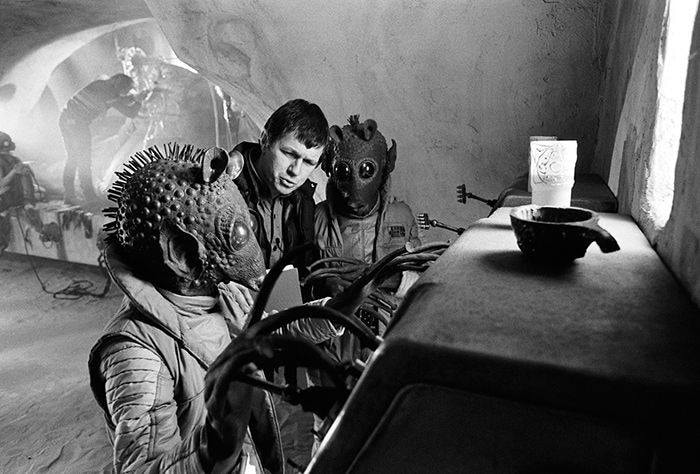
The story, as commonly told, is that Richard Marquand was somewhere around 10th or 11th on the list of possible candidates, and might not have even been on the list at first. Lucasfilm thought David Lynch seemed on-board and had a contract offer ready. Maybe they were surprised when Davey turned them down, but it’s more fun to think that Lucas all along knew he really wanted this Marquand fellow. Eye Of The Needle had exactly what he needed and nobody else would suffice. He knew David Lynch had a headache and purposefully took him to that place that only served salad just to aggravate him further.
I have no idea if George Lucas had seen Eye Of The Needle before searching for Jedi directors. At one point he said that he liked the suspense of it, which, yes there is some of that, but I find it weird that would be singled out. It’s not really the suspense of Eye Of The Needle that sets its apart, but rather its depth of feeling. Eye Of The Needle has a lot of emotional beats, and all the lead characters have full arcs. Marquand never rushes any of them, and the emotional beats eventually grow to overtake the story. Return Of The Jedi would also serve a lot of tasty character dishes in its blockbuster buffet, and RM unintentionally got a dry run at it with Eye Of The Needle. “The war’s come down to just the two of us” is even where Jedi ends up with Luke and Vader.
Marquand’s skill at finding authentic character moments has the spotlight in his penultimate movie Jagged Edge, with an airport-potboiler screenplay by an up-and-coming Joe Eszterhas that flogs every hoary trope and hacky cliche in the book. It’s remarkably not-that-sleazy for Eszterhas, except for a lurid turn at the end that’s well outside of Marquand’s wheelhouse. But the movie up to then is a master class in wringing dramatic resonance out of a screenplay seemingly designed to not have any. Glenn Close, Jeff Bridges, Peter Coyote, Robert Loggia, they all find real people within these flat, cliched characters. Close and Coyote are especially good — the best scene in the movie might be a throwaway moment of them arguing in the judge’s chambers, when Coyote realizes something profound about the case, and that his prior “all-in” histrionics in the trial will work against him now. All the best parts of the scene are the ones not on the page.
While Marquand didn’t have the same amount of creative freedom that Irvin Kershner did on The Empire Strikes Back, he was happy to be “the conductor” for George’s symphony (his words) and envisioned his film as an “organic” contrast to Kershner’s more “metallic” feel (something I think he achieved). Interestingly, Yoda’s death scene belongs to him. Yoda wasn’t in the script to begin with, but after familiarizing himself with Star Wars and The Empire Strikes Back, Richard felt that Luke’s promise to return was set up too strongly for them to not follow up. He also had a strong instinct for finding tactile moments; after it was decided that Leia should be the one to kill Jabba, Marquand suggested that she should strangle him with the chain that makes her his slave. And he really draws out that moment on screen, displaying strangulation of a giant Caligula slug as gross and exhausting work.
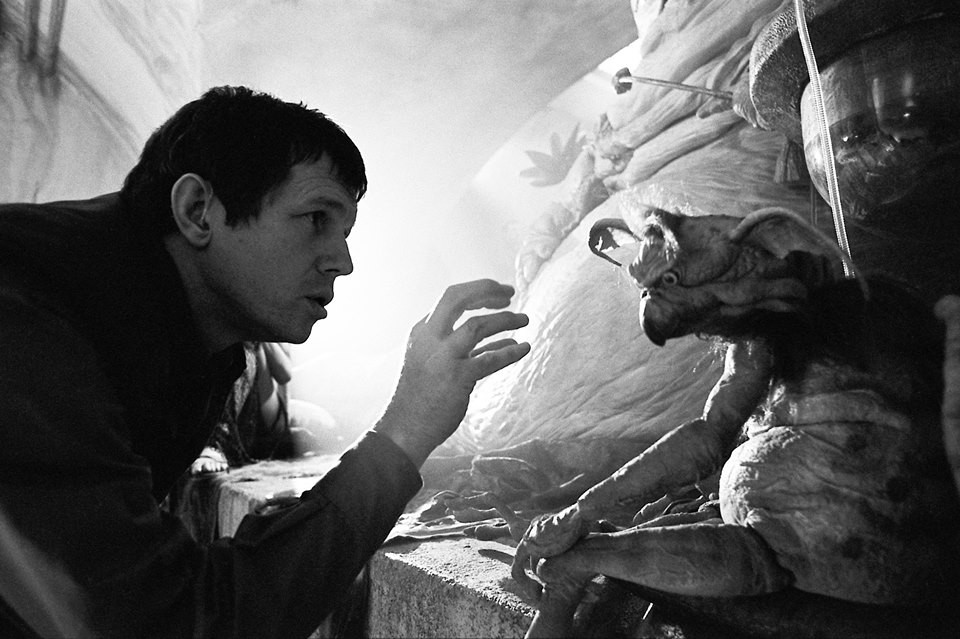
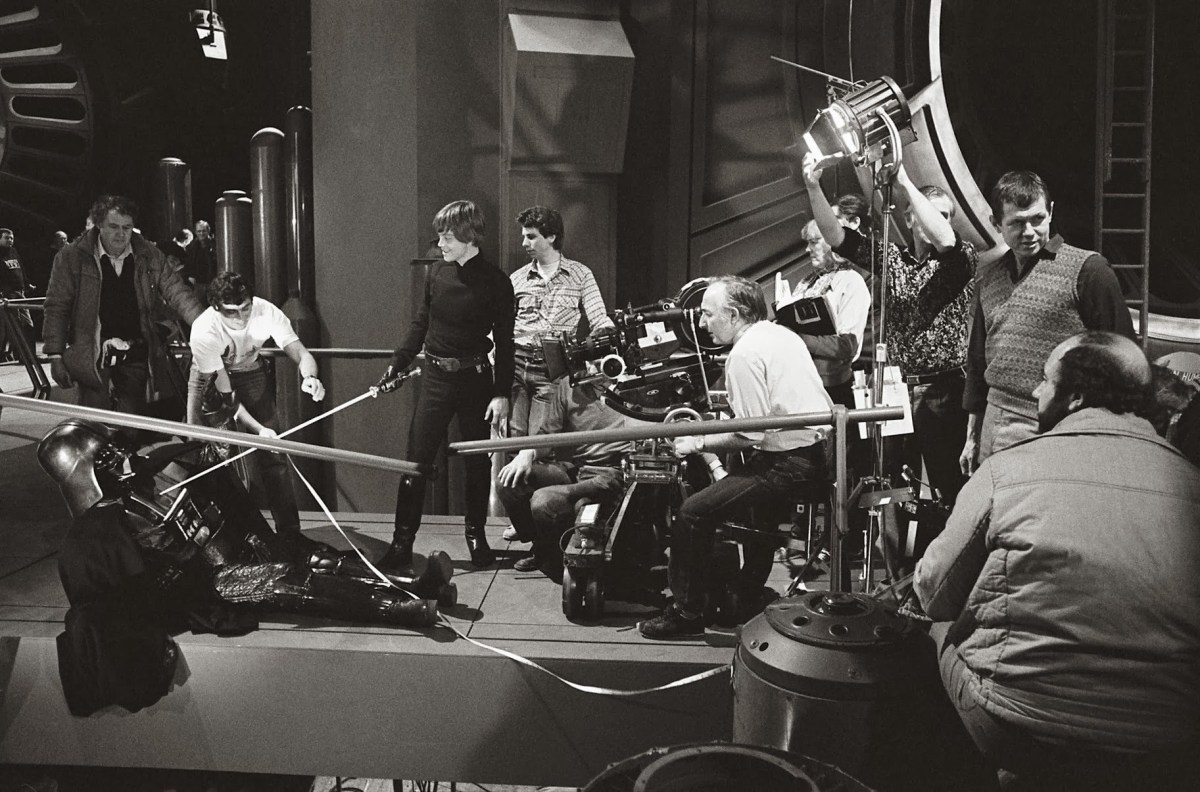
Unlike with The Empire Strikes Back, George Lucas was almost always on set during the making of Return Of The Jedi, which is where the ghost-directing assumption mostly comes from. In fairness, all of the behind-the-scenes accounts agree that Lucas deferred to Marquand on the nuts-and-bolts of directing, technical and interpersonal, while still acknowledging that it was a somewhat unusual situation. The most direct way that Lucas interjected was to sometimes add a camera placement, remnants of Lucas’ low-budget instincts to shoot with four or five cameras to leave lots of options in the editing room. Marquand seems to have been fine with this, but it frazzled his cinematographer, Alan Hume. And while I sympathize with Hume’s exasperation, his body of work simply isn’t strong enough for me to back him here. Hume did quality work on Eye Of The Needle and other notable titles like A Fish Called Wanda, but Robert Watts gave him the classic faint praise of being a hard worker rather than a great photographer, and his body of work looks exactly like that, a prolific professional career with nothing that you would single out for its cinematography. If there was any on-set area where Lucas could be of serious help, it was as a photographer who could shoot with his naked eye and set up fast: the arguments between Hume and Lucas seem to have boiled down to “I don’t want to have to change my lighting for it!” “You won’t have to!”
The movie isn’t unaffected by this. There are a smattering of shots, especially in the briefing on the Rebel ship, where the composition gets away from them. Look at this stray shot. Heh?
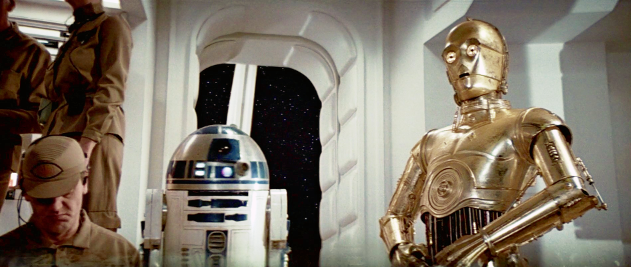
Irvin Kershner and Peter Suschitzky would never have gone with that. They would have spent the entire day arguing about the lighting and fallen even further behind schedule, but they would have nailed the shot. But Return Of The Jedi is also direct and potent with its emotional stakes, almost intimate in a way not often seen in blockbusters like this. The film’s articulation of Luke’s moral conundrum as he goes through the movie is something to behold, and not to be taken for granted as a directing skill. It’s possible that the more “immediate” (or “plain”) cinematography is part of the puzzle, part of how this movie articulates interior spaces so well. The closeness of everything between Luke, Vader, and The Emperor is appropriate: world-building is over, and everything has narrowed down to the characters in the center. The war came down to the three of them.
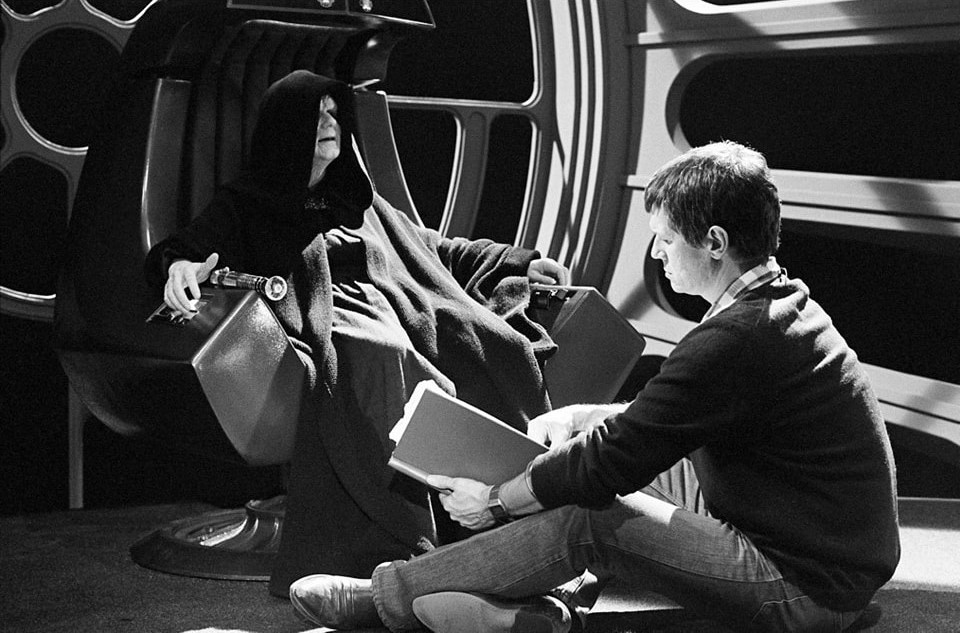
Marquand’s style is very much the opposite of Lucas’ “faster, more intense” approach to acting, and nowhere is this clearer than scenes with The Emperor. As Lucas accidentally showed in Revenge Of The Sith, The Emperor isn’t just the voice and the cloak and the face. Marquand allows for pauses in his conversations and won’t rush them if he thinks the moment calls for it. The Emperor flat out stops the room, and sickening silences hang around all his words. I would go as far as to say that The Emperor is memorable primarily from Marquand’s directing. There’s a gravity to the presentation here, of this sick black hole of a person the galaxy is orbiting around. McDiarmid brought his A game once again to the prequels, but Lucas couldn’t conjure up the raw power that everyone seems terrified of in this movie. Ignoring prequel explanations, I think The Emperor is meant to be just obscenely old, probably like a walking corpse; every regular person is grossed the fuck out by him in such a primal way. Piett was uncomfortable getting a glimpse of Vader without his helmet, Jerjerrod is repulsed by having a little walk and chat with The Emperor (I also think it’s intentional that Vader can pick up The Emperor so easily at the end — there’s no physical strength left in that desiccated body, Force or no Force).
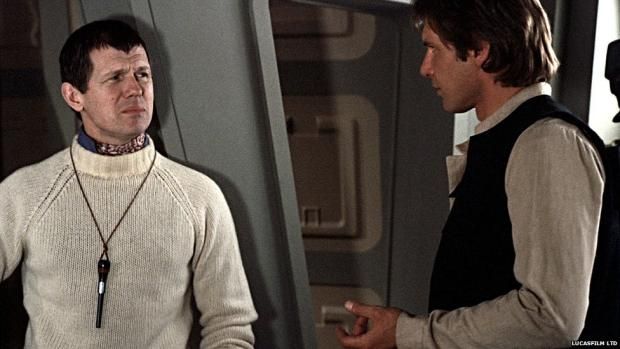
Much has been said regarding some of Lucas’ story decisions here, particularly Han Solo surviving despite not really having a story role anymore. Harrison Ford proved impervious to Richard Marquand’s directing and gave a thoroughly uncommitted performance. But Richard was going for the right thing aiming for a more reflective and considerate Han in this movie; I think it’s natural that Han would lose 80% of his bluster after going through the events of Empire, and sometimes Ford hits that note right.
The whole third act is an extremely skillful, downright musical edit by the great Marcia Lucas, her swan-song to the film industry. It weaves in quiet moments throughout all the (amazing) bombast and never lets Luke’s story drift into the background just because it’s not “action-y” enough. The movie is not just concerned with its lead character’s inner self but also willing to be quiet so that we can hear it amidst all the action. And RM did not have to impose that quiet on the movie, he had a sympathetic partner in GL. “There was a feeling I had that I would like the fight to be bigger than the one in Empire. And then George said that it doesn’t have to be bigger, because basically it can’t be. George is very blunt. He said, ‘It’s just a couple of guys banging sticks against each other. Don’t worry about that. It is bigger because of what is going on in their heads. That is what makes it bigger.'” Once again, I do not understand how that person became this person. Despite being on-set quite a bit more, I think George (back then, anyway) understood that he didn’t know how to make the character-driven movies that the sequels were becoming. There are stories that he threw together a panicked rough cut of Empire to give it the same quick-cutting rhythm of Star Wars and even he could see that it didn’t work at all with that kind of movie. Deferring to his directors opened up a lot of possibilities, and in Marquand he got someone who was always tuned to the emotional beats of any given scene. “Luke goes through sort of three changes during the fight. One is just straightforward anger. The next is not wanting to fight and withdrawing. And the next one is, you son of a bitch, okay, I’m going to kill you. So it’s three different fights. Plus the whole thing with the Force going on there — if he gives in to the dark side, he will become like his father, and if he doesn’t give in, he will probably be killed…it is this conflict that will make the scene very exciting indeed.”
Within all this franchise-ending, Empire-destroying joy, Return Of The Jedi blends with this a potent sense of the importance of accepting death. Yoda and The Emperor are contrasting examples of mastery. The Emperor is all about aggressive manipulation to force events to a certain outcome. The practice that Luke adopts after training with Yoda specifically calls for him to remain vulnerable and receptive to moments: He knows Jabba won’t take the negotiation, but Luke will leave the option open until the moment they have to fight their way out. Luke could barge his way out of getting captured by the Ewoks, but he lets it play out, and finds a solution that brings them a valuable ally. And I think Yoda is specifically referring to The Emperor when he says “strong am I with The Force, but not that strong” at Luke’s suggestion that he can’t die. Immortality is possible, but it rots you from the inside out. There is a need to die at some point, eventually. Vader is redeemed by disconnecting from the machine keeping him alive and accepting his own inevitable death (part of a recurring theme in the original trilogy of disconnecting from technology at critical moments).
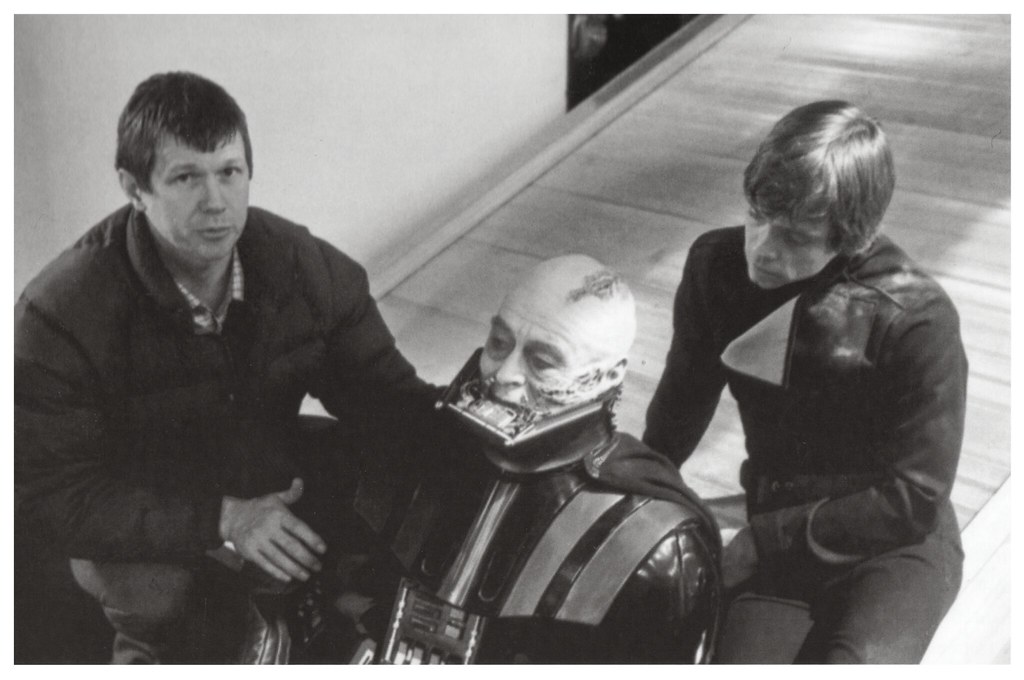
Richard Marquand only had three more movies after Return Of The Jedi before departing us far too young (a mere 49!), and his final movie, the barely-seen Bob Dylan flop Hearts Of Fire, seems to have had the same effect on him that The Next Best Thing had on John Schlesinger. Of the original Star Wars trilogy, Marquand’s film is the one that suffers the most from its Special Edition. The first two movies survive those with their overall tone intact, but Return Of The Jedi‘s alterations end up fatally throwing off its organic feel. It’s a terrible fate given the depth of feeling that he brought to the movie, but thankfully, modern advancements in amateur film scanning and despecializing have helped to bring it back to its proper glory. And so, a toast to the sentimental, very emotional Welshman who unexpectedly became the right filmmaker for the right story at the right time.
This is a fantastic write-up and a beautiful appreciation of Marquand’s work. Certainly Leia strangling Jabba with the chain is a visceral, iconic image, but I also love the construction of the emotional beats you mention. It speaks well of Marquand that he put that much care and attention into “George’s symphony.”
100% agree, and I also deeply appreciate the attention to the other pieces, especially Marcia Lucas, that made the whole.
Great analysis of a man’s underrated contributions. I especially like singling out the less-than-stellar coverage shots, these kinds of things contribute to an audience’s response conscious or otherwise and I can see this playing into the mixed response the movie gets. I’ve gone back and forth between it being my favorite of the trilogy to being a disappointment – I have more to appreciate after this.