Novocaine is a comedic action movie where a man who can’t feel pain must run a gamut of over-the-top criminal violence to rescue the possible love of his life.
And that’s basically it. But … that’s gloriously it? This is not a masterpiece of the genre, but it’s fun, funny, and—above all else—devoted to exploring its premise as thoroughly as possible.1 If it didn’t commit, it would be a mere gimmick. When it commits this wholeheartedly, it’s a joy—and an engine for creative action storytelling.
A lazier movie would use Jack Quaid’s Nathan Caine more or less as a sight gag: he’s an unassuming assistant bank manager who can shrug off bullets like a Terminator. It would be an excuse for some everyman action—a little funnier than usual, maybe, but not any more inventive. That would probably still be watchable, especially with the charming rom-com opener between Quaid and Amber Midthunder’s Sherry.
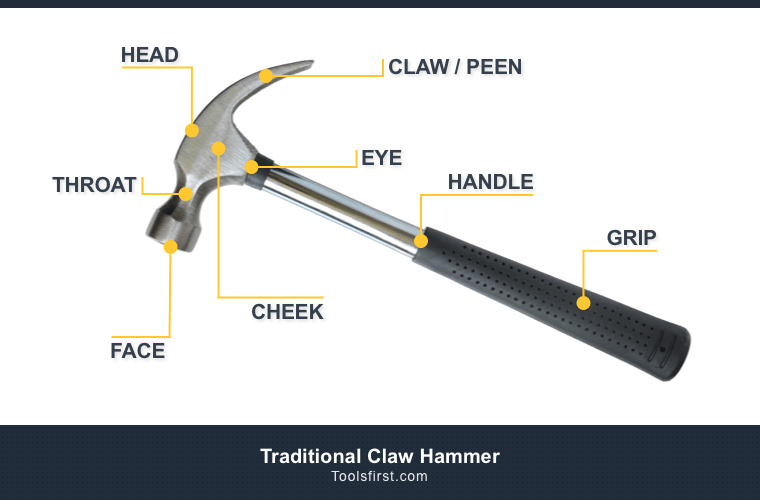
But no. Novocaine may only have a hammer, but it finds a lot of nails to use it on. And for variety, it even remembers that its hammer has a claw end too.2
Nathan can’t feel pain? Then he can retrieve this gun from a fryer full of boiling oil. Nathan can’t feel pain? Then he can improvise brass knuckles by pounding his own fists into some broken glass. Nathan can’t feel pain? Then he can use reverse psychology to manipulate a goon into torturing him so he can effectively chill out and wait for a rescue. (This is all about what you see in the trailer, so I’m not even giving anything away here.) All these actions have a single source, but it’s turned to multiple ends: access, weaponization, trick.
This thorough commitment to wringing every possibility out of its premise is the film’s greatest strength, but it comes with a few built-in weaknesses: see above, re: “if all you have is a hammer.” Nathan is sweet and likable, and Jack Quaid’s performance breathes a lot of fresh air into him, but almost every detail of his life, like every detail of his unexpected action prowess, comes down to his condition. It’s not only why he’s shy, or why he’s spent years being risk-averse; it’s a key part of the setup for two of Sherry’s big romantic gestures towards him. It is his Rosetta stone. “A man’s disability—which he can conceal well enough most of the time, because in his case it conveniently comes with the bare minimum of socially iffy drawbacks—becomes his badass superpower” is arguably an iffy premise to start with, but at least it’s offering up a cool fantasy with that guy in the lead. “Area man is almost completely explained by his disability” is probably less winning.
The saving grace here is that Nathan’s kindness, at least, is separate; it’s never implied to be the result of suffering, he’s just a nice guy. And his niceness is essentially the only other plot mover in the film, begetting positive consequences and opening up some important resources. Plus, he gets to be funny, and humor adds its own kind of depth; characters who can convincingly make jokes are characters who, at least for a couple seconds, provide narrative as well as serve it.
Which brings me back to the first line of this write-up, because that’s the “comedic” part. The film keeps its tone and genre in mind at all times too. It always knows exactly what it wants to be, in every detail, and it goes for that wholeheartedly. Maybe it’s only a three-star movie, but it’s a five-star Novocaine. It has racked up all the participation trophies in its category. And I’m a Millennial, so I think that matters.
Novocaine is streaming on Paramount+.
About the writer
Lauren James
Lauren James is a writer who wears many different hats (and pen names). She lives in Connecticut with her wife and two cats.
Lauren James’s ProfileTags for this article
More articles by Lauren James
Anthologized
A late night horror in an in-between kind of place.
Year of the Month
Winning the numbers game.
Department of
Conversation
It is an inherently good, if I guess problematic, premise for a movie. (I know not feeling pain can suck because of how much you have to think about it, but also you can’t feel pain! You can go through some gnarly shit and not care!) This makes me think of a stand-up joke where a paraplegic comedian said, “I know I should be all about disability rights and living a full life, but sometimes…this sucks and I wish I could walk.”
but also you can’t feel pain! You can go through some gnarly shit and not care!
You make me think of the AMA with the guy with two dicks, where he was repeatedly asked in different ways how having two dicks felt different to everyone else, and he simply said “I wouldn’t know, I have no way to compare it”.
Heh, to quote Unbreakable Kimmie Schmidt, “Your experiences are not universal!”
What did we watch?
Justified, Season Two, Episode One, “The Moonshine War”
“We’re gonna talk. The three of us, like civilised men.”
“Just because I’ve shot the occasional person doesn’t make me a thief.”
To be honest, I think the way this episode cleans up the end of lasts season’s plot is kind of bullshit – too fast, too clean, not dramatically satisfying. But it leads to the rest of the episode so I have to forgive it. This is already head and shoulders over the first season, setting up a larger story in an instantly compelling way and interweaving it with a great episodic plot of tracking down the sex offender. I know something fucked up is going to happen between Raylan, Mags, and Dickie, I just don’t know what it is yet.
Jeames Earl Dean carries the weight of the episode’s themes; the start sets up that he’s just smart enough to get through life, not quite smart enough to get away with anything, and prone to violent outbursts when he’s not getting his way or gets humiliated. Loretta’s takedown of him is superficially cool and it’s hilarious when he gets boobytrapped – Billy Miller has a pretty-boy face and we get to see it scuffed up all episode from the wires – and he simply keeps escalating right back.
Raylan’s solution involves some ownage – spraying him with the hose is hilarious, and he does this thing he occasionally does where he basically threatens someone with their own lack of education – but it also involves talking to him as a fellow person with a rational worldview and a desire to live. You do this, and I’ll do that. To put it another way, he offers James options.
This is in stark contrast to the good parts of the opening of the episode, where Raylan is faced with the recognition from an investigation that his actions, when seen from the outside, might not be perceived as entirely rational (weaving in another line from the episode, “Is that how it runs in your head?”). It’s also in contrast to Dickie, who is an intelligent person who clearly recognises his place in the world – you could call him one of America’s permanently embarrassed millionaires, where he knows he’s not gonna do any better so he might as well enjoy himself; despite what she tells herself, America is the land of clearly limited options, and she generates people like James, Dickie and Mags.
Biggest Laugh: “You got me! I’m stealin’ gas! I don’t know why I do it. Not like I can’t afford it.”
Top Ownage: Verbally, Loretta’s takedown of James. Physically: “Put your foot in, Walt.” Maybe also Mags guiding her victim out of this world.
Awesome to now be getting into the part you haven’t seen yet. I’m excited to see you watch S2-S4, in particular, for the first time.
I love when there are moments in this series that set up how fantastic Olyphant would be at the pure comedy of Santa Clarita Diet, and that gas stealing bit is one of them.
Frasier, “Ham Radio” – Simon inspired me to watch this and indeed by the end, I was bursting into surprised laughter once Frasier’s attempt at a reenactment of a live radio mystery show completely falls apart and the actors (Poor Niles having to play six different parts) are actively rebelling against his direction. “I’m Nigel’s brother Clive!” “He’s got a nug!” “Gun! He’s got a GUN!”
Addams Family Values – Threw on while drinking, Joan Cusack should have gotten a Best Supporting nom for “MA-LI-BU BAR-BIE!” Also there is something inherently funny about slides juxtaposed with the least appropriate subject matter for said slides. (The husbands in their death positions!)
“He’s got a nug” should not be so funny. And yet…
The Naked Spur – As opposed, I guess, to spurs with clothing on? Rancher turned soldier turned bounty hunter Jimmy Stewart chases Robert Ryan across the Rockies to bring back Ryan for the money. Prospector Millard Mitchell and recently dishonorably discharged solider Ralph Meeker become Jimmy’s unwanted partners, and Janet Leigh is with Ryan but not WITH Ryan, so she can fall for Jimmy. One of several westerns Stewart filmed with director Anthony Mann, and the first time Jimmy ever played against type, as the bounty hunter is, quite frankly, a greedy asshole. I am not sure how much I don’t care for the character is on Jimmy’s unsubtle performance and how much is on the script, but either way it sets a rather unpleasant tone. Not that Ryan’s gleeful killer or Meeker’s gleeful possible rapist are any better. Plus Leigh is just not very good here. To its credit, though, the last half hour is quite dark for a 50s studio western. And the scenery is nice.
Kojak, “Summer of ’69,” part 2 – Kojak, on leave, makes more headway investigating things than the new lieutenant. and pieces everything together. Only for the new guy to make a premature arrest. Of course, the killer is brought to justice the usual way, plus a plausible explanation is given as to why Kojak had the wrong man back in ’69. Oh, and there is stuff to the side involving someone growing weed in his apartment, and a recruiter for a wetworks company of some sort who wants to hire the killer, but this is really not about that. It’s about Kojak making up for his mistake, and it’s very well done on that regard. Plus it turns out that the mentions of the Mets winning the series weren’t just for flavor. The confrontation between Kojak and the suspect was literally during the final game of the series. Second best use of that game in pop culture after Men in Black 3.
Frasier, “Have You Been Served?”/”Ask Me No Questions” – I missed logging the former yesterday, but in a way these are kind of a thematic two parter. In the former, Maris serves divorce papers on Niles. Due to the strange but effective coincidence of finding a journal from the late Hester Crane that seems to call Niles weak in the face of women, he decides to accept the divorce. Only it was a bluff on Maris’s part. So in the latter episode, they are in therapy and Niles asks his brother “do Maris and I belong together?” Frasier spends the episode trying to decide what to tell Niles, and finally says “no,” but it’s too late, Niles and Maris are actually spending the night together! Take separately, both episodes are a great mix of humorous and heartfelt, with both leaning towards the absurd and even a bit of slapstick. Taken together, they work to show the sort of arc that’s been created around Niles and the unseen but ever-present Maris as they try to fix things.
I really loved the darkness in The Naked Spur – Ryan and Meeker are bad but charismatic as hell and Ryan in particular really works the situation, Stewart could just kill him but selfishly (and with fatal consequences) does not. And Stewart is hard and in some ways broken, the ending can be read as pretty grim I think. He’s definitely not a “good guy.”
Along with VERTIGO this i Stewart’s least heroic leading man role, and a fairly weak character too in terms of decision making and moral resolve.
If you think that THE NAKED SPUR is a bleak Stewart/Mann Western, then avoid MAN OF THE WEST
The Righteous Gemstones, “For Jealousy is the Rage of a Man,” “On Your Belly You Shall Go,” and “The Man of God May Be Complete”
*sniffle* So we come to the end of the road. I wasn’t going to finish this last night–I originally meant to save the finale for Wednesday–but I couldn’t help myself.
I’ll admit that the criminal plot arc this season wasn’t as well-executed as they generally have been in the past: the show sets up the specter of the Ex-Boyfriends Club a little too late, and then it doesn’t get much time to build tension as much as it just erupts into “Eli and Baby Bill kidnapped into a Saw” movie, and I even think the idea of Mitch spending months as a raped and terrified captive is a shade too dark for the show. (But that sequence did lead to “God, bless this cocaine” and Baby Billy’s matter-of-fact recounting of the various traumas Eli and Lori now have to associate with each other, both of which were great.)
The Cobb-Corey switch is a good one, though, and the kind of misdirect the show has always done well–I like how the eventual reveal implies Corey turns on his dad in part because he can’t believe that after everything he’s done for him, Cobb still won’t appreciate him enough to not slap him at his own backyard birthday barbecue. Best of all, Corey’s involvement leads to both the dark comedy of the Gemstone siblings crawling around the lake house trailing blood everywhere and them accepting his request to pray over him as he dies, which is one of the tenderest, most moving things the show has ever done. Giving a sincere, deeply felt death-bed prayer, one that recognizes their messy, sinful commonality with the friend dying in front of them, even though he tried to murder them, bring this season full-circle back to Original Elijah Gemstone’s conversion-via-praying-for-the-dying, so it feels appropriate when the (stolen) Bible comes home to them once more. They’ll never know where it came from, but if they did, they’d understand, and they’d eventually be able to accept that it was appropriate.
Nath’s talked before about how “God always has the Gemstones’ back” seems like it builds off what the Gemstones themselves do for others, and we get maybe the best example of that yet in this finale: if Judy doesn’t love BJ more than she fears and resents Dr. Watson, she doesn’t get the helper monkey back, and Corey murders the Gemstones. And it’s not even just loving BJ–it’s also being able to accept her own flaws enough to understand them when she sees them repeated in someone else, even a fajita-meat-hurling Capuchin monkey, and reach out with tough love and forgiveness.
Kelvin’s testimony is lovely, and the bit at the beginning–“They said I was special, but I just felt different”–is especially poignant in a great, plainspoken way. Keefe’s face when Kelvin officially comes out the world, throwing away the plausible deniability that was previously so important to him, is absolutely glowing. And of course their wedding is both heartwarming and spectacular: those rings! the fireworks! the outfits! the bizarre spit vow! Honestly, a happy, unifying dance-filled of a wedding is exactly what this finale needed as a send-off for all these characters I love, and seeing everyone partying down was great. I especially loved Jesse and BJ comparing mustaches as a dance move and Eli, Baby Billy, and Martin stealing a moment as the three old men looking out at it all. (The implication that Baby Billy is free of his game-playing resentment of Eli now that he’s finally stepping back from the constant financial grind and hustle is beautiful, too: their last conversation is really nice.)
Stray notes:
* Not enough Gideon this season, and I’d have liked to see him give an actually good sermon towards the end as opposed to just do some cool stunts of the type we already knew he could handle, but eh, I’m still glad he mended his relationship with Pontius, and I love Eli pointing out that it’s to Jesse’s credit that he raised Gideon, and Jesse is a better father than he was. (Jesse’s slightly wounded double-take at the full implications of that is also perfect.)
* Beautiful Eli/Lori reunion, beautiful Aimee-Leigh letter. Lori tracking down Eli because he’s in slip 69 is fantastic.
* I love how heartfelt the kids gathering around the piano to tell Eli they’ve come to terms with him having a relationship again was even as it contained some of the most hilariously crude, gross phrases the show has ever come up with, from “daddy dick” to “we’re very impressed you can still do cums.”
* Corey going through his whole rampage in a sparkly Michael Jackson jacket was great.
* “Judy, don’t misbreed Dr. Watson.”
Judy’s “Don’t be a cunt to people who love you” to Dr. Watson is one of the funniest lines*.
(* – that you didn’t mention, as “Why, because he came out better than me?” and “We are proud and quite frankly impressed that you can still do cums” are also some of the funniest lines.)
Also the great Cape and Pistol scene doesn’t just have the “Why, because he came out better than me?” moment, it’s got Simkins trying to dodge Jesse’s incoming shot, Jesse sparing him (and accidentally hitting the other pastor), and Eli’s parting speech: “When I was a child… ah, fuck y’all.”
And of course in terms of personal growth, there’s Jesse internalizing what Amber and Eli have to say: “Capes and pistols, that stuff doesn’t mean shit. Your actions make you an impressive man. So I quit.” (Also, Eli’s pride in him at that speech, and also Eli stifling a laugh at the other pastor accidentally getting shot.)
Kelvin found the gold Bible in Corey’s bag.
I loved Eli trying and failing not to laugh at that pastor getting hit by the ricochet. A perfect beat of humor in the middle of Jesse’s triumph (along with Vance frantically dodging around trying to avoid a bullet, which I’m glad you mentioned. Also Vance’s “I’m an orphan!” ploy).
Re: where the Bible came from, I meant that they won’t necessarily ever find out that their ancestor killed its original owner and stole it. But if they somehow did, they would still eventually accept Original Elijah Gemstone, even as the revelation tarnished the family history.
Oh, right. I actually thought after the premiere that at some point the Gemstones would discover the true origins of the gold Bible, and would have to reckon with that at least internally, but it never came back.
I find myself thinking back to the origin story of the original Elijah Gemstone, and “God always seems to have the Gemstones’ backs,” and his own prayer over the Confederate soldiers about to be executed. “Maybe the rest of us sinners need to stick around a little bit before we can join them in Your everlasting glory.” Maybe God sees the potential in the Gemstones and looks out for them to try to nudge them into doing the right thing, being better people, rising above the worst impulses of their nature.
THAT MAN FROM RIO– I recommended this for a film discussion group that has been alluded to here on numerous posts (and if anyone here wishes to join I’ll run it up to the moderator) and then remembered that there was a pretty good chance that I was pretty drunk when I saw it on Z channel in the 80s, so my recommendation might be a bit suspect. Fortunately it held up, so my taste in movies, particularly 1960s caper comedies, might still hold up.
Like NOVOCAINE, this film offers a maximalist level of commitment to a single premise; namely, that Jean-Paul Belmundo will stop at nothing to save his (maybe) girlfriend from the clutches a gang stealing highly specific Brazilian antiquities for some mysterious purpose. No mode of transportation is spared commandeering, no staircase will be left untraversed, no symbol of petty authority will go outmaneuvered, and no border, ocean, or rainforest will obstruct this quest. There is something rather Keaton-esque in the unrelenting manner in the manner in which Belmundo overcomes obstacles by a supernatural improvisational competence coupled to physical grace (although not really relying of slapstick for big laughs). Unlike many of these exotic farces, there isn’t too much downtime from the pursuit. Through in some marvelous scenery (including the incredible modernist fantasia of 1960s Brasilia) and you have a marvelous couple of hours of pure entertainment.
This sounds worth watching in that I enjoy works with the absolute minimum amount of creativity necessary, and while that usually involves an absolute minimum of ideas – with my gold standard being It’s Always Sunny In Philadelphia – I enjoy this for being wildly creative but only with exactly one idea. It sounds like the kind of thing I would be enthusiastic about writing at first but then get bored really quickly with trying to execute it.
Edit: And now I actually read the footnotes and see I’m given a shoutout for exactly this!
Yeah, I don’t think I could keep as diligently to exactly one idea, but it’s fun to see how it works. And–relatedly, but not exactly on-topic–one of the best pieces of writing advice I ever got as far as keeping your audience in mind was about thinking about what kinds of stuff your premise implicitly promises, because there will be a certain inevitable disappointment if you don’t provide that. (A writer may be okay with that, but it’s at least good to know it going in.) And it can be very satisfying when a work tries this hard to give you what you’d want after hearing what it was about.
Full marks for researching the parts of a hammer and moreso for using the word claw and not confusing things by telling us that Quaid also uses the peen.
He does get to use the peen at one point. In fact, arguably all of this is a quest so he will get to use the peen again in the future.
“he’s an unassuming assistant bank manager who can shrug off bullets like a Terminator”
ANNOYING PEDANT ALERT – and this is not on you because the marketing emphasizes the pain part, but it sounds like he is invulnerable too? Unable to be harmed, as opposed to taking damage but just not feeling it? The latter seems like a more interesting premise to me, how to operate without one limitation but very much still subject to another.
It’s a good distinction to make! I was being a little tongue-in-cheek there, because he does power through a lot of damage because he can’t feel it, and at various points, it’s probably implausible that he’s as functional as he is. But he does have to inject himself with adrenaline at least twice to keep from passing out from sheer accumulated damage, and he can get knocked down/stunned. The torture scene builds in his fear of physical deterioration, as opposed to pain, in an obvious but still meaningful way: he’s faking his fear until it comes to the guy threatening his eyes, and then it’s real.
Oh, that’s clever – especially since as someone who couldn’t feel pain, he would have been taught (by caregivers and experience) to be extra careful of damage.
I once saw Dennis Quaid buying Jack an ice-cream cone at McDonald’s. Quaid fils was maybe 10 or so.