with Rachel Anderson
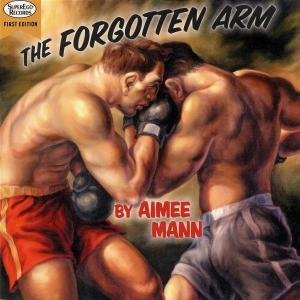
Aimee Mann has long been known for her realistic, some would say cynical, views about relationships. With The Forgotten Arm (2005), she crafts a concept album about John, a heroin-addicted boxer, and Caroline, the woman who falls for him. In the opening song, “Dear John,” Caroline’s infatuation jumps across the spaces of logic like a wildfire, setting her, and us, up for facing the complex realities about addiction that permeate the album and fracture their relationship.
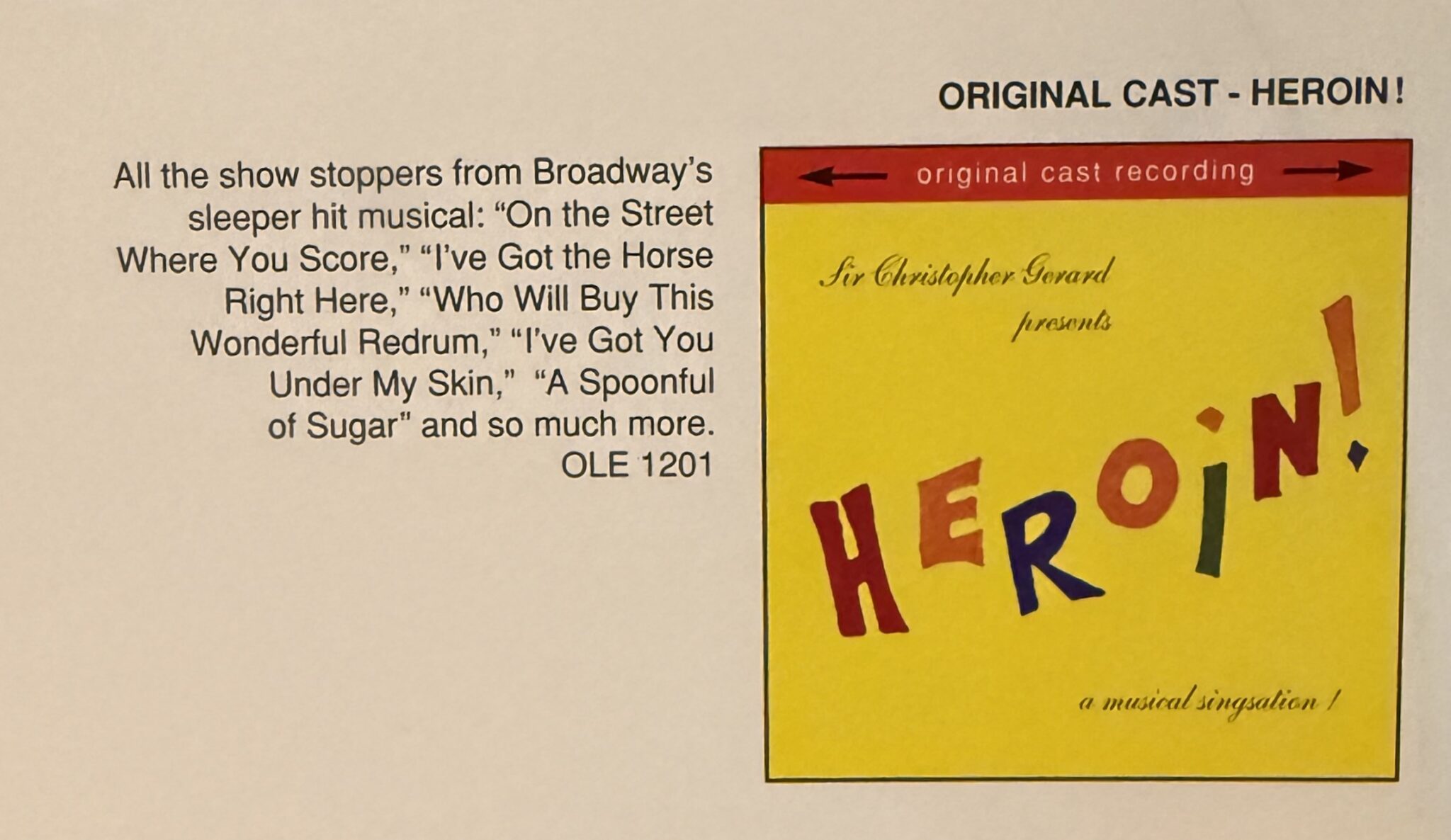
Mann’s well-honed avoidance of cliché prevents The Forgotten Arm (the title referring to a boxing move akin to a sucker punch) from curdling into something like Heroin!, the Musical, the album-cover parody that Yo La Tengo included on the CD insert/record sleeve, for I Can Hear the Heart Beating As One (1997), that mocked the hoary tradition of major-label promotions. While not overblown, Mann’s songs pull you in; you’re interested in the characters. And even if you don’t get all of the emotional twists and turns of what John and Caroline are going through, the music is there to guide you. On “Goodbye Caroline,” which would be a standout song (see Rachel’s comments) even without the conceptual framework, John’s leaving to get clean is conveyed in a chorus that sounds tonally higher, yet starts on a minor chord (the verse ends on A; the chorus begins on Em): we can really hear John’s melancholy farewell.
Of course, Mann gets that laughing vs. crying depends on perspective. While some songs strategically shift to third person to offer a more distanced view (which traditionally lends itself to humor), a monologue about the best intentions of kicking hard drugs can also have comic undertones, such as John’s travails in “I Was Thinking I Could Clean Up For Christmas.” On the other hand, there’s something very painful about giving up on happy endings, which Caroline grapples with on “That’s How I Knew This Story Would Break My Heart.”
Yet what we hear also depends crucially on Mann’s diction. It’s not just that she may mean something other than what the words initially appear to mean to us; there might be multiple poetic ideas floating around at any one time.
A Note about Lyrics (Rachel Anderson)
I am, and always have been, a lyrics person. I listen for the story, for the poetry, for the images painted by the song. The Forgotten Arm is, therefore, an interesting challenge for me: a concept album in which the songs are narratively and lyrically connected, sung by a singer whose singing style seems at times to deliberately stymie someone who is trying to well, understand the lyrics.
And I don’t think it’s just me—I took part in a rousing social media debate once about the various ways we all interpreted Mann’s (while with ’Til Tuesday, 1985) song “Voices Carry”. For years I was sure the chorus was “Hush, hush, let’s go downtown; / This is scary” or “This is Carrie” depending on the day. This is not a knock on Mann, or her songwriting or singing. Rather, it’s her style. And as I’ve come to listen to more of her solo work, I’ve appreciated the mental exercise of figuring out the possibilities in her lyrics. (Yes, I know I can look them up, but what’s the fun in that?)
But how does this serve A Forgotten Arm? One would think that a concept album, to be successful, would need a greater sense of lyrical diction and precision. But I think Mann, here, shows us that we don’t need words or lyrics to understand the emotion of these two characters, doomed to the wreck of a relationship by the specter of addiction. There is love and beauty (especially in the poignant “Beautiful”) and there is hope and regret. My favorite song on the album, “Goodbye Caroline” has a strikingly catchy chorus that ends with the line: “Who could only really let you down,” referring to the “house dealer” who always wins.
Of course, I didn’t hear that; I heard “Look around, we’re in a nutshell, down” which, while wrong, immediately connected this song for me to Hamlet’s “Oh, God, I could be bounded in a nutshell, / and count myself a king of infinite space” (2.2.273-4). It’s a bit like looking a cubist painting—multiple perspectives and viewpoints exist at the same time, and that’s the point. While my mishearing might be (probably is!) just me—the point remains – Mann’s singing makes her lyrics more evocative because of her diction choices.
Further energized by having been recorded almost completely live in the studio (the musicians all playing together), the songs refuse too much literalism or naval-gazing, nor do they traffic in the tired allegory of love as addiction. For all of the conceptual weight of The Forgotten Arm, Mann never forgets that Job 1, as a singer/songwriter, is to create memorable songs. Even when she gets into tragic mode, Mann invents huge melodic hooks, such as the hybrid Beatles/Byrds riff that breaks through the rain clouds of “I Can’t Help You Anymore,” Caroline’s lament to John.
Lastly, for anyone hoping to hear something, anything, upbeat in the album closer, “Beautiful,” Mann, in various registers, has throughout been resolute in showing us what we should, or ought to, know: that heroin and romance tend to mix about as well as oil and water. The forceful, three-chord refrain of “Beautiful” comes across as both a resolution and a comedown. It’s breathtaking, if well, not exactly, pretty.