Shadows is the 1959 debut of writer/director John Cassavetes. If you haven’t seen it, you’ve probably seen the many films that its influenced—like Breathless (1960) with its rhythmic editing, or the walking-and-talking scenes in Woody Allen movies. And yet, Shadows is a treasure in its own right, needing no longer than 87 minutes to make a provocative social statement, featuring Black actors, about people living in the shadows of the bright lights of NYC.
If, however, you don’t empathize with the ongoing humiliation of jazz singer Hugh (Hugh Herd), and Rupert (Rupert Crosse), his loyal manager, then you’ll miss how the exploitation of these characters is shown through their anger and sadness. If you aren’t moved by the searching honesty of Ben (Ben Carruthers), when he says to his friends, “I don’t know why we do this,” then you’ll miss an indelible moment of someone trying to become more than just a shadow of his possible self.
As an early independent film, Shadows’s historical achievement is widely recogzniezed; but many viewers stop short while trying to come to terms with what the film is doing. A big part of the problem is that Cassavetes fudged the account of the creation of Shadows to further capitalize on the hype around the film.
Technically, there are two versions of Shadows. The first develops out of an hour-long improvised story about a Black family: Hugh looks out for Ben, his younger brother, and Lelia (Lelia Goldoni), their younger sister. Ben and Lelia are passing for white. Tensions erupt when Tony (Tony Ray), a white man, sleeps with Lelia and takes her home, where, upon meeting Hugh and Rupert, he cannot hide his discomfort. Lest we think that this meeting is depicted heavy-handedly, interracial relationships were hard to handle for even the most liberal white people in the late 1950s.
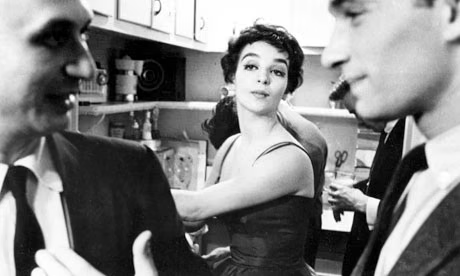
As an improvised film about a controversial issue, this first version of Shadows would’ve been spectacular – that is, if it were watchable. Some people loved it, but their reaction perhaps says more about Cassavetes’s impressive skills as a salesperson than as a filmmaker. The first version was made primarily by Cassavetes and the students whom he selected from his acting workshop, started in 1957 in a rented, run-down NYC studio space. Simply put, there was every problem you could imagine (and even some that you can’t) with an almost completely amateur film shoot.
Cassavetes knew that he had the start of something, but it would need considerable work. In the second version of Shadows, approximately half of the original scenes were taken out, leaving less than 25 minutes of the original version. Almost an hour of new, scripted scenes were added. Yet Cassavetes did not remove an end card that stated, “The film you have just seen was an improvisation.” He excused this decision by claiming that he lacked confidence as a writer. As we’ll see, this oh-so-clever move would come back to haunt him.
When a print of the first version was found and screened at the 2004 Rotterdam International Film Festival (after Cassavetes passed in 1989), Cassavetes’s wife and star player Gena Rowlands, and Al Ruban, her partner in the distribution company that held the rights to Shadows and the rest of Cassavetes’s self-financed films, hit the roof. Rowlands, backed by Ruban, has always stated that it was up to Cassavetes to decide what he wanted to show to the public. Apart from the legal issues of copyright, Cassavetes’ decision that the first version of Shadows was unsatisfactory, and had to be reshot, ought to be the final word on the matter.
The reshot version of Shadows has an impressive dynamic range, from the opening rock ‘n’ roll rave up to the downbeat ending – where Ben and his white friends (which speaks to his passing as white) make their nightly farewell, while nursing their wounds after getting beat up trying to pick up women. Ben’s critical self-reflection (“why we do this”) reminds us that Leilia must make up her mind about Tony, whom she knows was initially attracted to her because he thought she was white.
Also in the final sequence, Rupert’s outburst at how he and Hugh have been treated follows a deromanticized portrayal of the jazz life. After a cringy white male comedy duo squeezes laughs out of a drunken audience at a club, Hugh goes on, but is abruptly kicked off the stage by a musical act of burlesque dancers.
Keep the jazzy narrative beats, add some outlaw chic, and there’s the template for Breathless.
Keep the jazzy narrative beats, add some outlaw chic, and there’s the template for Breathless. Yet Breathless constitutes, at best, a partial impression of Shadows: Cassavetes devises a scene that anticipates the looser temporality of later-60s films, like Model Shop (1969) where Ben and his buddies walk around, looking at the outside exhibits at the Metropolitan Museum of Art. Like friends do, they playfully argue; their free-wheeling dialogue touches on education, philosophy, and art appreciation. The point is that you feel the time passing in/through this scene – and, what do you think about that?
Woody Allen, attracted to the thoughtful energy of such a scene, puts similar ones in many of his movies (for example, the “negative capability” discussion in Manhattan [1979]). But they correspond with plot points, thus moving Allen’s stories forward in an orderly way. They clean up the messiness.
Cassavetes’s claim that Shadows “was an improvisation,” however, gave his critics plenty of ammo to use against him for the rest of his career. As the conception of directors as enlightened dictators came into fashion, critics could easily accuse Cassavetes of dereliction of duty. Yet Cassavetes’s own definition of improvisation is far more rooted in the emotional variances of performing, as opposed to just making stuff up. Which means that there are actually very few truly improvised moments in any of his films. To put it another way, it is as big of a difference as if you compared Charles Mingus to a jam band.
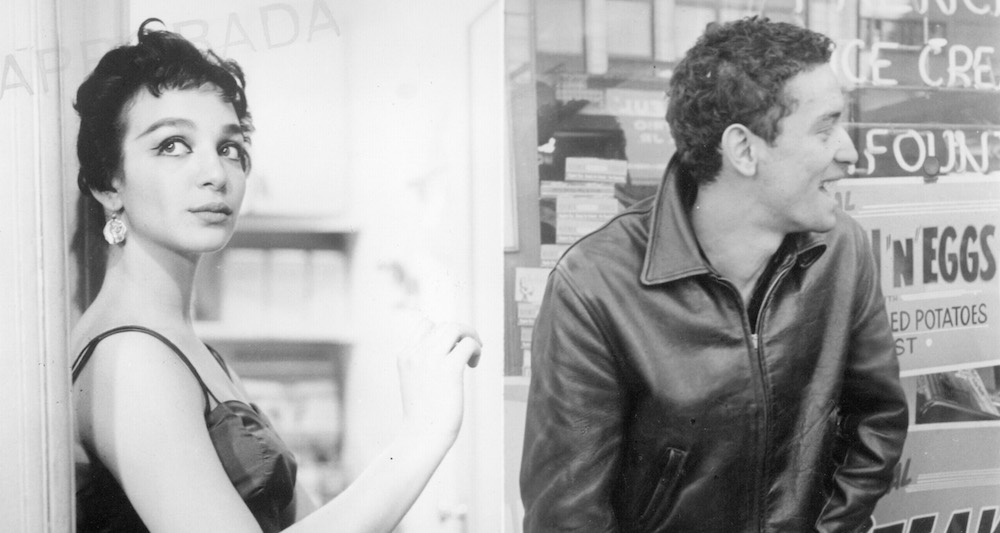
Very good essay, and I think you go beyond explaining its importance beyond “it was the first blah. blah, blah–“. I think SHADOWS manifests the progressive dream of merging a cultural moment of personal expression to social awareness, two themes that would become estranged as the 70s emerged. For Cassavettes the process of building a character was as dependent on a collaborative rapor fostered through improvisation with the actors and director on a project as with introspection through sense memory.
Side note: While the influence of Bergman and Fellini are often brought up o\regarding Allen, I really think of him as the American Rohmer, where philosophical discourse serves as an obfuscation of moral truth.
I think for Cassavetes, HUSBANDS, is a crucial film, where he engages in not just self-examination – otherwise, why enlist Falk and Gazzara in the project – but what the hell his generational cohort is supposed to do in the aftermath of the social changes in the late-60s (aka the “60s”). He’d be the first to say the guys portrayed in HUSBANDS are looking for easy answers, and that is the basis for his social awareness, circa 1970.