These top four shows will probably not be a surprise to you, as three of them are from creators whose work consistently rates very highly for me, and the fourth one I haven’t shut up about for nearly a year now.
4. The Chair Company
Season 1
HBO
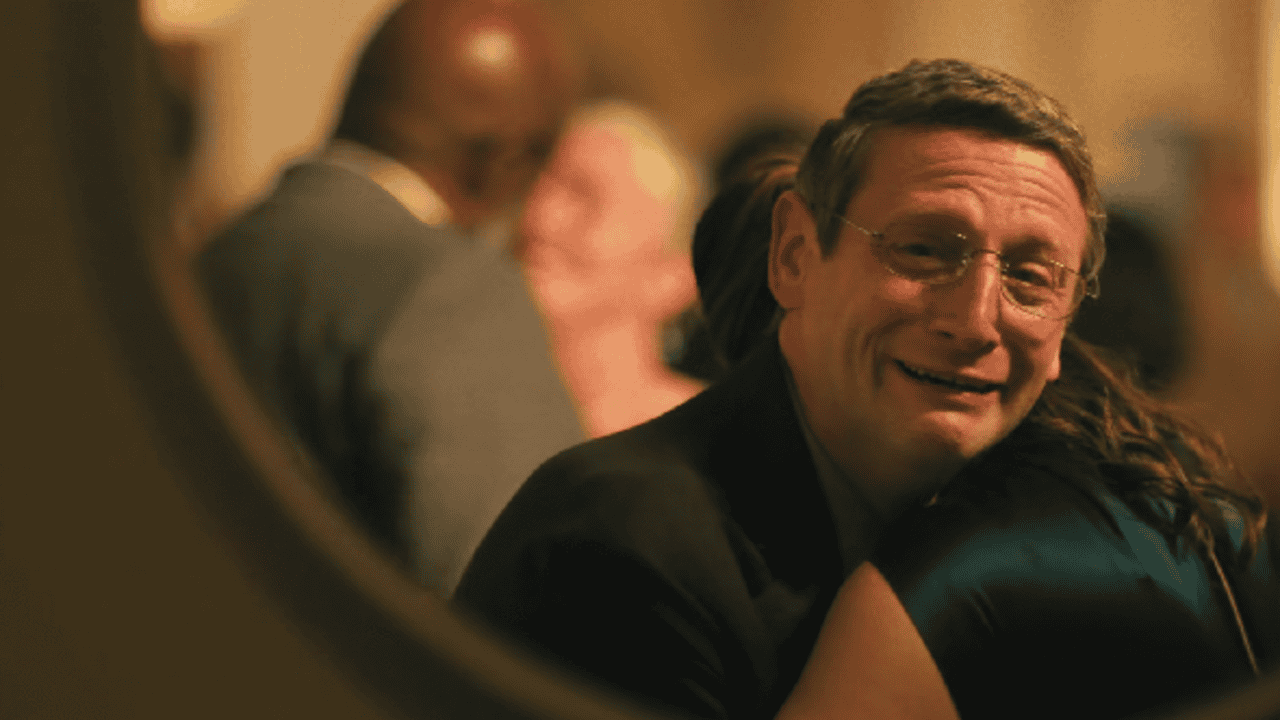
Tim Robinson and Zach Kanin’s latest project takes on a more ambitious bent than some of their previous work: What if a Tim Robinson character, with all the strange ways of speaking and the ego that can’t let minor slights go (and, to be fair, surrounded by some equally nutty people) finds himself in a conspiracy thriller?
The Chair Company follows Robinson’s Ron Trosper as an embarrassing incident at work leads him to an obsession that convinces him he’s uncovered a conspiracy. Ron’s chair breaks during a company presentation, and in a great example of the Robinsonian character’s ego, he simply can’t let this minor moment of embarrassment go. (Why does he care so much? That will make more sense, at least psychologically, as you go on.) He first tries to contact the chair company, and even that attempt leads him down another strange rabbit hole: The company doesn’t seem to exist, only to be a sort of shell subsidiary for a vague parent company… and Ron’s decided he’s gonna get to the bottom of it, even with everything else he has going on. He’s heading a project at work for a new mall (and, aside, has some very strange co-workers); his wife’s new startup is in the funding phase and his family needs his steady income to get by until she launches it; his daughter is engaged to someone who may be controlling to the point of abusive; and his son is looking at colleges for a basketball scholarship… but may not want to play anymore and may be drinking to deal with the stress. How is Ron going to balance managing all of these things with his investigation?
Probably not very well, if you guessed. (Not least of which because so many of the people around him seem to have their own weird issues as well, particularly the aforementioned co-workers. Have I mentioned yet that the other people around Ron are pretty strange, too?) And yet… Ron may be onto something after all, something even stranger than he first expected, as his investigation leads to multiple threads involving city officials, his boss, his wife’s startup… of course, it’s the journey to get there that’s so bizarre and uniquely Robinson/Kanin.
The term “Lynchian” gets overused, but this show really is Lynchian in that particular way that, just underneath the surface, there are horrific people, places, and scenes for those brave (or foolish) enough to look into the ugly truth of what lies beneath. Ron’s introduction to this world is a man who first assaults him and then offers to join the investigation on behalf of the good guys (so to speak). Mike, like so many odd characters of Robinson et al’s creation, may deep down just be a lonely weirdo desperate for some form of human connection, or maybe deeper down is something even darker than that who doesn’t have it for good reason.
The Chair Company strikes a strong balance of a few Robinson-related elements: The weird characters, situations, and dialogue could come out of I Think You Should Leave, although we spend more time with most of these strange characters. Robinson’s alienated family man desperate for meaning could come from Friendship, although unlike Craig there, Ron seems to actually have an interior life, people skills, and be generally respected at home and at work… when he’s not off on some obsession that threatens to pull him from reality, that is. The show manages to balance the comedy with the strangeness and the mystery plot very well.
I was a little worried about where I’d place this, because I feared I might just place it highly because of its pedigree. (Really, this and the next two shows were the most predictable high appearances based on past years.) But I was satisfied with how it ended, in that part of the mystery was satisfactorily resolved, while other parts seem to be ongoing. The Chair Company not only contains that Lynchian sense of the dark underbelly of society, but it also reminds you that, even though they don’t all use the peculiar language or sentence structures of the characters in a Tim Robinson show, many— maybe most— individuals are pretty weird not far underneath the surface. And that speaks to one of The Chair Company‘s biggest strengths: It can plausibly make Ron Trosper seem like both an unhinged conspiracy theorist and the only sane man in the room.
3. The Rehearsal
Season 2
HBO
You know, I realized how much Nathan Fielder has broken my expectations of television during the second-season finale of The Rehearsal.
Fielder has moved the recursive wheels-within-wheels nature of The Rehearsal from an all-encompassing program to help others and into focusing specifically on aviation. Fielder’s research into aviation crashes leads him to the conclusion that one significant factor he can help with is poor cockpit communication; specifically, that from black box transcripts, the first officers often notice something is wrong but are afraid to speak up or contradict the captain.
This is, of course, a Nathan Fielder show, so his efforts on this front are as roundabout, thorough, elaborate, and possibly batshit as ever. Of course, part of the point of The Rehearsal is to practice for the actual scenarios in question, so some of this effort does go to Nathan helping pilots rehearse for these conversations. And he does make a genuine effort to connect with lawmakers so that he can report some of his findings.
But, of course, those are relatively pedestrian efforts for Fielder compared to what we’re used to when he goes to real extremes.
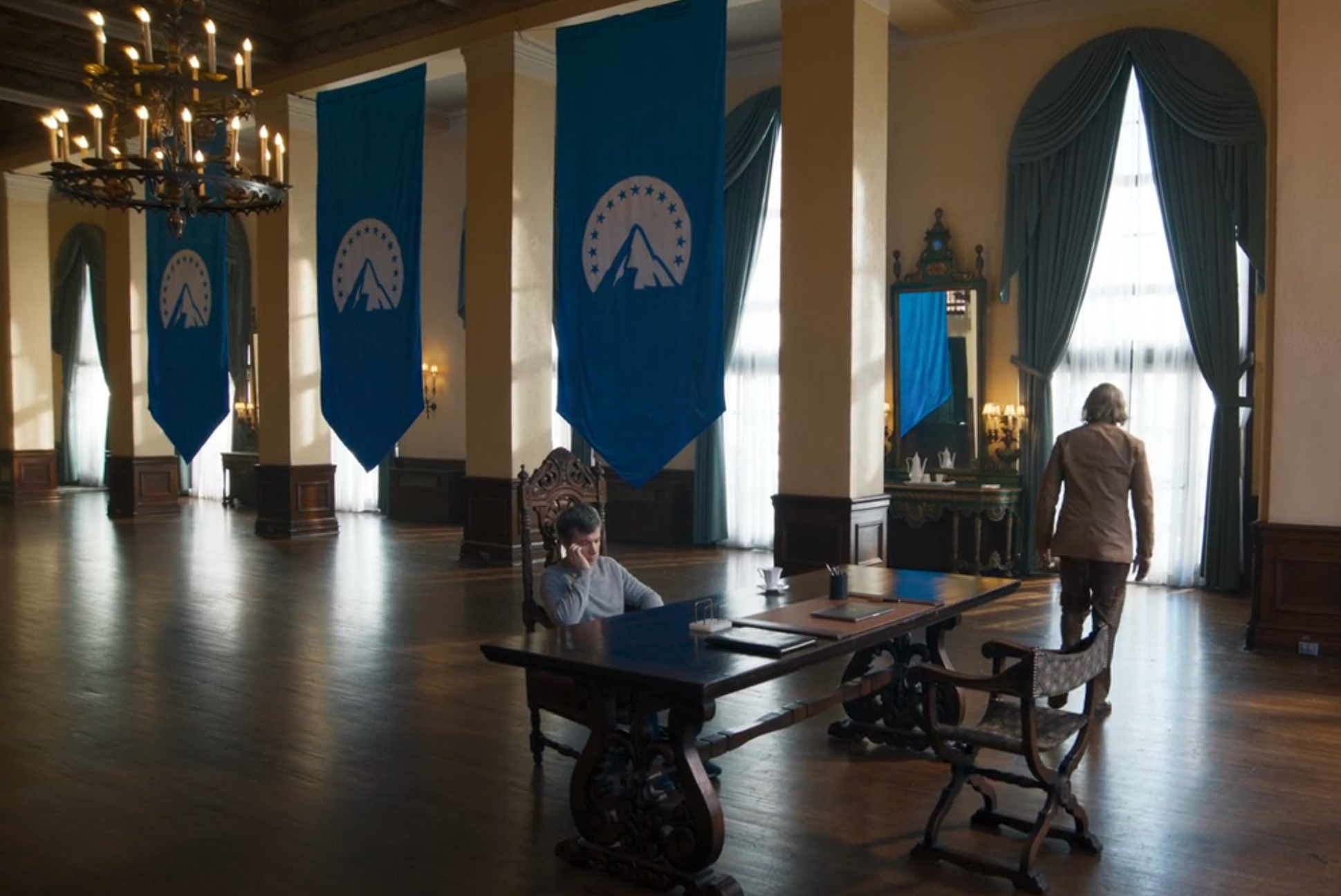
“Star Potential” might not be more than the third-wildest episode of the season, and it involves Nathan creating a fake singing competition show and having maybe hundreds of aspiring singers audition, just to give co-pilots practice at breaking bad news to people. And in trying to work out how he wants to approach Paramount+ pulling the Summit Ice episode of Nathan For You over vague concerns of antisemitism (read up on the episode at the link if you’re not familiar with it), his simulation of the Paramount offices is… well, you can see in that above image for yourself what he’s getting at.
The episode “Pilot’s Code” might be the most batshit of them all. I’ll just say that Nathan trying to raise a cloned dog in a recreation of the environmental upbringing of the original is maybe the third-battiest part of the episode. His attempts to understand what was going through Chesley “Sully” Sullenberger‘s head when he made his emergency landing on the Hudson give us the other two, one involving Evanescence and another that just has to be seen to be believed.
Of course, the finale “My Controls” has its own case— largely because of one reveal, but it’s a doozy: Nathan had over the last two years trained to get his commercial pilot’s license and spends nearly the entire episode piloting an actual (if not airline) flight of a 737, with a full cabin of passengers.
So, back to my opening sentence. When I saw the reveal in “My Controls” that Fielder was piloting a 737, I thought “That’s not that surprising; of course he would go to the lengths of getting a pilot’s license himself.” And then I thought about the amount of time and effort it would take to do something like that, and the fact that it seemed like a relatively ordinary thing to me for Fielder to do. And then I realized just how insane it is to be unsurprised by that reveal, to expect something so outrageous, over-the-top, and requiring an absurd degree of commitment.
How do you even compare a show where the creator spending two years getting a pilot license for the bit doesn’t surprise you to anything else on TV?
And even on top of that, there was still one little extra reveal in the coda that did blow my mind (or at least a little bit… wrinkled my brain?).
How do you even describe this? Audacious, avant-garde, hilarious, unbelievable. Doesn’t even seem to begin to cover it all. Nobody’s making television like Nathan Fielder.
2. The Righteous Gemstones
Season 4
HBO
I was disappointed to learn this would be the show’s final season, because I had remembered Danny McBride saying he could envision the show being epic and spanning generations, “like fuckin’ Thorn Birds or something.” I should have looked up how long The Thorn Birds actually aired.
In the season three finale of The Righteous Gemstones, a character says, “I guess God always has the Gemstones’ backs.” Season four opens with an episode that suggests maybe it’s been this way for a long time, and maybe God saw something in them the rest of us couldn’t, that with a little nudge, they might find a way to become the best versions of themselves.
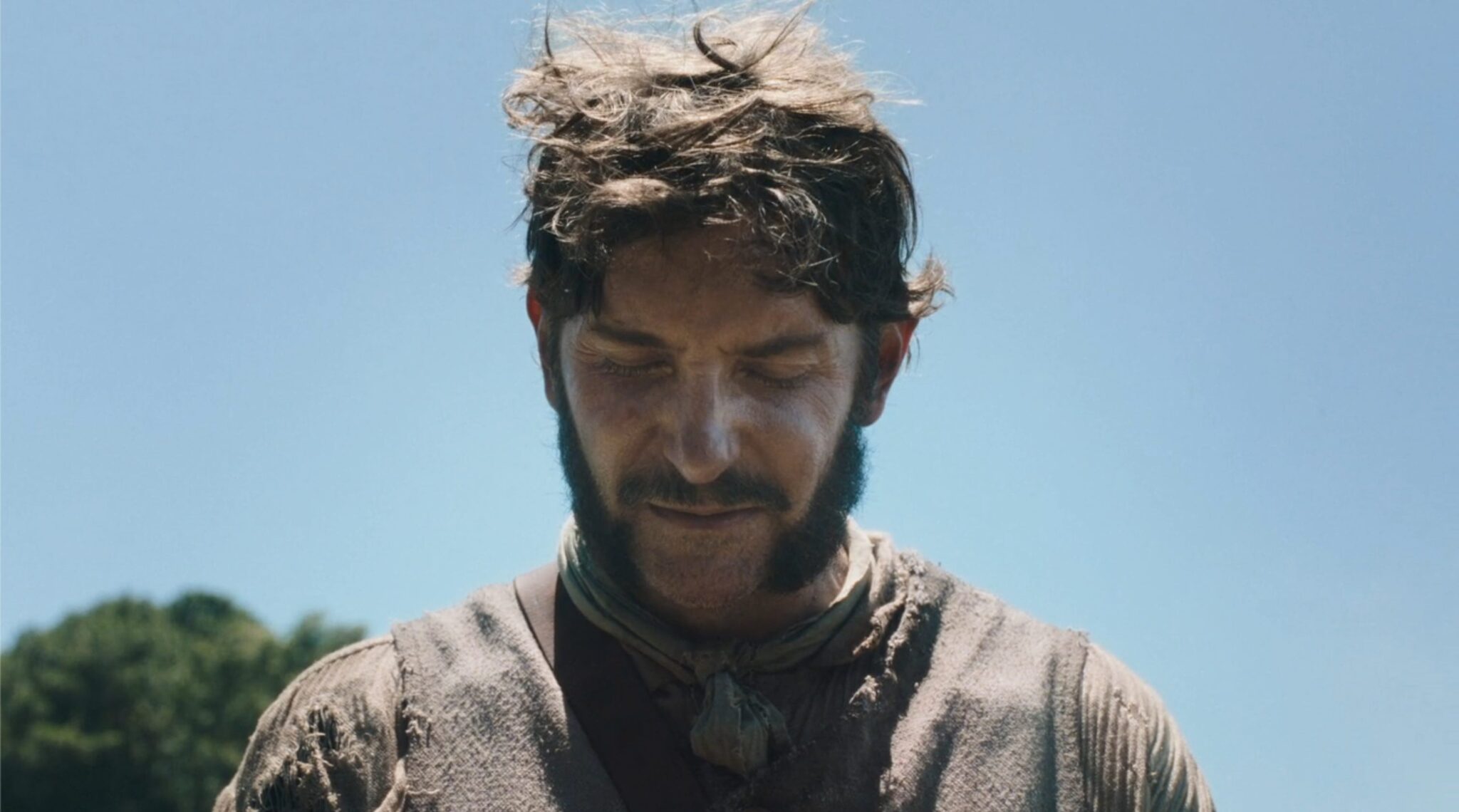
The season opener takes us back to the Civil War, where Bradley Cooper plays the original Elijah Gemstone— though through most of the episode, he goes by Abel Grieves, after he murders the preacher of that name to rob him, then has to pose as him when Confederate soldiers come around to conscript a chaplain. It is, perhaps, the first example of God offering a Gemstone some grace, as Elijah’s initial halfhearted attempts to fake it (and conning soldiers out of money at card games) give way to him having to deliver a prayer of last rites to a group of Confederate soldiers facing execution, actually doing it well after a false start, and then, being spared by the Union soldiers as a man of God, decides that God spared him, so maybe he should start studying the Bible and actually take his new role seriously. Perhaps that was God’s first nudge to a Gemstone that he could be better than what he is— You want to play preacher, well, you’ll have to do it right in order to survive… and then you may realize you actually mean it.
That episode (in conjunction with the always-present midseason flashback interlude) leads to only seven episodes in the present this time around. For a slightly shorter season in the present day as a result, and one where the plot wasn’t nearly as complex as in previous seasons, the season still was satisfying and very funny. One last set of complications and conflicts, some of which hit close to home, that the Gemstones have to navigate— as usual, first childishly and pettily, and then in a way that, as God so often asks of them, requires them to rise up to the better angels of their nature.
The children are running the church with Eli officially retired, and they travel to the Florida Keys to fetch Eli to get him to join in the telethon for Aimee-Leigh’s birthday. Their (hilarious) attempts eventually work, and Eli’s return puts him back in touch with Lori Milsap (Megan Mulally), once a close friend and fellow musician alongside Aimee-Leigh. This also ends up bringing her son Corey (Seann William Scott) into the mix, and eventually, her ex-husband Cobb (Michael Rooker, and if you know who Michael Rooker is, you can probably guess he’s the main villain of the season). Lori and Eli’s budding relationship gives us both the chance to see the children’s hilariously childish reactions to it, as well as the reactions of Corey and Cobb, potentially far more dangerous.
Meanwhile, Vance Simkins continues to be a thorn in the Gemstone brothers’ side, whether that’s antagonizing Jesse at the Cape and Pistol Society, or antagonizing Kelvin for being gay during the “Top Christ Following Man of the Year” debates. B.J.’s taken up pole dancing to stay in shape, but an injury leads him to get a helper monkey through Amber, and Judy becomes convinced the monkey is trying to push her out of the picture.
And Baby Billy, buoyed by the frankly baffling success of Bible Bonkers, is making Teenjus1, his movie about the life of teenage Jesus. (and the Jerks?) Tiffany just wants him to come home and spend time with her and baby Lionel, but he’s convinced he still needs to make more money to provide for them, so he works far too hard and does far too much cocaine for a 70-year-old man.
Like I said, the Gemstones deal with these things childishly at first, then correctly. Jesse’s dustups with Simkins start with slap fights and cape flourishes, before Simkins challenges him to a duel. At that point, Eli helps Jesse realize what’s important, and so he spares Simkins, and together Jesse and Eli quit the Cape and Pistol Society. (“When I was a child… Ah, fuck y’all.”) Kelvin melts down, unprepared, the first time Simkins brings up his homosexuality as wrong, hiding in his treehouse afterward… until he gets it together, embraces who he is, and gives a stirring speech about the diversity of God’s creation that wins him the award. Judy’s worry about the monkey isn’t misguided, but she does come to see how she and the monkey are similar, and that it’s not worth being petty and petulant to hurt the ones you love. And after their initial tantrums about Eli and Miss Lori’s budding relationship (whatever the fuck Judy is doing at the lake house is screamingly funny), all three of them finally accept that Eli still needs companionship, albeit in the crudest way possible.
Even Baby Billy has some revelations about what’s truly meaningful in life.
And, perhaps, the Gemstone siblings have finally grown into the kind of people who can offer the word of God and truly mean it, as the climactic scene of the finale has them rising up much in the same way “Abel Grieves” did praying over the Confederate soldiers about to be shot by a firing squad— over someone that, like those soldiers, may or may not have been a good man in the final analysis, but may have been better underneath than his actions, and who was pushed into violence and awful decisions by forces more powerful than he.
And in the end, that’s why God has the Gemstones’ backs— particularly when comparing them to the other megachurch preachers of avarice they call peers2. The Gemstone family is the purest embodiment of Winston Churchill’s observation that Americans will always do the right thing… but only after they’ve tried everything else.
I am sad that this is The Righteous Gemstones‘ final season. But I am very happy with what we got.
- I felt very clever when I called it Jordan Riverdale. ↩︎
- The show may have started as a more vicious satire, but it rounded out into something else, and I think for the better. Naturally, as it’s a comedy and not a tragedy, the series ends with a wedding. ↩︎
1. Andor
Season 2
Disney+
I did not get to Andor season 1 at the time. Even “get to” overstates my interest; I had no real reason to check out yet another Star Wars property. Even when people said it was really good, I assumed they meant “really good for another Star Wars show.”
I was finally convinced by a recommendation from a friend who had already bought some goodwill with Invincible. And, as you already know if you’ve talked to me at all in the last ten months or so, Andor turned out not to just be better than I expected, but to possibly be the frontrunner for TV Show of the Decade at this point.
And, look, I’m coming to this writeup nearly a year after the season ended, and when lots of people have written on some of the topics I’m going to talk about, including just how damn good the show is, so I’ll try to keep from repeating too much you’ve heard elsewhere for too long. Yes, it is a powerful and realistic depiction of fascism: how it operates on a day-to-day basis, how it responds to threats, how it works internally, the range of ways people try to deal with it, how it justifies itself… and even, ultimately, why it fails. Yes, it’s written in a refreshingly adult manner that trusts the viewer to pick up on subtext. And yes, it’s not just all of those things, but quite thrilling and fun along the way, as well. (It’s from season 1, but “One Way Out” might well be the frontrunner for the best TV episode of the decade.)
Andor doesn’t hold our hand. There’s no expository dialogue here. The scenes can be so dense that they even play better on a second viewing. (The first time I watched the series, I had little idea what was going on and who was who in the first three episodes. The second time, I could see how much these characters were written as fully three-dimensional from the get-go, how much I better understood what was going on the whole time, how much I better grasped how much was communicated in those moments.) Like Shōgun last year, Andor continually compels our attention and rewards it.
That communication is key for a show in part about covert operations in life under fascism. Every face is false when the truth could mean your life or worse. Everything said has hidden and double meanings and you likely won’t pick them up the first time around. Because, in what is depressingly rare but a refreshingly adult way to tell a story, the dialogue isn’t for our benefit. It’s what the characters would say to each other. And since none of those characters are the Exposition Dump Character, we just have to pick up what’s going on by paying attention and reading in between the lines.
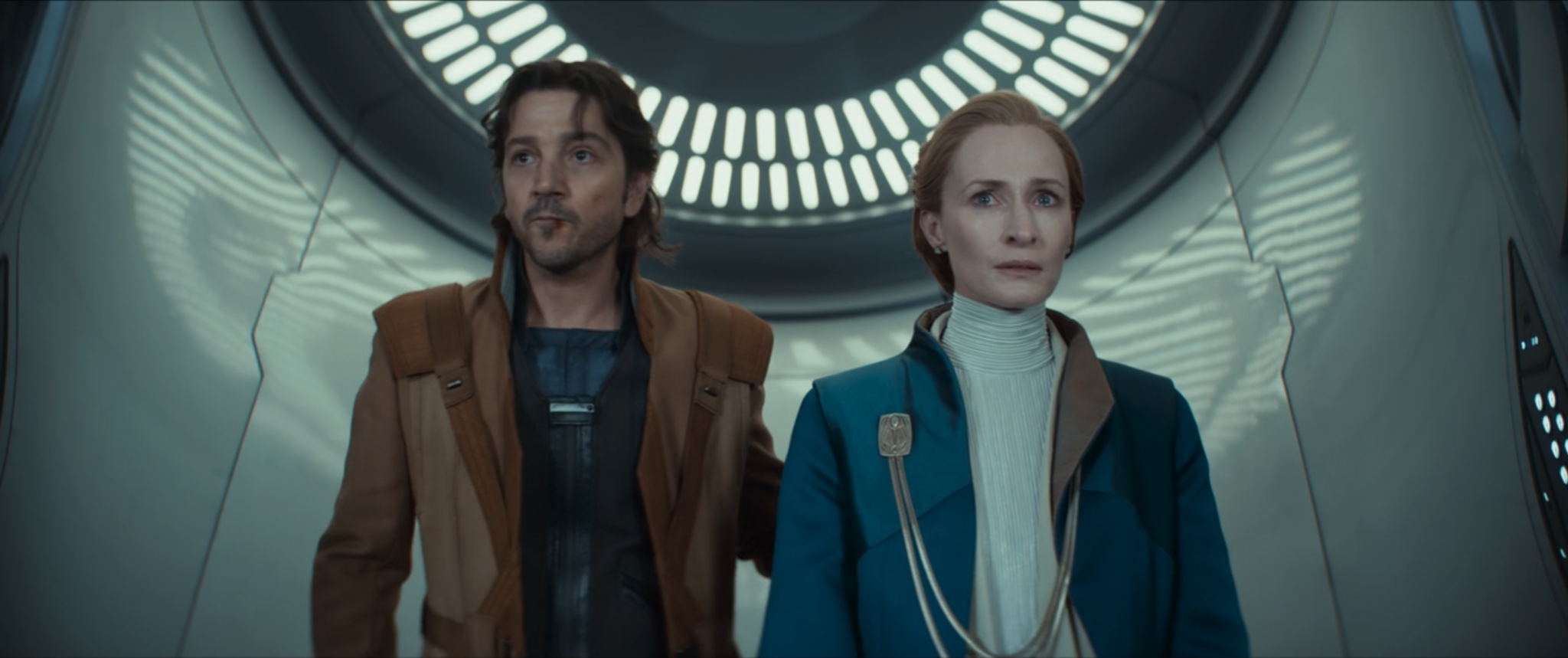
It’s also how it focuses on so many aspects of life in a fascist empire, so many places in the socioeconomic order, both on the side of the fascists and on the side of the rebellion. Cassian Andor, the thief who becomes radicalized over the course of season 1 by his experiences with the Empire. His friends on Ferrix who were happy to do business with anyone who came through and not make waves until the Empire made that impossible. (In season 2, Wilmon in particular, just a teen boy in season 1, who becomes radicalized after the Empire’s cruel ways lead to his father’s death at their hands, becomes a critical operative on the rebel side.) Luthen, the spymaster posing as an antiques dealer, and Kleya, his assistant, and long ago the girl he rescued when he was fed up with doing the empire’s colonial bidding. Mon Mothma, the senatorial face of liberal objection to imperial overreach until she isn’t, and privately a source of funding for the rebellion. Vel and Cinta, the fully committed spies for Luthen’s network. Saw Gerrera, a paranoid fuel-huffing anarchist and possible madman, but understandably paranoid and even inspiring. (His monologue is a highlight of the season, no small feat in a season full of highlights.) Dedra Meero and her fixation on “Axis,” and her fellow middle-management enforcers at the ISB. Partagaz’s intelligent and relatively benevolent commanding officer. Blevin and Heert’s more by-the-book supervisors. Lonni Jung, the double agent. And Syril Karn, the true believer in the empire’s fascistic order who wants to be a hero, whose naive belief in what the empire is becomes his tragic flaw, and whose obsession with Cassian ultimately becomes his downfall.
Of course, the performances are incredible. Some of these are no surprise— of course Stellan Skarsgård and Forest Whitaker would be incredible; Diego Luna and Genevieve O’Reilly shining as effectively co-leads is no surprise, either— but one of my favorites, one of the best, comes from newcomer Elizabeth Dulau: She only graduated RADA in 2020, was cast as Kleya Marki in season 1— Andor was her first professional production ever— and what she delivered impressed the writers and producers enough to expand her role for season 2. The commanding presence, intensity, and iron will she gave Kleya often stole the show from far more accomplished actors when she was on the screen. Dulau could be one of the greats when it’s all said and done.
And then the actual events of season 2. The season is broken into four three-episode chunks that each represent a snapshot in time with a year in between them. (This was a necessity of production; the first season took place five years before the events of Rogue One, to leave the possibility open for a five-season run; the sheer scale of the production, in terms of both time commitment and budget, would have made it such a long commitment as to be impractical— there was already a two and a half year gap between seasons one and two.) Over time, we see both the Empire’s plotting and we see both the continued spycraft of Cassian as well as Luthen’s other agents, and the Rebellion slowly grow into a more organized and structured one that is capable of actually fighting back at full capacity against the Empire. (And, of course, the conflicts between these two approaches and the agents involved.)
We see squabbling rebel groups, we see the difficult decisions Mothma and Luthen have to make, we see Bix and Cassian trying to survive in the wake of all they’ve been through and the threats they still face, we see Dedra Meero’s fixation on “Axis” be her triumph and downfall. And we see the event that most hangs over the season, the Ghorman Massacre, planned out from the start, with Dedra overseeing it and Syril being her useful idiot on the ground, and we see how such pretexts for the genocide parallel those in real life, and then we see the explosive, awful mass killing of civilians in the eighth episode, “Who Are You?”
Then we get a three-episode stretch from “Who Are You?,” “Welcome to the Rebellion,” and “Make It Stop” that rivals nearly any three-episode run of television ever. A genocide and the chaos in the midst of it, a Senate speech calling it one, an exfiltration, a great confrontation thwarted, and an infiltration. Not only are there so many plot bombs going off in these three episodes, but they’re all handled exquisitely, with thrilling sequences as our characters try over and over to escape and survive. “Welcome to the Rebellion,” where Cassian is tasked with extracting Mon Mothma after her speech condemning the Ghorman genocide and calling out Palpatine by name for it, once Luthen learns Bail Organa’s team for that purpose has been compromised, was my pick for the TV episode of the year, just an incredible sequence depicting both the calm before Mon’s speech and the storm of it and what comes next— and, funnily enough, with only three episodes to follow, the first time in the series our two leads actually meet.
And then, the timing of the season to real-world events couldn’t have been more prescient. Officers of the empire harassing undocumented workers? A Wannsee Conference-style committee planning a prolonged campaign of genocide through Imperial propaganda, invasion, and murder for resource extraction? Someone calling a genocide a genocide and being persecuted by the government for it? Tony Gilroy and crew weren’t specifically referring to anything current, but there’s more than enough historical echoes to draw from in the long history of fascism and other oppressive systems and empires. History doesn’t repeat, but it rhymes. (Even from season 1, actual rebel groups across the world have used passages from Nemik’s manifesto to define their cause.) If anything, the show only seems more relevant in 2026… and probably will continue to be unless we do something about that.
Having said all that: In the end, none of it works if it’s not astonishingly well-made. Every character acts like they should act. Every line of dialogue says what it should say. Nothing is dumbed down, nothing shies away from the reality it creates, nothing rings false. Not every performance is Elizabeth Dulau, but there are no bad or false performances. Not every scene is the thrill of Kleya infiltrating the hospital, but there are no bad or false scenes. Indeed, the weakest parts of the show may be toward the very end, with the necessity of fitting the ending into immediately before the events of Rogue One— but even though it’s not perfect, so much is so well-done that it may as well be. Nothing has been so compelling that I watched it repeatedly in 2025, far more than I ever rewatch any TV show in such a short time. If I did a “Best TV Moments of 2025” article, I could probably pull at least a half-dozen from season 2 of Andor— honestly, just from the three episodes I named above— without feeling like I was being gratuitous.
I’ll just end by saying this: After several repeat watches of the show (and watching “One Way Out” maybe seven or eight times) last year, my wife finally said, “I don’t think I’ve seen you this obsessed with a show since The Shield.” Andor may be the first TV show since to create something that even rivals being as real, engaging, and powerful as the greatest of all television dramas. To do that as a Star Wars prequel to a prequel, in 2025, is frankly mind-boggling.
That’s it! I’m going home! See you on Thursday!
Looks like I need an HBO subscription. Whatever happened to those free preview weeks they used to do? I think half my parents’ VHS collection was movies taped off HBO during those weeks (usually 2 1/2 movies per tape).
Heh, I didn’t even notice until you mentioned it that 4-2 were all HBO shows.