Sitcoms of the ‘80s hit strangely these days. So many of them are built on insults. Famously, Growing Pains drove Tracey Gold to an eating disorder because they decided that her character would constantly be needled for being fat. Generally, you’d have a stupid character, one too out of it or genuinely unintelligent enough so that they didn’t notice they were being insulted. Even most relatively mild shows would have at least one person who hurled insults at the others and was seldom if ever shown actually caring about the others. And my goodness but there was slut-shaming, even though quite a lot of sitcom characters have considerably more partners than the average person.
Which brings us to The Golden Girls. Blanche Devereaux (Rue McClanahan) owns a house in Miami. A year previous to the pilot, she posted a notice in the local grocery store, looking for roommates. Rose Nylund (Betty White) and Dorothy Zbornak (Bea Arthur) moved in. In the pilot, the Shady Pines Retirement Home burns down; one of its residents is Sophia Petrillo (Estelle Getty), Dorothy’s mother. For seven seasons, the women would live together. (In an eighth, there would be a brief spin-off called The Golden Palace, minus Bea Arthur but plus Cheech Marin and Don Cheadle.) They would bicker, go on many dates, and eat a lot of cheesecake.
Fun fact: Bea Arthur hated cheesecake. This, to me, sums up a fair amount of the behind-the-scenes goings-on. She didn’t get along with Betty White; apparently, she preferred to have someone on set she didn’t get along with and chose White, at least according to Arthur’s son. They also seem to have had very different acting styles, with Arthur a lot more formal and White a lot looser. Arthur was the only one of the four who didn’t stay in touch with any of the others after the show ended, and it ended because Arthur was done with it.
The original idea for the show stemmed from a skit Selma Diamond of Night Court and Doris Roberts of Remington Steele made on a special introducing the 1984-85 NBC season. It was about old people living in Miami and was called “Miami Nice.” NBC executives liked it, and when Paul Junger Witt and Tony Thomas came in pitching a show about a female lawyer, NBC senior vice president Warren Littlefield rejected it and suggested a show based on the skit instead. Witt brought in his wife, Susan Harris, and they created what was initially a show based on four elderly Jewish women.
At least, that’s the gossip, that Harris was told that no one wanted to watch a show about four elderly Jewish women, and it was changed. In fact, both Arthur and Getty were Jewish, but their characters were made Sicilian instead. Despite their bewilderment on the subject, the characters weren’t allowed to be Jewish. The pilot was about three middle-aged women, one of whom had an elderly mother, with a gay cook, but the audience loved Estelle Getty, and there wasn’t room in the show for a fifth character. Apparently Harris also thought it was sexist for a man to be taking care of the women, and anyway they spent so much time in the kitchen that it didn’t work.
Estelle Getty was a year younger than Bea Arthur and spent a lot of time being made up to look old, and then she had a facelift at one point, making it even worse. She also suffered from crippling stage fright, by all accounts probably exacerbated by the dementia with Lewy bodies (build up of excess protein in neurons, if I’m understanding this correctly) that eventually killed her. In early seasons, her lines were written in various places including on the purse she carried; eventually, they agreed to give her cue cards. She had also done the least acting of the four and found the others intimidating, which didn’t help.
All in all, it sounds like it was a hell of a set to work on. Arthur eventually had to insist they stop insulting her character’s appearance so much, which sounds exhausting to have to do when you’re in your sixties. McClanahan had it in her contract that she got to keep all her character’s clothing and eventually had a dozen closets full. Arthur’s clothing had to be custom-made because they had a specific look they wanted for her and they couldn’t find it in her size off the rack. McClanahan and White got along, though McClanahan was also exhausted from commuting back and forth between New York and LA and was constantly catching catnaps around the set.
At that point, does it even matter that I never have really liked the show? I know, I know. But it strikes me as one of those shows that normalizes the idea that female friends do basically nothing but bicker all the time but obviously love each other anyway. And I will tease my friends, especially about very specific things, but one of the compilation collections of “best Dorothy moments” on YouTube features Dorothy calling her roommates “a slut and a moron.” I’m less than thrilled with that, and if my roommate openly admitted she was planning to cheat me by selling me her lemon of a car, I’d figure out how to move. The whole thing’s a lot.
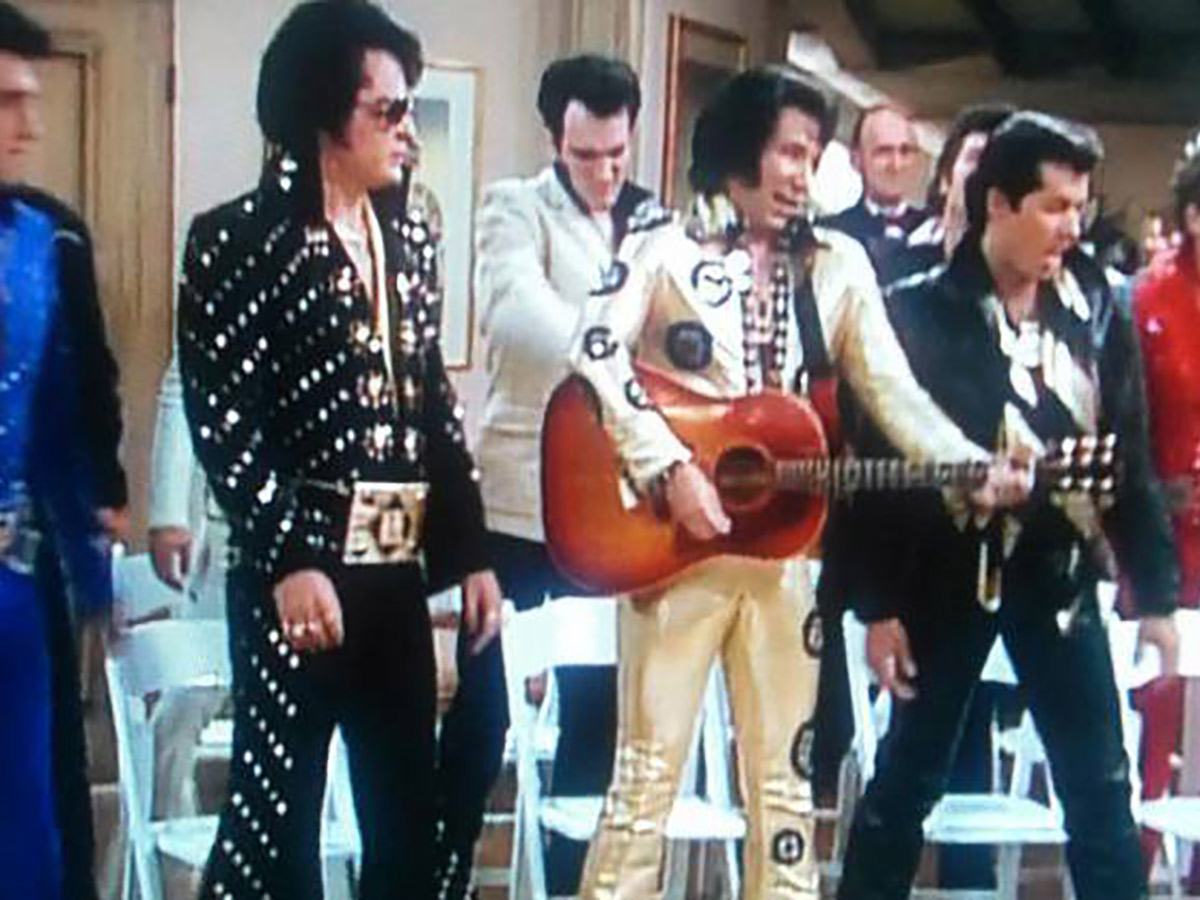
Though the guest stars are impressive, at least. Dorothy leaves to go marry Leslie Nielsen. There’s an episode with a student who turns out to be in the US illegally and is played by Mario Lopez. Dorothy dated John Fiedler once. Sophia dated Mickey Rooney. Blanche, Rose, and Dorothy all pursued Tony Jay. And, of course, Quentin Tarantino played an Elvis impersonator. And that’s even before you get into Very Young Don Cheadle territory. I think George Clooney plays a jewel thief, too.
But, no, The Golden Girls has never particularly been my jam. I liked Empty Nest, its spin-off featuring Richard Mulligan and David Leisure, though I haven’t seen it since its initial airing. I know a lot of my friends are eyeing me askance now. Mostly, though, I dispute the idea that this is “Miami Nice.” Oh, nicer than Miami Vice; Rose isn’t shooting Dorothy or anything. But while I admire the fact that the older women—McClanahan, the youngest, was barely older than I am now—are allowed to have lives and even, gasp, sex, I do wish women were allowed to have friends they’re actually nice to.
I love this show. I love affection masked in hostility, and I love crotchety old women who are allowed to be as blunt and terrible as crotchety old men. Every time Rose starts a St. Olaf story I’m ready to start giggling. Would I want to hang out in their (admittedly lovely, if very 80s) house? Maybe not, but that’s why the show was only thirty minutes.
I also appreciate how ahead of its time it was, even if they did ditch the gay cook. Matt Baume has a great video about the show, including some genuinely lovely trivia about the cast:
https://www.youtube.com/watch?v=cRL_e94jj18
Speaking as a middle-aged man whose primary social engagement with my friends is making fun of them, I think there’s a sense in which it’s liberating, even feminist, to show women having the same relationship with theirs. Especially in the ‘80’s, when women in television had very rarely to that point been anything other than the mother or the object of the male main character’s attention. Even on Taxi and early Cheers, where the female characters got their licks in, they still existed in the story largely as “the girl.”
I have a lot of trouble even trying to think of female characters allowed to be prickly and mean. Even in The Golden Girls and Roseanne there was usually hugging at learning at the end.
No wonder we all loved Toph so much when Avatar came out.