Depth of Field is a video project for the Media Magpies YouTube channel. This is a transcript of the full video interview between E. Rose Nelson and Dr. Kipp Davis, available at www.youtube.com/@mediamagpies.
E. Rose Nelson: Okay, looks like we’re recording.
Dr. Kipp Davis: All right.
E: All right, welcome to whatever we end up calling this series.
K: Thanks, Gillian. It’s great to be here on whatever this is.
E: It’s great to have you. This is for the Media Magpies channel. We are planning actually now a whole series of people who have interesting jobs talking about movies, at least tangentially related to their jobs.
K: You know, that’s – wow. I’m honoured to be the first. And these are two topics that I really actually love. I love, you know, my job, which is – promoting biblical scholarship in in public spaces and—and that’s mostly an excuse just so that I can I can continue doing work, like critical academic work in in biblical studies, but I also love movies and television and I’ve actually written I guess it’s just the one article, but I actually wrote an article some years back about the intersection between theology and the Dead Sea Scrolls and what at the time was my favorite show on television. The Walking Dead and it’s still I think one of the best things I’ve ever written so there you go. This is gonna be fun.
E: Do you want to go ahead and tell us a little bit about yourself?
K: Yeah, for sure, so and I’m going to silence my phone yes because that’s rude. So my name is Kipp Davis. I am a scholar of the Hebrew Bible and a specialist in early Judaism and the Dead Sea Scrolls. My narrower specialization and some of the things that I’m really keenly interested in are things like the transmission and reception of biblical literature in this critical period. We call the Second Temple Period from the fifth or sixth century BCE up to the first century CE. And manuscript cultures and scribal cultures, who was writing these texts, why they were writing them, how they were writing them, what they were doing with them. And yeah, so a lot of my work is is in that direction. It’s providing me opportunities to do some—some other really cool things for seven, eight, nine, ten years there, I was involved in working with manuscript fragments from private collections that all pretty much turned out to be modern forgeries. So, you know, that was that was cool. And I had the chance to work with the chemists and physicists and, you know, papyrologists and specialists in the construction of ancient paper and–and these sorts of things, so it’s—it’s—it’s wide and it’s varied, and then I currently have been working on promoting Biblical scholarship. Some of the—the things that I’m really interested in in public spaces I’ve been focused more intently on doing public-facing scholarship through mostly my YouTube channel,and I’m in the process [glitch in feed] and courses that I—that I do offer. I’m just starting one in biblical Hebrew here in the upcoming couple of weeks, but—but I also have courses in Israelite religion and probably one on the Dead Sea Scrolls coming in the near future and I’m hoping to do a lot more writing. I’m putting—I’m coming—I’m—nearing the end of a—of a large book project that I hope to to get published here in the next several months, so . . . .
E: Very exciting.
K: So that’s—that’s—that’s it. I guess that’s me.
E: All right. Well, we’re gonna start—sort of ease in here with what is your favorite Biblical movie?
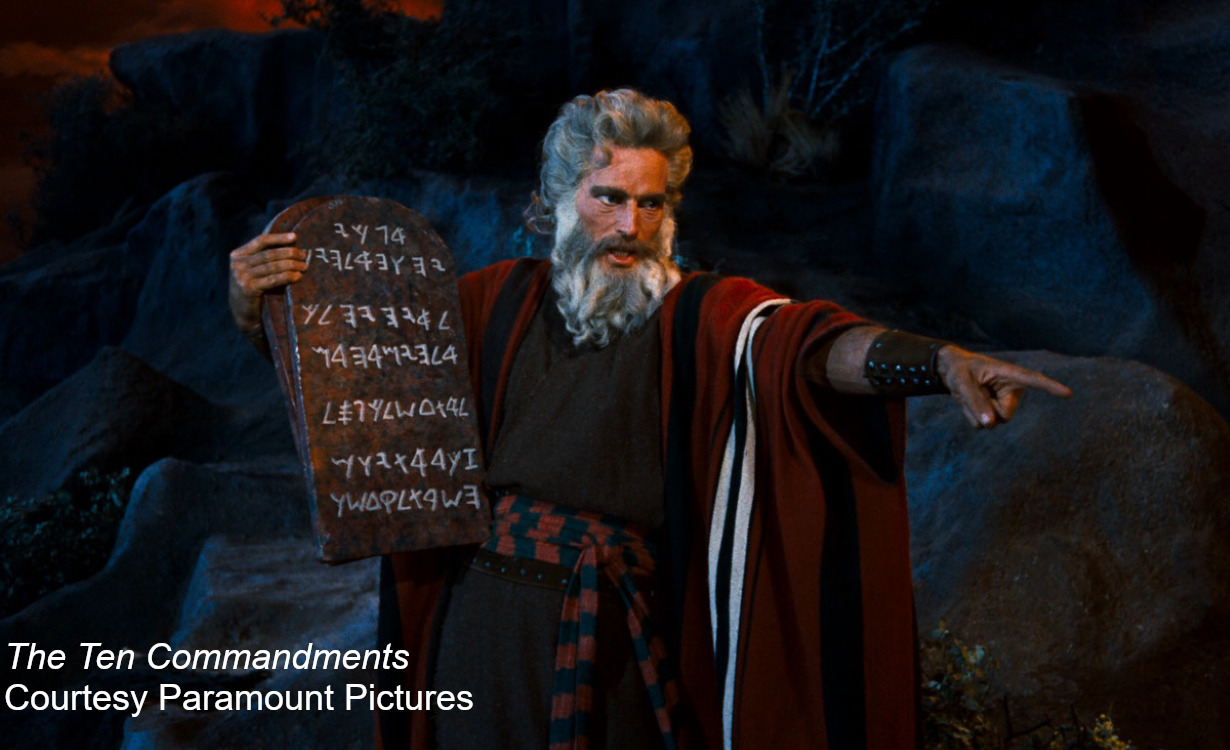
K: Wow. You know, for forever, it was always the classic Cecil B. DeMille’s The Ten Commandments. And the reason for that is almost completely nostalgic. And to give you a sense, I actually own a VHS box set of The Ten Commandments. It’s on two videotapes because the movie was so goddamn long. And what’s really cool about the box set is that it actually includes the entire twenty minute theatrical intermission.
E: Oh, nice.
K: Yeah, as well as the five-minute theatrical introduction where Cecil B. DeMille actually walks onto the stage and talks about his movie, which is something that directors did back in the fifties, right? I think it’s the fifties.
E: Yeah. I’ve always felt that the interesting thing about the release of The Brutalist is they’ve brought back the intermission.
K: Yeah, right? So I don’t know what it looks like on that one, but on Ten Commandments, it’s just twenty minutes of dramatic music and a blank black screen with the curtain. Right?
E: I’ve got a couple of movies that have the full intermission in the middle of them. It’s like, okay, that’s fine.
K: It’s cool. I get a kick out of it, but what’s with that? When I used to go to the drive-in with my parents, we used to actually have things to look at at the screen, on the screen, at least, while we were waiting for the next movie to show. But it’s very nostalgic for me, The Ten Commandments, because I grew up in the 1970s and ‘80s, mostly. I grew up pretty sheltered, I think, in a Canadian evangelical Christian household. I got to watch quite a bit of TV, but it was also very much controlled. There were lots of rules on what I was allowed to actually watch, and there were things that I could watch by myself but most of it I had to watch with with my parents. Right, so and Cecil B. DeMille’s The Ten Commandments was definitely on the list of things that I was allowed to watch and pretty quickly one of the things on the list that I was allowed to watch by myself, and fortunately for me—and we didn’t have cable, either, so you know we had—we had the three Canadian channels, but every year on, like, Good Friday or what’s the—what’s the name of the—the Saturday just before?
E: Holy Saturday.
K: Holy Saturday. Either—either Good Friday or Holy Saturday, or maybe both, because the movie is so goddamn long, it would show—they would air The Ten Commandments for Easter holidays on network television every single year. It was like one of my favorite times of year all the way into high school, because, like, you would get off for Easter break. Usually the last day of school was the Thursday, right? And you’d get off and you’d have–we had to go to the citywide Easter service at the Jubilee Auditorium in my hometown of Calgary. Which was lame, but you know, and—and you had to feel like you were—you were being properly piously observant the whole day, which was also annoying, but! My god I loved, you know, in the evening sitting down. It was usually just me this time who enjoyed doing this but I’d sit down you enjoyed doing this but I’d sit down you enjoyed doing this but I’d sit down you know in front of the television and watch The Ten Commandments for four and a half hours on onnetwork TV. Loved it. It was for, yeah, for all those mostly nostalgic reasons, I think, it was always my favorite. My wife bought me the—the box set of VHS tapes when such a thing started to, you know, I—I actually think she—she even ordered them from, like, a, like, an internet distributor before there was such things as—as Amazon or Indigo here in—here in Canada, but, uh, yeah. So yeah. Great film. I think it still holds up. And, you know, it still holds up. And that’s just I think that’s part of the charm in it, too. It’s the, you know, it’s the—the campy melodrama from the nineteen fifties that I—that I love. And it just makes me smile.

E: There is something about that era of biblical epic. My personal favorite, which is, to this day, it’s a two DVD set, and it also has the intermission and the whole thing. It’s Quo Vadis.
K: Oh, I haven’t seen that one.
E: That one is, that’s a little bit… further ahead in time, because it’s about the death of St. Peter. Broadly. It’s about a lot of things, not all of which have anything to do with anything. But it’s set right around the great fire of Rome and Peter Ustinov chewing approximately the entire set as Nero.
K: Oh, wow. Now I feel like I must see this film.
E: It’s enormously fun if you like fifties and sixties biblical epics. So . . . .
K: Oh yeah, absolutely. And I think that like, that’s the other, that’s the other side of this too, is just the, you know, the, the, the real life massive productions that these movies were, right?
E: Yeah.
K: The Ten Commandments with literally thousands of extras set against the backdrop of actual, you know—
E: Enormous sets.
K: Huge sets.
E: Yeah.
K: All in, in, yeah, it just, it’s, it’s, yeah, it just, it’s, there’s, there’s something about it. We’re never going to approach anything like that anymore with the way filmmaking is gone. And I mean, there’s, there, there is something kind of magical and—and disarming about that so it’s—yeah, I don’t know. I think one of my—and, you know, clever, clever special effects in in some of these, too. I think one of my one of my favorite moments—memories as a kid was the first time we took a family holiday to Southern California when I was, I think, seven or eight years old, right? And of course, we went to Disneyland, but we also went to Universal Studios before any of the Star Wars stuff.
E: Yeah, it was all—the studio tour and a couple of stage shows, and then you went home.
K: And honestly, lots of it was kind of lame at Universal Studios, right? But the one really cool thing was the trolley, the car thing that you sat in, and then you went into the water.
E: They parted the Red Sea for you.
K: In the pool where they part the Red Sea, which was awesome. And I loved that as a kid. I was like, this is amazing. And then to top it off, the Jaws shark is right there too, right? So it just, yeah, it was one of my… enduring memories from childhood just connected to this film too. But even apart from that scene, which is amazing, I was always really taken aback by a scene early on in the film. Where Ramses complains to—to, or—or I should say Moses fails to show up for an important audience before his father-in-law or his his grandfather, sorry, his adoptive grandfather Seti and—and Seti is enraged. Ramses, his disloyal stepbrother, eggs him on, played by the incomparable Yul Brynner—
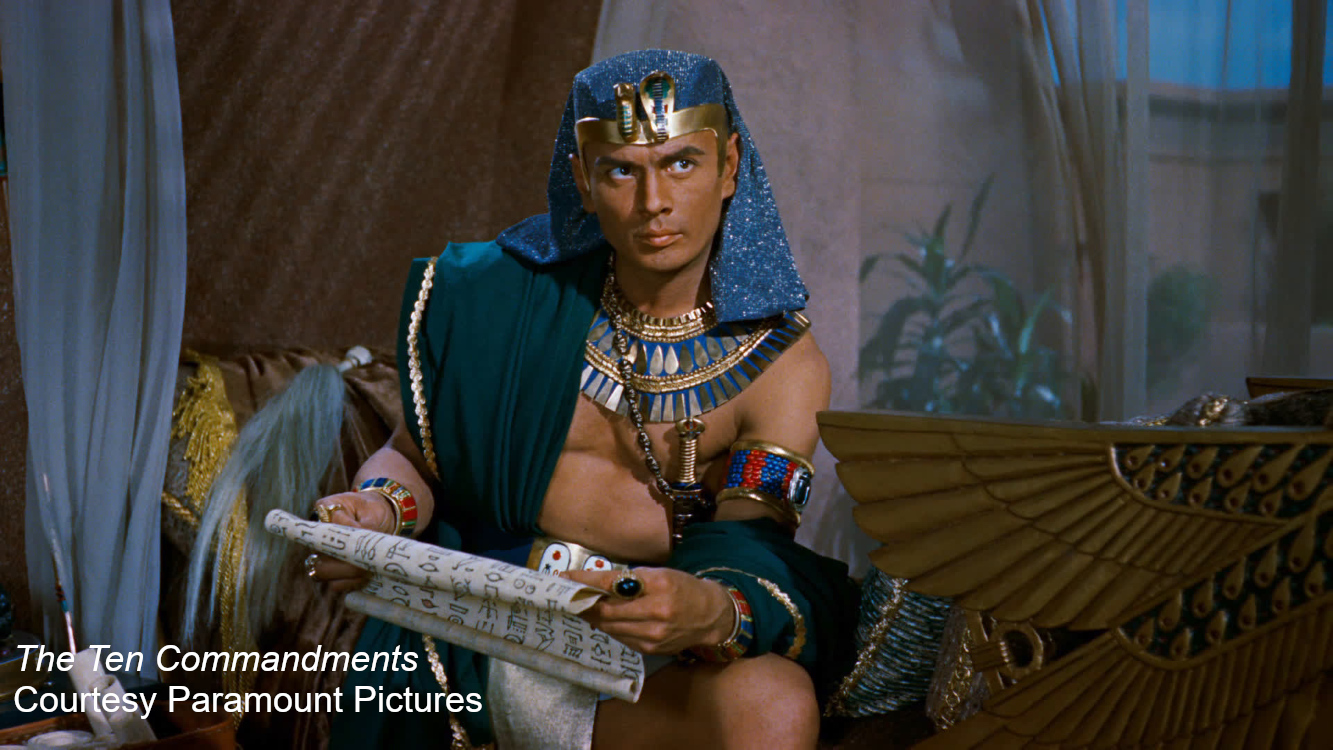
E: Oh, yes.
K: Which absolutely stole that show. But they go out to the city that Moses is in the process of building in Seti’s honor. And Seti’s upset because he called for Moses, but Moses is too busy with this project to come to him. And he has to explain to him, well, you know, we’ve got this… We’ve got this giant obelisk that we’re in the process of lifting into position. It’s an incredibly sensitive point in this building process. There is just no chance I could leave. If I did and we had to pause now, we probably would have broken the stone. And the climax of this scene is them, you know, the thousands of Hebrew slaves are on their ropes and have their axes and their hammers. And they all are being coordinated by the Egyptian taskmasters. Everything goes into action. And you see this gigantic stone obelisk lift up in place. It’s a model, obviously, right, but—but my god it looks incredible. Like, even now I think—I think it—it still stands up with the way that the stone sways, you know, back and forth a little bit as it’s settling, and—and then, you know, he pulls back the—Moses pulls back the curtains to reveal to Seti just this—this enormous, monumental, royal city that he’s that he’s built for him. It’s an amazing scene. It’s brilliant.
E: Have you seen Hail Caesar?
K: Is that the newer one with…
E: With the Coen brothers and it’s George Clooney being kidnapped by communists?
K: Yes, yes. It’s on my radar. I haven’t actually sat down and watched it yet. It’s about this era of filmmaking, right?
E: Yeah, George Clooney, at the time that the film is set… his character is making a biblical epic where he plays St. Longinus.
K: Oh, right.
E: And he’s playing, he’s in goofball Clooney mode.
K: Brilliant.
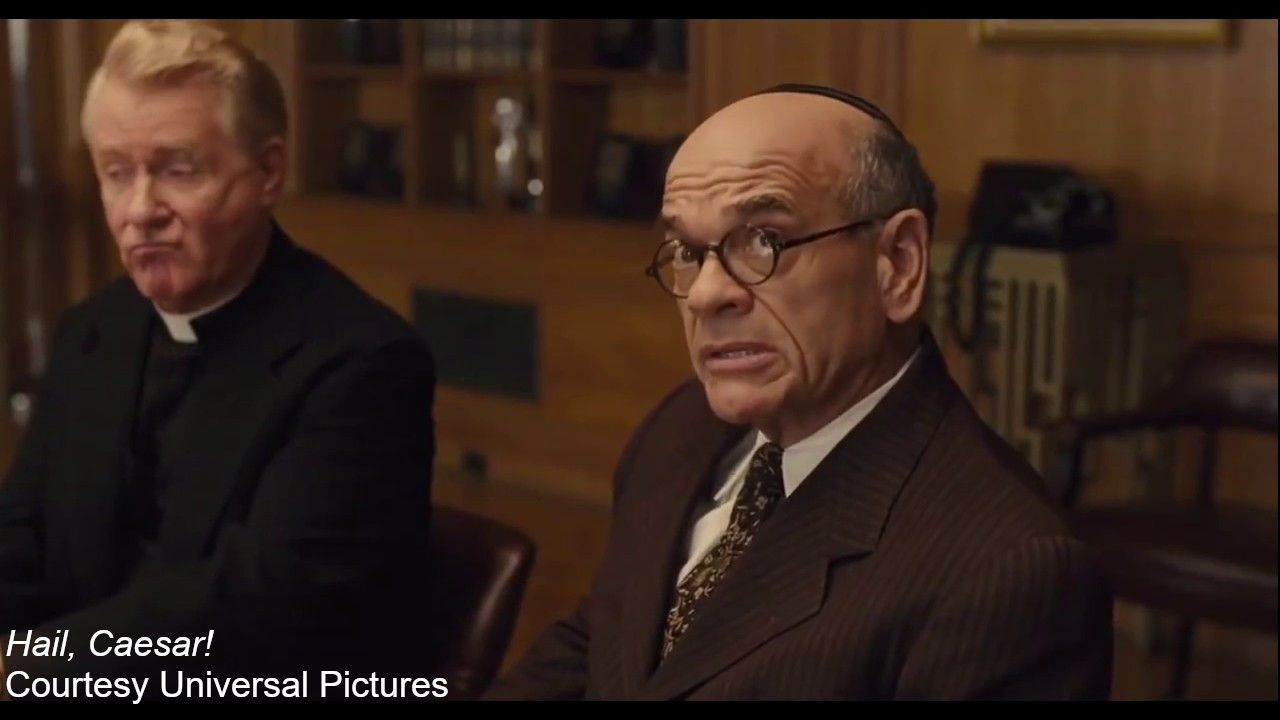
E: And it’s so funny. And Clancy Brown standing there just, and they’re trying to get this scene right. And there’s a scene in the movie where the studio executive, Josh Brolin, is talking to a bunch of priests and ministers from all sorts of different sects of Christianity to try to make sure they’re not offending anybody. And there’s this one rabbi who’s just like, we don’t show God. I don’t know what to tell you.
K: Yeah.
E: The rabbi’s like, I don’t even know what I’m doing here. This is a movie about Jesus, right?
K: Of course.
E: I mean, shoot your Jesus movie. I don’t care. It’s a fantastic scene.
K: I will definitely have to check it out here.
E: But it does get into how much of a production those movies really were.
K: Yeah. Yeah, they really were. Back when you could afford to do such things, I think.
E: Though on the set of Gone with the Wind, a lot of the extras in that one scene are just dummies.
K: Oh, really?
E: The scene where she’s at the train yard and it’s all the wounded men and the camera keeps pulling back and keeps pulling back and you see more and more and more wounded people, about half of them are dummies. And the job of the extras was to nudge the dummies so they were moving too. So it didn’t look as much like it was a bunch of fake people.
K: For sure.
E: So.
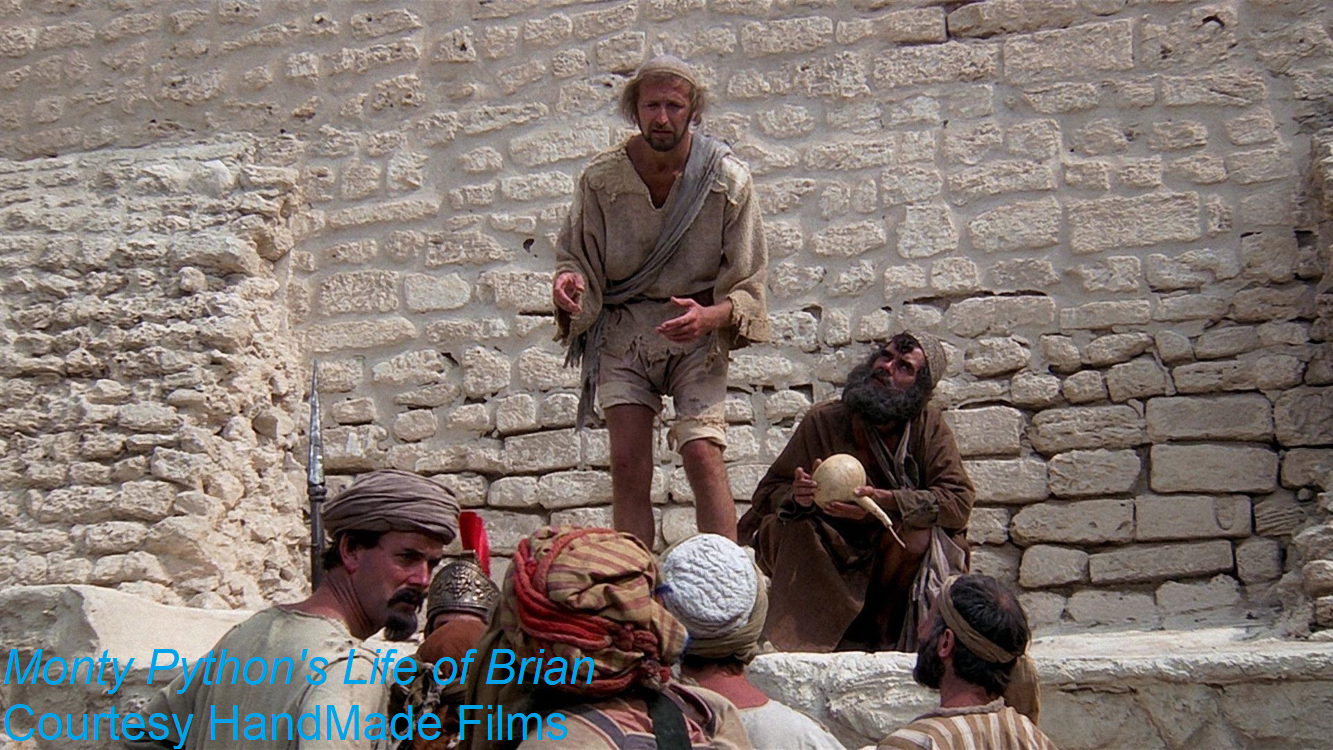
K: You know, I think… So, yeah. Definitely just on the nostalgia and the marvel factor, The Ten Commandments is maybe still my favorite. But, you know, in terms of… In terms of… I guess… My… my evaluative criteria as a scholar when it comes to film, of course, as, as shifted in terms of how I enjoy these things nowadays compared to when I was a kid, right? So, you know, I think now there’s—there’s a few films that I—I have enjoyed and I continually recommend just as I think—and it, you know, because my—because my enjoyment of them is on this other level, some of them are not the best quality pieces of art either. But I find a great deal of value in them. So I think it’s important to mention a few. First and foremost, which is a phenomenal film, as well as an incredibly clever film, is Monty Python’s The Life of Brian.
E: Oh, yes.
K: And I wouldn’t doubt if you polled critical biblical scholars on this question, this is the one that likely comes back at the top of the list for most of them. I’ve talked about this in some of my public work before, but people should be aware that there, and I believe this is the only one of its kind, but my friend and colleague from King’s College London, Joan Taylor, I guess going back fifteen years now, actually organized an academic conference on The Life of Brian, just out of a strong appreciation for how much Biblical scholars are in love with this film. She invited other scholars to—to come and to give papers. The highlight of the conference was an appearance by John Cleese at a panel, right, to answer questions about the film and about working with the teams of scholars that they did on the film. And Joan Taylor’s, she’s a—she’s a brilliant scholar, and she’s—she’s, you know, widely polished and very well known, but we’ll talk actually quite a bit about having the chance to sit down at dinner next to—next to John Cleese, right and, you know, it just—it’s so—this is—this is probably the one I think that captures the attention of scholars. In large part because it does such a phenomenal job of capturing the reality of Roman, of Judaism in the period of Roman Palestine, but through satirizing it. And it’s just so well done. The apocalyptic motifs are one hundred percent on point. The illustration of the political cultural climate of the city of Jerusalem I think are entirely on point. Of course, you still have to keep your tongue firmly planted in your cheek through all of this, but—but if—if you can do that, you—you—you can watch this—this movie and—and come away with just this enormous appreciation for how much thought and work on the part of the Flying Circus guys went into crafting something that they wanted to be historically faithful while telling just a really hilarious, great story. And the other part of this that is, I think, kind of remarkable is—and you call it, in some ways, I think it’s tragic. But it’s sort of amazing, too. Again, as a kid growing up evangelical, this was a—this was a film that was that was definitely off the list. Now, for a long time, and this is—this is a common evangelical experience, the only Monty Python any of us ever knew was from—the one from the first film, The Quest for the Holy Grail. Because there’s no nudity and there’s no objectionable content. It’s just absurd and kind of silly.
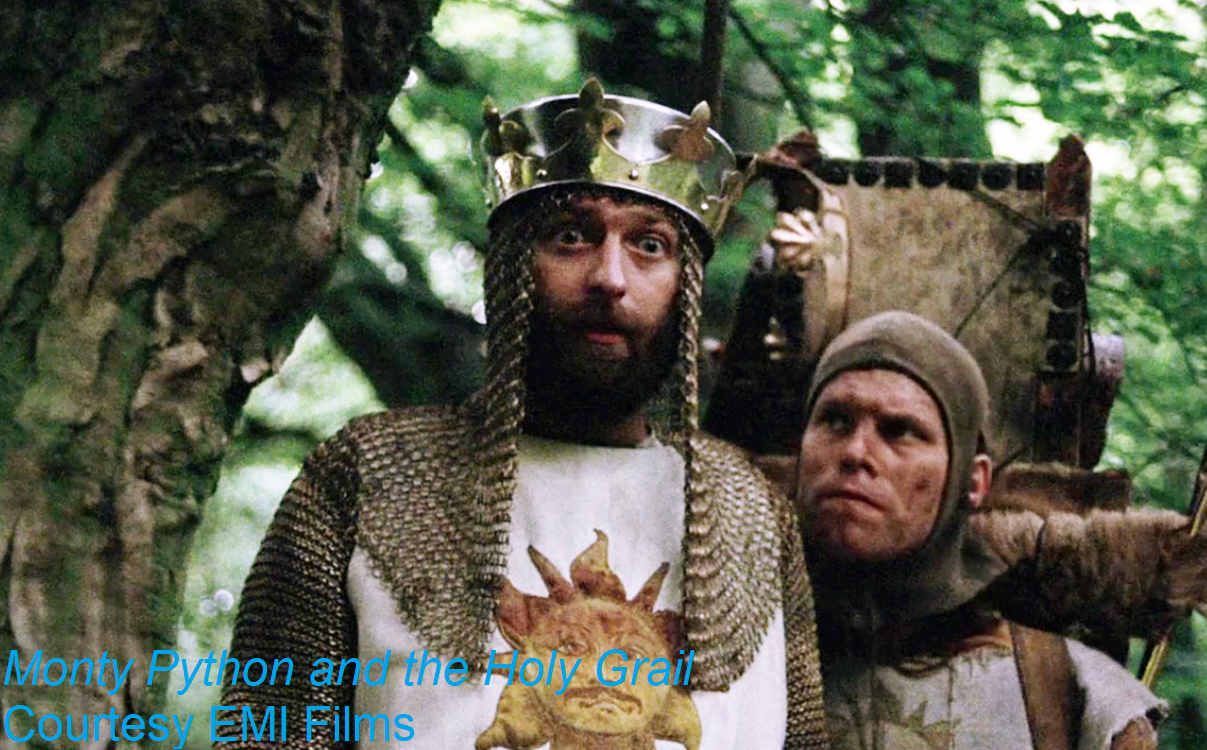
E: Castle Anthrax gets a little…
K: Yeah, yeah, yeah.
E: But I think it’s easy to miss some of those jokes if you’re not…
K: It certainly is, right? So that’s what I was familiar with growing up, right? And I distinctly recall finding… Because I love… Quest for the Holy Grail. When I was older and my parents were not—the reins were loosening as I got older towards the end of high school. My buddies and I were at the video store and found it. We’re like, wow, yeah, we love Monty Python. This is cool. Let’s watch The Life of Brian. And it’s hilarious, right? And I remember feeling like, yeah, well, I mean, there’s a number of scenes in there just with the nudity and the sex stuff that I could understand why my parents weren’t permitting me to watch this.
E: The scene where Graham Chapman opens the… That was the first time a lot of those people had ever seen a naked man before. So that reaction was a little… Yeah.
K: All my friends were guys. So, you know. It was like… It was hilarious to us.
E: He opens the shutters, and that crowd is a lot of relatively sheltered Tunisian women in that crowd, and they had never seen a naked man before, and look, it’s Graham Chapman.
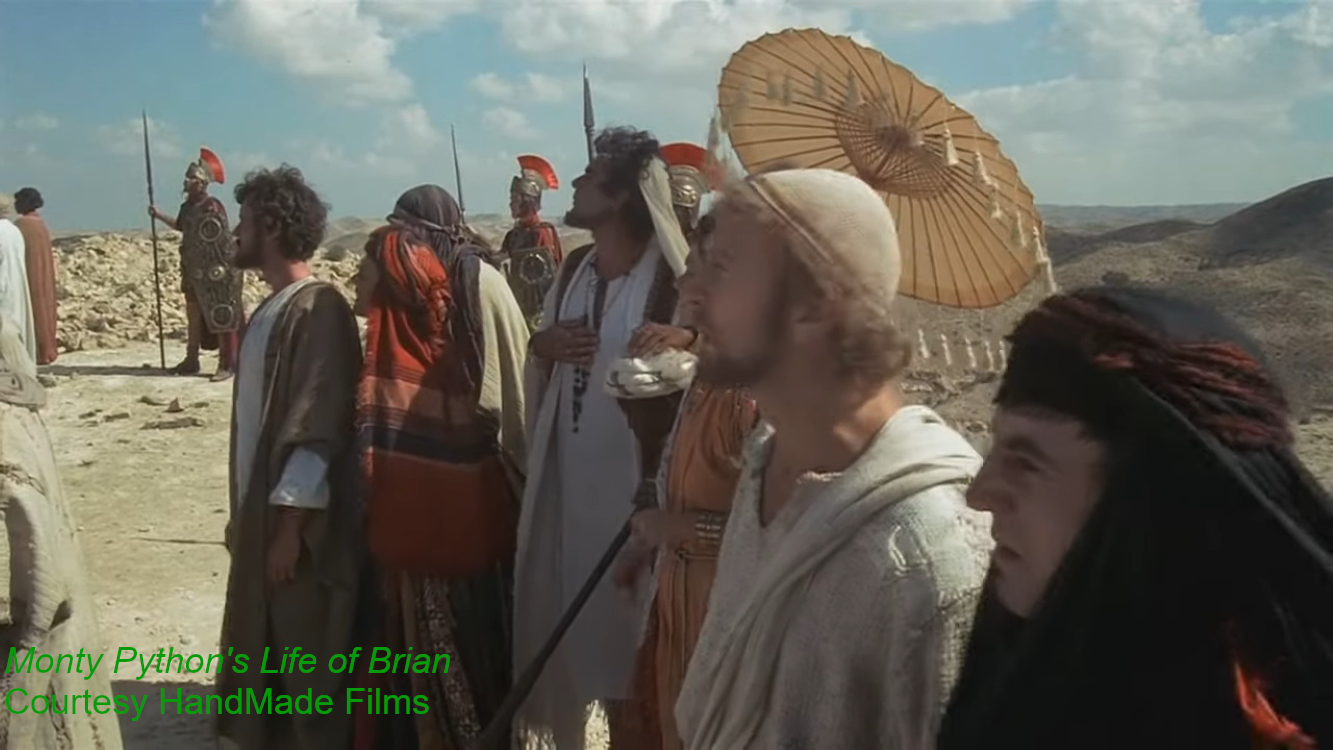
K: Look, it is. There he is. Oh, man. Incredible. But even as a thoughtful… well, I—I guess thoughtful for—for like a seventeen-year-old high school boy. I consider myself kind of thoughtful. Even as a thoughtful seventeen-year-old boy, I could—I could watch some of these scenes, and, you know, I—I was always a Bible nerd, too, so you know this plays into it. I—I knew some stuff early on, but I watched some of these scenes, and I could see, like, I—I think I can understand why this is—this is a film that my parents wouldn’t want me to watch, and after the fact, I found out how angry when it first came out this film made Christian establishments. And in retrospect, this is where I thought it was kind of tragic, because I think that’s the other side of this, is how much it felt like the Money Python guys were straining to make something that they could in fact publish and not—like they, I, you know, I, I think, I think they were, they were doing their best to thumb their nose at the church, but in such a way that, you know, hopefully no one’s going to take it too seriously. Like. You know, it settles on the fact that this was a story about how silly… Jewish apocalypticism was in Roman Palestine, and how silly Romans are, and how silly Orthodox Judaism, I can’t use that term, sorry, how silly their impression of mainstream Judaism was from that period. You know, these are all the big… themes of this film. This is not—so this is what the film is about, so it’s—it’s tracking on the edges of, which is part of what makes it so brilliant, too, it’s—it’s—it’s walking on the edges of life and teachings of Jesus, the context of Jesus, without diving right into the life and the teachings and the context of Jesus, to the point where he makes a single appearance, I believe, in the film, in which Brian and his friends are in [the] distance, you know, at the back of the crowd, listening to the Sermon on the Mount. And it’s—the portrayal of Jesus in this scene is very respectful and ordinary—like, relative—I mean there’s tons of films made about Jesus. If you compare—remove the crowd from The Life of Brian and everything else about that scene looks exactly like every other film portrayal of the Sermon on the Mount. But it’s just a real life, it’s just a real life funny, what’s the word I’m looking for? It’s just a real life funny retelling of what it must have been like if the crowd was that big. I mean, you’re so far back, you’re being distracted because, you know, there’s people there like Brian and his insufferable mother who can’t shut the fuck up. Sorry, am I allowed to say that? I’m sorry. Is it happening now or do I—
E: The joy of prerecord is that if we have to, we can bleep things.
K: Okay. All right. Okay. But I’ll stop. I won’t.
E: We don’t need a fund.
K: Oh. Very good. So, but, you know, these annoying, obviously there were annoying people. If the crowd was that big, there’s annoying people in there who won’t shut up. And because they won’t shut up, you can’t hear what he’s saying. And you’re going to think maybe he said, blessed are the cheesemakers. That’s strange. What’s wrong with the cheesemakers? Don’t they deserve to be blessed? Why not the cheesemakers? I mean, it’s brilliant.
E: Well, yeah, and there’s no microphones.
K: No.
E: So you can’t hear what he’s saying anyway, because he’s like more than ten feet away from you.
K: Yes. And this is the thing about The Life of Brian, right? They got… They got absolutely hammered by the Roman Catholic Church and the rest of the Christian establishment for the mockery. And in their responses, they continue to come back to this point. They’re like, guys, why don’t you get this? How do you not understand what we’re doing in this film?
E: Well, you know, I myself was raised Catholic, and I saw that movie. I don’t know if my mother’s ever seen it, but that’s because she doesn’t think Monty Python is very funny. British humor is not my mom’s jam. But, you know, the funny thing to me is, in a way, it vaccinated me against ever going for mythicism. Because of the portrayal of first century Judea, it’s like, there were a lot of guys like Jesus wandering around first century Judea. This just happens to be the one we still know about.
K: Yeah, right? And when you track the life of Brian, all the way to his untimely end. You know, of course we don’t know more about the actual historical Jesus.
E: Yeah.
K: Because we know nothing about the life of Brian beyond what the Monty Python crew were somehow able to salvage from those lost ancient sources.
E: Yes. Yes. The historical documents.
K: Yes. Yes, exactly. Those Roman records.
E: Yes.
K: Very meticulous record keepers, you know.
E: People called Romans they go home.
K: Yes. But it must be in three languages to make sure that you get your Latin diction absolutely correct. Because, I mean, come on, guys. We’ve been here for sixty years now. How do you not know Latin? By this point. So, yeah. So, yes. Life of Brian… easily just the best in terms of representing life, culture, and history. And it happens to be some of the best satire and comedy out there. So it’s got to be at the top of everybody’s list. But—and I will also mention another Jesus film, which is The Last Temptation of Christ, which is not, not at all, a strong historical portrayal of Jesus. Not at all. This is a work of historical fiction. And the story, I will confess, is a strange story, in my opinion. A pretty inventive story. And I guess I can appreciate it on those lines. I’ve never read the book. I don’t know if you have.
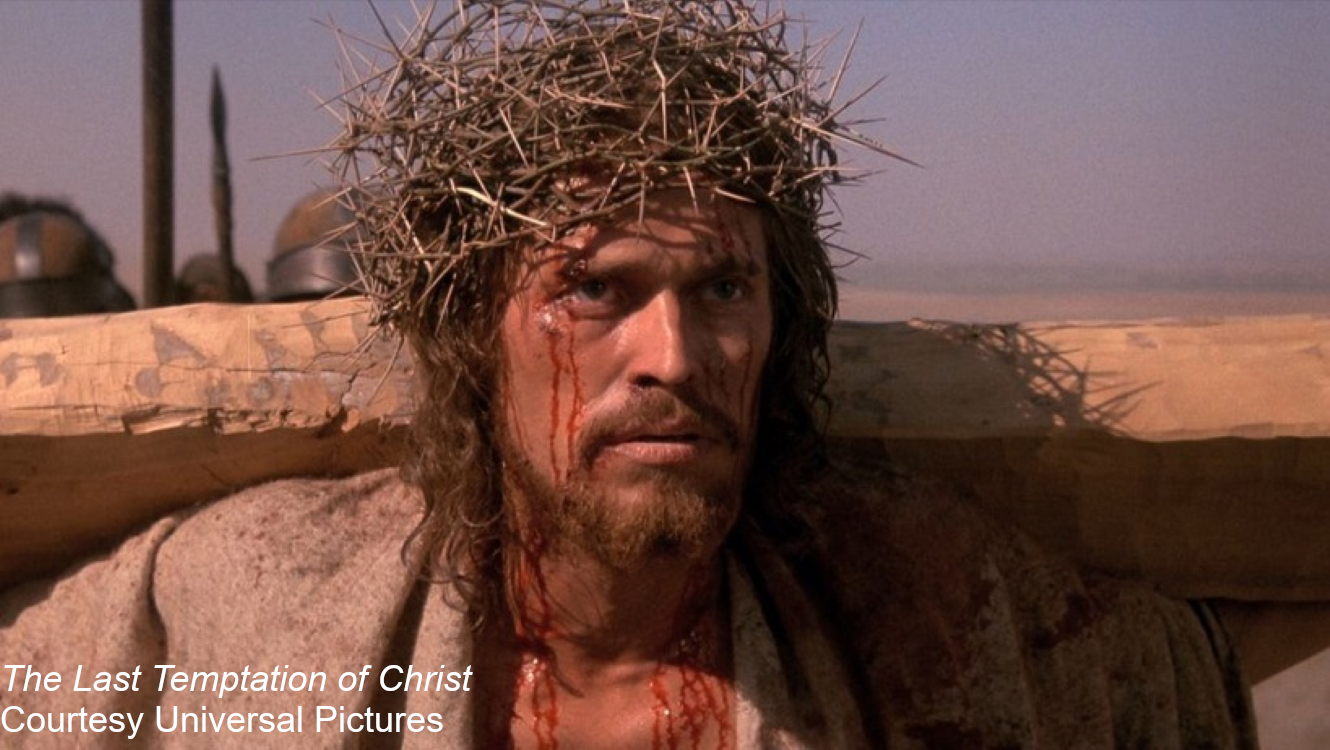
E: No, I’ve seen the movie, but I haven’t read the book.
K: So, and I thought, you know, when I watched the film, the first time I was watching it as a staunch critic. So my entire focus was—was set on, you know, trying to find everything wrong with, you know, a film portrayal—excuse me—of Jesus and not not also, you know, my fault, my bad for failing to grasp what—what the—the author—I can’t remember his name—
E: Neither could I.
K: We could look it up quickly, I guess.
E: It’s like the internet exists.
K: It does. It’s Nikos… It’s a funny name.
E: It’s Greek. That’s what I remember about the author name of The Last Temptation of Christ.
K: That’s right.
E: It’s by a Greek guy.
K: So it’s, wouldn’t you know, of course the film is what comes up first always.
E: Of course.
K: That’s it. Nikos Kazantzakis. Sorry, Nikos Kazantzakis.
E: Yes.
K: I’m—Stephen Nelson, from Cross Bible ever watches this, he’s going to, I’m going to hear from him about my Greek pronunciation, but it’s, it’s, it’s really, really terrible. But so I, like, I didn’t understand what the author, I didn’t read the book. So I had no, I no grasp of what he was trying to do. So you know, I–I looked at it very critically. I had the chance to to watch it again, and after I had had some exposure in my, I think I was in my graduate program by this by this time, in critical Biblical scholarship. I had the—I had the chance to, to watch it again and gained an appreciation for—for a couple of things. The cast is excellent.
E: Oh, yes.
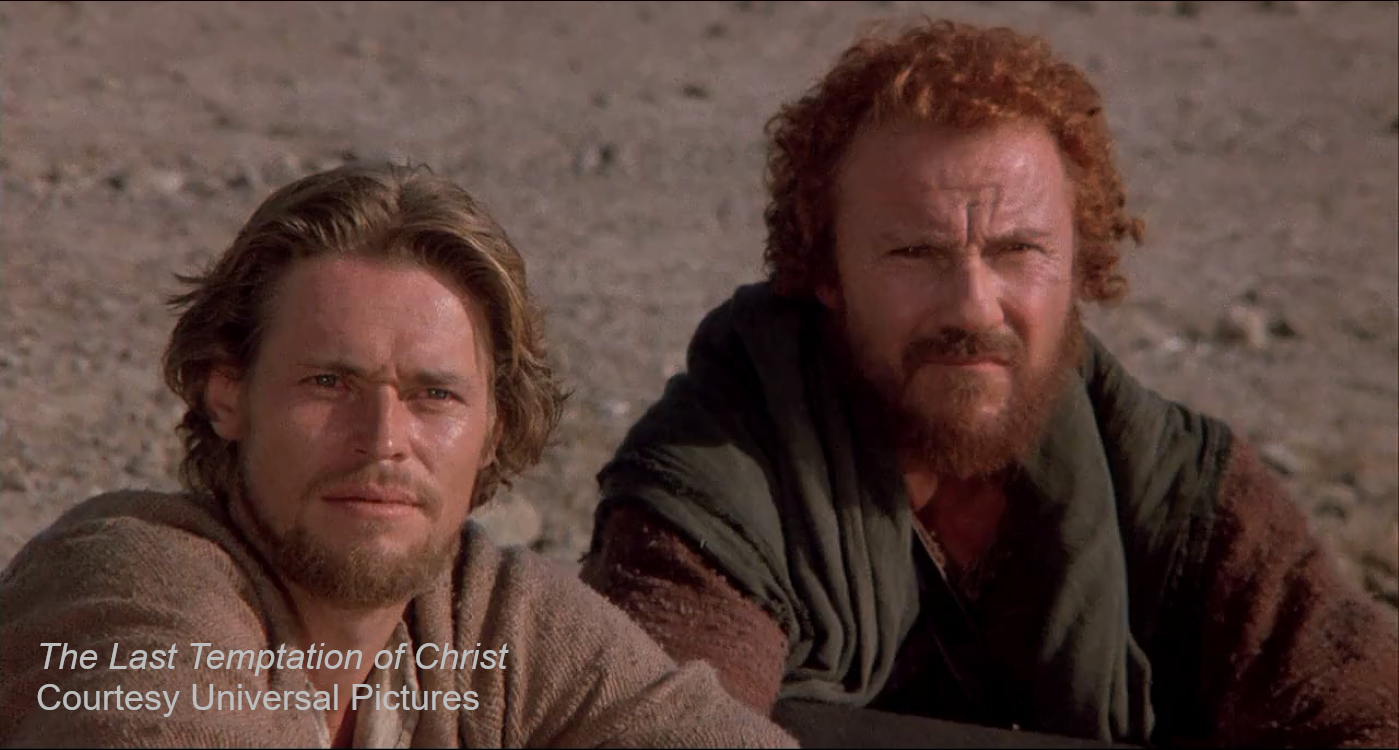
K: Harvey, Harvey Keitel and Willem Dafoe I think maybe to this day is my favorite film portrayal of Jesus. I think he’s excellent. And I think he humanizes the character so well in so many ways that you can’t help but relate to this guy. Relate to… And maybe that’s… I mean, this isn’t why people were uncomfortable with this film. But I think maybe part of it is in that fact, right? I think there’s this sense that you’re not supposed to relate to… a human Jesus. As much lip service as Trinitarians will give to the—the human part of the Trinity, the humanness of Jesus, it’s lip service. No one actually takes that seriously. No one actually—in, you know, I think the outworking of—of their theology don’t believe Trinitarians ever spend nearly enough time reflecting on this, which is why a portrayal like Willem Dafoe, a fictional portrayal like in The Last Temptation of Christ continues to make people just enormously uncomfortable with the fact that Jesus was a man, Jewish man who lived and died on Earth. And so I really appreciate that one for that. And then I’ll change gears here in a jarring fashion and mention one more. And it’s not a great piece of art, I don’t think. But I also think it’s probably underappreciated on a lot of levels. That’s the film by Darren Aronofsky. Noah from it’s gonna be, what, 2006 now?
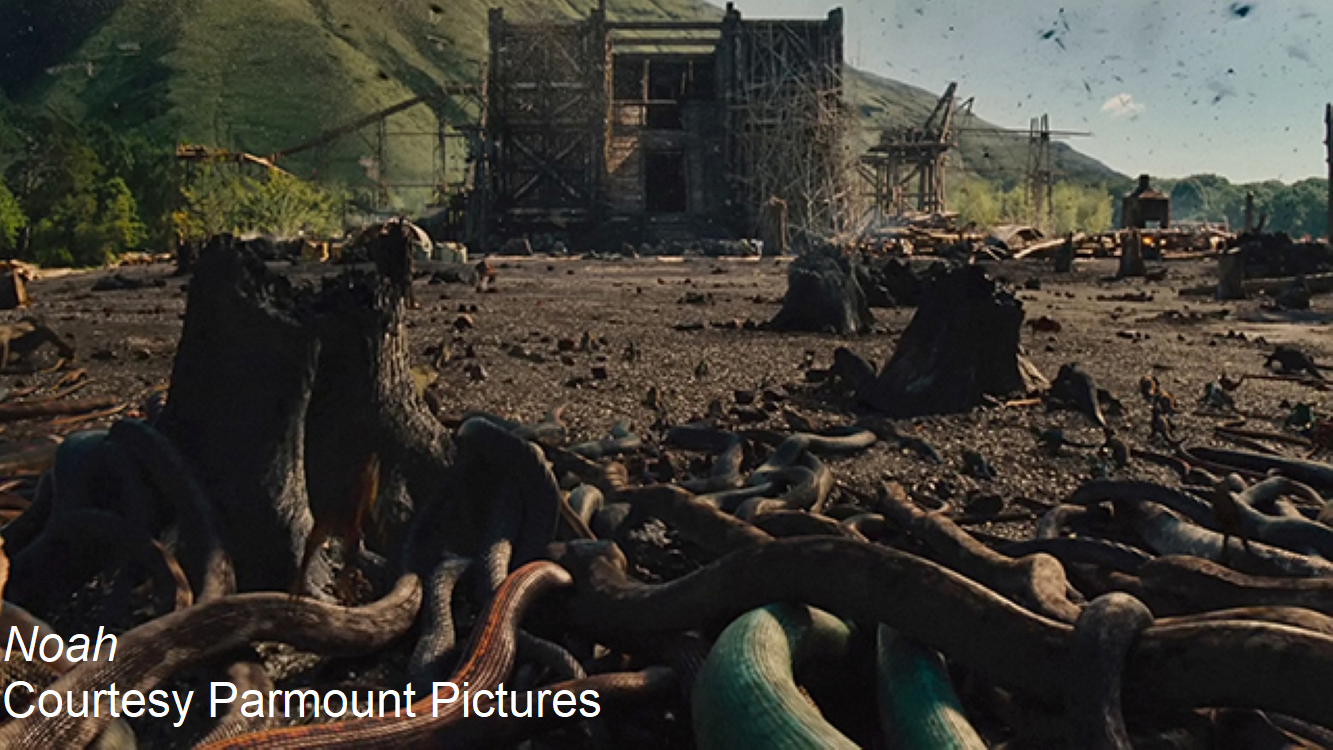
E: Something like that.
K: Yeah, yeah, so, and again, of course, this is—this is the film that that a lot of people really hated. And a lot of people hated it for different reasons. Of course, evangelical Christians, conservative Christians hated this film because this is a wildly inventive retelling of the story of Noah.
E: Well, sure, no heat problem.
K: There’s no heat problem in this film. That is true. Now, I think a lot of artsy types didn’t like this film either. Lots of film critics didn’t like it. I think because some of the structuring, in terms of how he was trying to tell this myth, get clunky, and I don’t know if that’s much a part of, or the—the—the fault of Aronofsky, the filmmaker, as it is in the dramatic challenges of translating ancient mythology and—and to be fair, this isn’t, this isn’t strictly ancient mythology, this is, this is ancient—this—this is like a, like a—a modern version of ancient mythology. This is—this is Aronofsky’s construction of the story of Noah based on—not purely the Biblical story or even, you know, one of the sources of the Biblical story in the so-called J or—or I should say maybe the P or non-P version—that’s the priestly or non-priestly version of the story. It’s not strictly that. It’s a version of that, but then also blending in elements from the Book of First Enoch and even a little bit from the Atra-Hasis myth. And then, you know, set in such a way to make it, I mean, I guess I’m struggling even to say the word historically. But I guess realistically relatable, maybe that’s a better way of putting it. So just an impossible task, I think, in building this film. But I appreciated enormously just because as much as, as Aronofsky did some, some things like, you know, let’s solve the problem of how to, you know, keep animals in an ark for, months on end by just, you know, formulating an ancient medicinal concoction to put them all to sleep.
E: Sure!
K: You know.
E: There are evangelicals who will who will claim that one.
K: Yeah, right. Let’s, you know, but it’s that sort of thing. There’s—there’s stuff like that in the film. Let’s explain Noah’s divine encounters in the same way. That—that he was just tripping out on—on psychedelics most of the time, so there’s that, and—and it’s that kind of stuff I myself can do with less of, but then this is kind of set against the other side of this film, which is, you know, rock creatures descended from angels who fell out of the sky, who constructed like this pre-industrial world—pre-industrial, or how do I, this primeval industrial world. Right? That basically caved in on itself. There’s, you know, mythical creatures in the film. And in one of the earlier scenes, Noah is offering a sacrifice. I think. It’s been a while since I’ve seen it. He’s either off—no, he’s offering a— Now I have to think back. No, he’s rescuing a creature from being sacrificed by the horribly wicked industrialized people living in this hellish post-apocalyptic primeval world.

E: Antediluvian.
K: But it’s antediluvian, right? And this creature is a tetrapod with feathers of many colors that has sort of a serpent’s mane and long— It’s like nothing anyone has ever seen before, right. It’s a—it’s a mythical beast, so Aronofsky leans hard into it presenting this, like, this is a myth, people, this is—this is mythology. These are fantastic worlds. This is what this story is and then he’s—he’s, I think turn this story kind of on its ear to tell to do what mythology should do, which is to to help us to learn and to know things about our own world and our own circumstance. So for Aronofsky this film is all about, you know, environmental degradation and the—the—the natural existential crisis of climate change that we currently find ourselves immersed in. So as far as I’m aware, it may be a one-of-a-kind cinematic work which has tried to basically take the story and structure of an ancient, very popular myth and basically turn it into a modern myth. To do what myths were supposed to do in the first place. And I think I just can’t help but appreciate it on that level. And there’s other really cool elements in the story. One of my favorite parts of this film is once the Flood erupts on the Earth and the Ark is lifted onto the waters, there’s this amazing scene in which Noah tells the story of Creation to his his children and his family gathered in the darkness inside the ark. Remember there’s only one window in this, right, in this boat, right. It’s dark. There’s—it’s constantly dark, and he tells the story of Creation in the space of four or five minutes, but it is absolutely worth seeing even if you don’t see the—the film, go and watch that, because it’s—it’s honestly just an incredible blend of Biblical narrative, modern science, and great cinematography. I don’t know if you’ve seen the film, Gillian, but it’s…
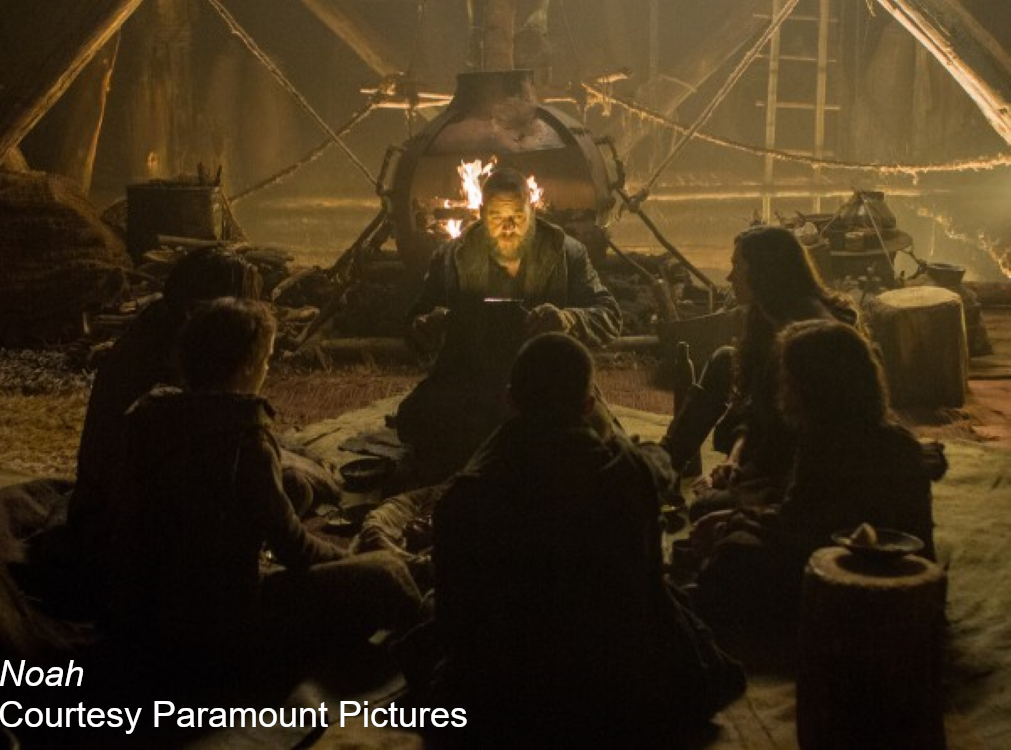
E: I have not yet, no.
K: Wow. Like, if I—I recommend you go watch it, but—but if—if not that then check out—you should be able to find it. I’m sure someone has uploaded just this scene on YouTube. Just—just go and—go and watch—go and check out Noah’s story of creation from the film Noah. I think it’s brilliant. It’s really amazing. It’s about five minutes long. Anyways, yeah, so I guess those are my favorites.
E: All right. So then there’s the other side of the coin. Which ones that you’ve seen do you think are the worst?
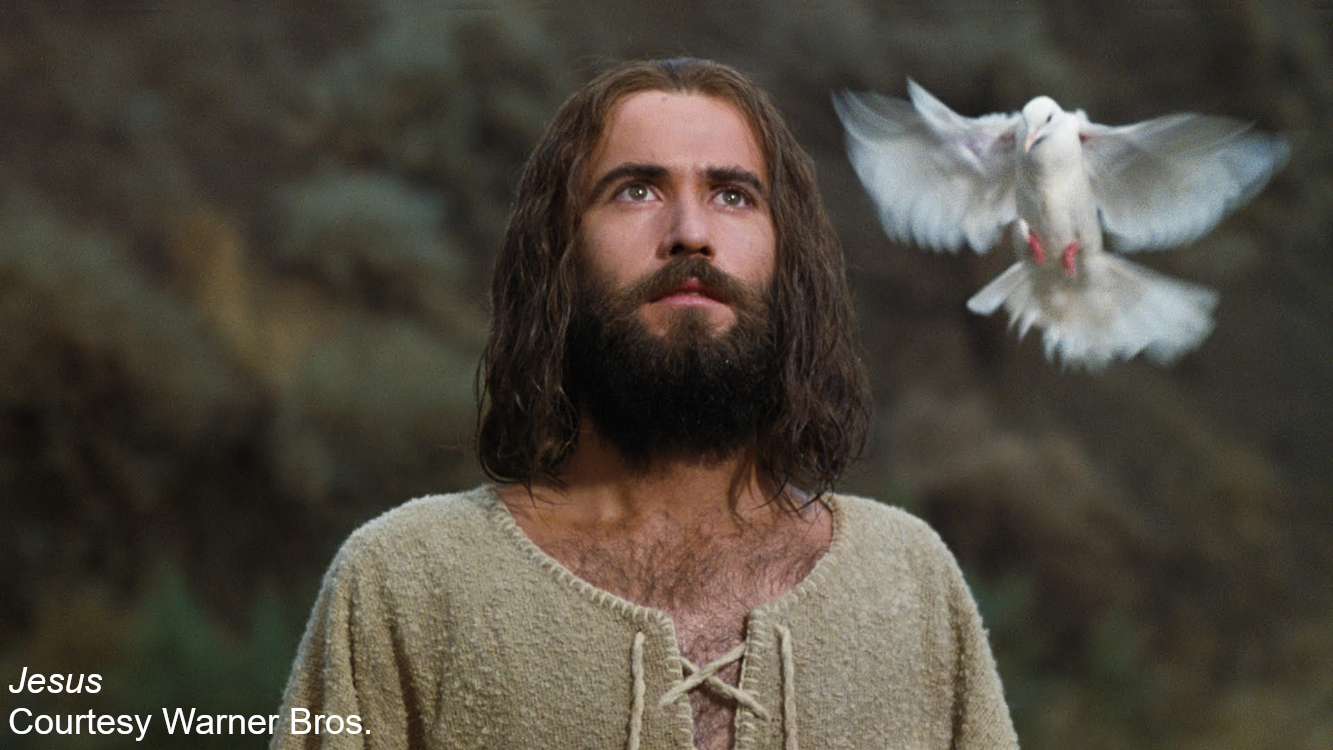
K: Which ones do I hate? The Jesus film is really, really, really, really bad. Like, really bad. It’s so bad. You can tell that it was made by evangelical propagandists. For the purpose of propagandizing. It’s that bad. So for anyone who doesn’t know, you know what the Jesus film is, right?
E: I think I know what the Jesus film is, yeah.
K: Yeah, so the Jesus film is a movie that was made by and for missionaries. For the purpose of going into non-Western cultures and presenting the Gospel story. And they chose to do a I think it’s thirty, forty minute film presentation reenactment of the life, death, and resurrection of Jesus as told by the Gospel of Luke. And they stick very closely to the English translation of the text of Luke in this story. So everything that Jesus says is taken straight out of, I don’t recall which English translation they use, but it’s taken straight out of that, but then they’ve, they’ve translated it in like, you know, a hundred and fifty languages or something like that. So, and I expect they used where they can, you know, the—the—the most prominent translations in whatever those languages are for the actual words of Jesus. So, I mean, that one, it’s quite terrible. And one of the… So, you know, one of the… I guess I’ll say, I think one of the reasons why I… I hate it so much is because I’ve watched how this works in real time, too. I saw the Jesus film in our church as a teenager, and it was because missionaries had come to our church to show the film in order to raise money to be able to ensure that people everywhere could see the film. So this was a fundraising drive, and the second time I saw the film, I was actually on a short-term mission in the Amazon rainforests of Brazil.
E: Oh, wow.
K: Yeah, and the group that I was with, it’s not so dramatic. We were visiting a village on the Amazon, but one that has pretty extensive local contact with the rest of—of Portuguese-speaking Brazilian society, right, so—so this is—this is not an isolated village. It is, you know, far. Like, we—we had to—we had to go down the Amazon on a riverboat for twenty-five hours to get there from the—the city of Santarém, which is on the, at the intersection of the Tapajós River and the Amazon. So you know, we were already way out, you know, in—we’re far away, I should say, from the roads. Any—any kind of that sort of access. You could only get to this place on the river. And the missionaries that we were with decided that for the one evening they were going to do like a film night. And so they were going to show the Jesus film. Sorry, no, this was over two nights. So the first night they showed, and people from the village were very excited, because it’s movies.
E: Mm-hmm.

K: That’s—that’s—that’s—that’s what gets the people out is, you know, the chance to—to watch movies, to see this amazing technology. To have this—this incredible experience, right. So the first—the first film that they showed the first night was—it was just a—a—a videotape of this group called the Power Team, which was like Christian bodybuilders. It’s as terrible and as absurd as it sounds. Securing the power of Jesus through the Holy Spirit to lift weights and to break cinder blocks with their foreheads. It’s incredibly dumb. You know, and I’m like, the whole time I’m like, why the hell are we watching? It wasn’t even in Portuguese. It was in English, right? What the hell? What the hell is going on? So that was the first night. The second night they showed the Jesus film. But, and this was all—and—and they, you know, there wasn’t a—a huge crowd. I think there was—there was maybe, forty or fifty people from the village who came out that first night, right, and the second night they were going to show the—the Jesus film, and there must have been over three hundred people, you know, there to watch it. And they, again, did not have a Portuguese-translated version of the film.
E: Despite that being the whole point.
K: Right? So they showed an English version. Right. But for some reason thought that it was important that people heard the English dialogue. And they didn’t have adequate sound, which was fine. It was fine when there was only thirty people, right? But now it was like a big group. They had like an amplifier connected to a microphone that they held up to the speaker of the film projector. And then—and then—somebody got up, you know, after the film was over and preached the gospel in Portuguese for ten minutes. And it felt like the entire village, you know, converted on the spot. And I was just… I don’t know. In the moment, I’m like, this is really kind of gross. But I, you know… It felt like, you know, I had seen the film in English, so I knew how bad it was from, you know, an artistic perspective. And the story behind it and, you know, the whole fact that it’s just this evangelical vehicle, you know, it does all of this. This had already kind of had me looking sideways at this and then to be there to watch this. Just gross—it was just gross, so, and you know there’s others you know. I think—I think Mel Gibson’s what’s that one called?
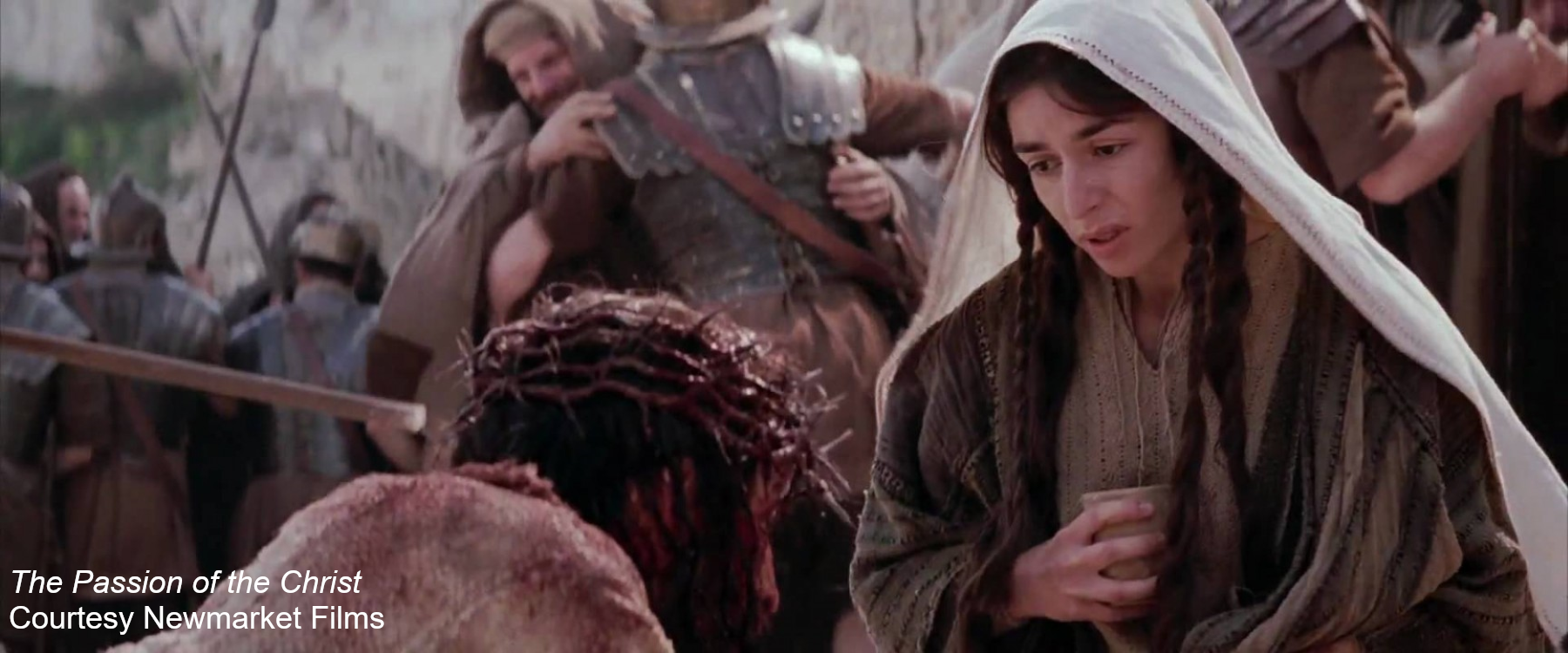
E: Passion of the Christ.
K: I’ve even blocked it from my memory. It’s terrible.
E: It’s so bad.
K: I appreciate the fact that it’s the only Aramaic cinema on the market. And I guess that was helpful for practicing my Aramaic pronunciation, so that’s good, but it’s just, on several levels, it’s just so—so terrible from—from the—the opp—the exact opposite, I think of The Life of Brian. Where this leans into well-worn, terrible, centuries-developed Christian stereotypes of early Judaism, of Roman Palestine, of the life and times of the historical Jesus. And then it marshals spectacle for the sake of spectacle and to enact, in my opinion, an impure way to manipulate the sincere humanity of people. In order to affect a response, you know a—a spiritual response to this story, it’s just, on all these levels, it’s—it’s awful, and now I hear from the Joe Rogan show that Mel Gibson is—is working hard on the sequel.
E: Yeah.
K: Which will apparently delve deep into the history of—of, I—I don’t even know what you call this. The history of the world, the cosmos, as he sees it, where, you know, there’s angels fighting angels in heaven, and I’m like, well, I mean at this point, what the hell are we doing? I—I do not know. I—I expect…
E: It’s like how Walt Disney said that if he’d known that the Davy Crockett show was so popular, he wouldn’t have started out by killing his main character. Clearly, that was Mel Gibson’s problem.
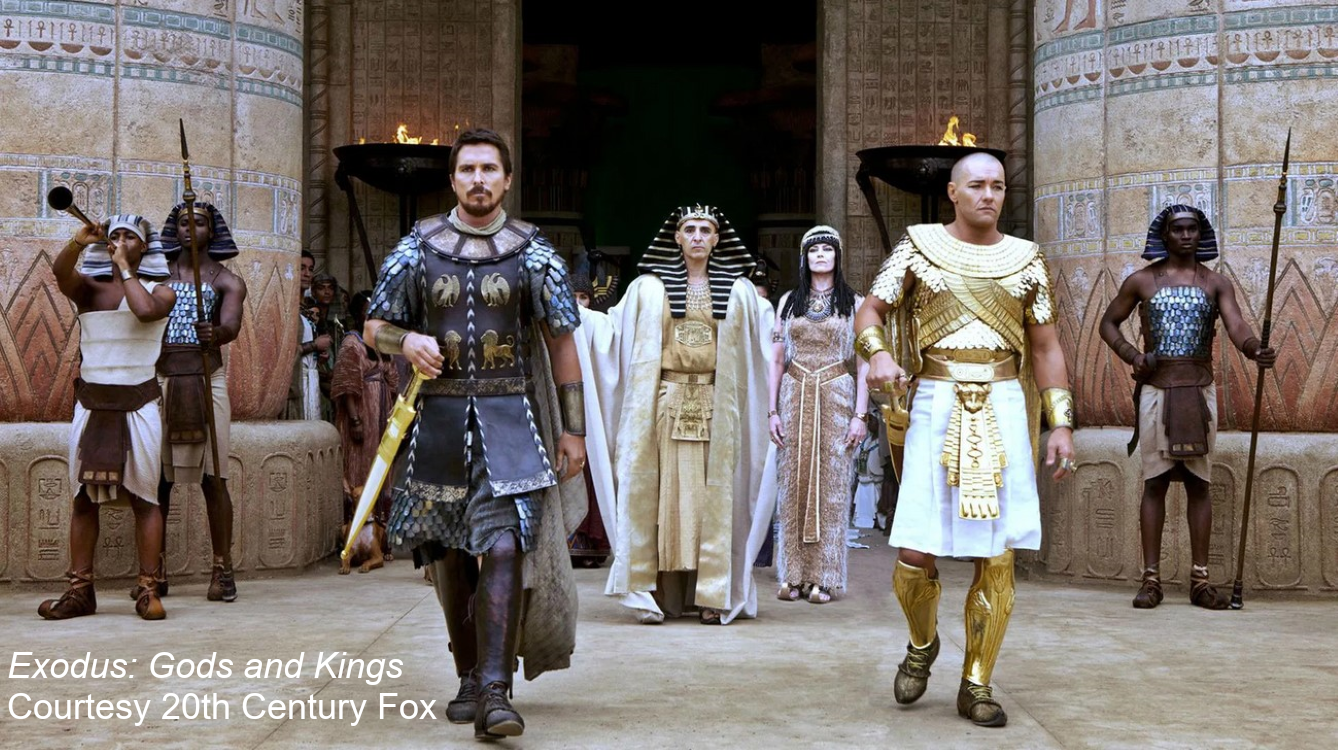
K: Apparently. Clearly, right? Yes. And I think it’s fair to say my anticipation is that if this film ever does see the light of day anywhere, because I expect it will be so offensive that maybe it won’t. But if it does, I expect it will be… Much like the Jesus film is the carbon opposite of The Life of Brian, this will probably be the carbon opposite of all those things that I really appreciate about something like Aronofsky’s Noah. It’s really bad. I really don’t like it. So, but I am kind of a sucker for a lot of these, right?And, you know, I’ll just mention a couple other things quickly. There’s parts of, one I saw recently actually was Exodus: Gods and Kings. I don’t know if you’re familiar with this. This is a more recent one.
E: I’ve heard of it.
K: Christian Bale plays . . . .
E: Yes. Gods of Egypt, yeah. So yeah, I was going to ask you about that one.
K: So I have a small appreciation of some things in that film. I don’t think it’s very good, though. But there’s some things in that film that I’m kind of like… I like the way they did that. One of the things I think I like is… the turn on the character of Moses into someone who is not just a prophet coming to release the slaves, the Hebrew slaves from Egypt, but also kind of in the process of leading a—a coup, a rebellion. He’s a bit of a guerrilla leader, which I think is a good way to go in telling this story if you’re trying to set it in some sort of historical reality. So I appreciate that. I don’t know. You had some questions about that?
E: No, I was just curious because of the whole, let’s have all of the Egyptian gods be played by white people.
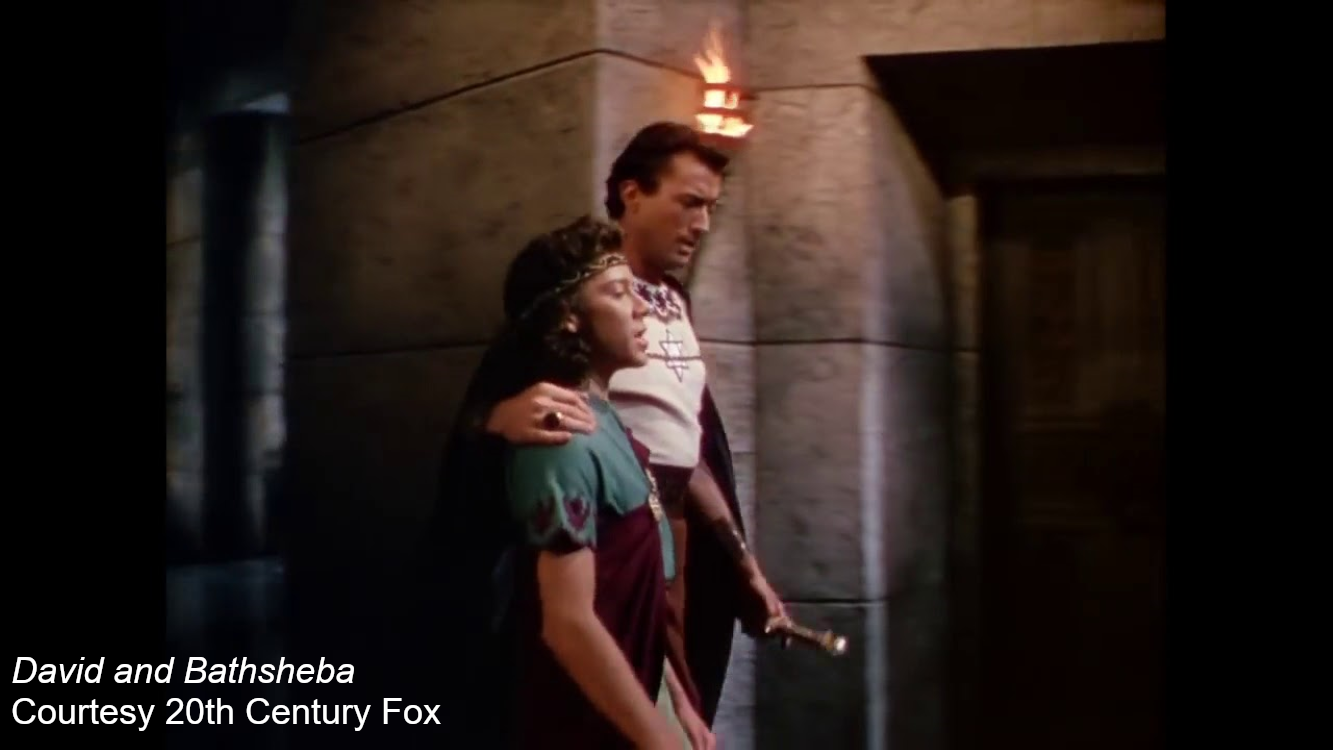
K: Oh, yeah, of course. Yeah, yeah, there’s all of this kind of stuff is always problematic. And on the other side, you know, there was a Netflix one made in three parts about Moses that doesn’t have that problem, but unfortunately is… just, it’s just really bad, campy, poor production film that’s hard to watch, right? It’s, you know, it’s so challenging to find anything that just hits on all cylinders. But yeah, and then, oh, I’ll throw another one here. And this belongs on the far end of the camp spectrum. That’s the Bible epic of David and Bathsheba. I don’t know if you’ve seen that one.
E: I haven’t seen it, but I’m aware of it.
K: Oh, God. Yeah. So I mean just to give you—this one—this one was definitely made on a budget, because everything is filmed on a Hollywood lot which is—and those are—it’s hard for me to watch. It’s hard for me to watch movies that were filmed entirely on a—on a backlot or a stage. So right away, it doesn’t have that going for it. And it’s all of the typical nineteen fifties and sixties melodrama built right into it. And then, you know, basic absurdities of historical—historical fails such as it’s kind of—it makes you cringe and laugh as you’re watching. How David’s clothes are all emblazoned with a massive star of David everywhere he goes. It’s—all right, then.
E: In case you don’t know he’s Jewish, I guess.
K: I guess so. I really, I think, and this is, I mean, this is probably—probably halfway faithful to the text of, and the text and the intention of the Deuteronomist, who wrote, or at least was the one of the last people to have his heavy editorial fingerprints on these—these stories of David, but this is maybe halfway faithful to the Deuteronomist who really wants to elevate the House of David at the expense of the House of Saul. This is one of the purposes of these stories, but in film, this—I don’t know if that was the intent. I kind of read it as just a way to elevate and sanitize the relationship—“relationship” here, right? This horribly flawed, romanticized version of, you know, David and Bathsheba in in an effort to elevate that—was that a doorbell?
E: No, that was that was my phone. I got a text. Forgot to turn it off.
K: Okay. Okay. Oh, so in order to—in order to elevate and to sanitize and I think excuse the—so some of the—the—the moral, the—the—the moral shortcomings of—of—of this, the filmmakers decided to—to—to, you know make David’s wife, his first wife, Michal, just a jaded bitch.
E: Oh, good.
K: So, yes. She, you know, theirs is a marriage of convenience. She secretly pines for David, but also conspires to undermine him. Pines for David because he’s, you know, so handsome and strong and charming and bright, right?
E: Perfect.
K: Seeks to undermine him because, you know, he ultimately… She unjustly sees him as responsible for the death of her father and the end of his rule in Israel. So I think these are all things that the Deuteronomist would have been happy about. I don’t think that’s why the filmmakers chose to do this. I think… they vilified this poor woman as a way to say, look, you know, David had an affair, but how bad was it really? Because, you know, look how poorly—look how bad he had it with this awful woman that he had to live with, right? I mean, “who wouldn’t step out on that bitch?” was a message in this.
E: I’d imagine that’d be a hard story to tell under the Production Code.
K: Yeah, yeah.
E: Because I could think of at least three ways that goes against the Production Code, because there’s adultery in it and murder and everybody gets away with it.
K: Yeah. You have to figure out ways to make this work, right?
E: Yeah.
K: And that’s the way they chose to do this. I don’t know if that’s a good… Maybe it was a good way to… Good being easy and effective. But honestly, just really also kind of disgusting. And, you know… I—it shows, right, that this was—this was a film made by—by men working in Hollywood in the—in the nineteen sixties, and it just—yeah, it’s—it’s not the sort of thing—it’s the—the kind of thing that I—I hope we would redeem ourselves in—in, you know the present and the future from making these same sorts of mistakes, I think. And just to give a sense of what’s at the heart of the story in the Bible, David is a renegade and a tribal warlord who’s embroiled in a conflict with another tribal warlord for control over larger groups of tribes. There’s probably some kernels of historical truth to these stories, but one of the ways in which David secures his power is through the manipulation and the—the subjugation of women. You know, he marries, he—sorry, he couples with, he takes a couple of women from Saul’s harem and his household. And the reason for this is to ensure that he’s weakening Saul and improving his own claim to more power, more territory, more loyalty from the people. His—his affair with Bathsheba, if we can call it that, is not a relationship. He’s a man in power who takes what he wants. And because he suffers anxiety or… has this strange sort of sense of his own—his own magnanimity—I’m not even sure if that’s a word—he’s, okay, he—he—he decides to murder the man from whom he’s stolen his woman and raped effectively. It’s just a terrible story. And in the end, she ends up added to his household. She is pregnant as a result of this relationship. She loses a child. as a result of David’s failures in the eyes of Yahweh. It’s the poor women in these stories, right? So yeah. Yeah. So, David and Bathsheba. It’s kind of crappy. But, you know, if you can get through that, you’ll probably laugh at some things, too. Because it’s super campy and dumb.
E: Probably the weirdest of the biblical epics that I have seen is called The Big Fisherman.
K: I don’t know this one.
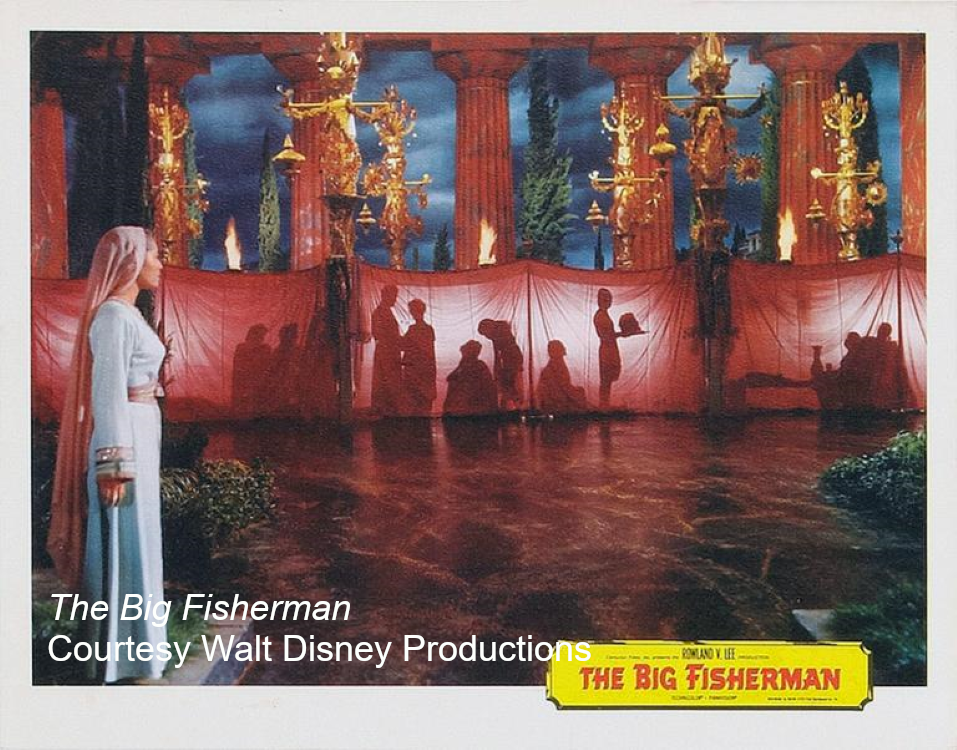
E: The Big Fisherman is about St. Peter. Sort of. He’s certainly a character in it. Really, it’s about local politics that are completely fictionalized. But the weirdest part about it is Roy Disney went to Walt and said, “we should make this movie.” And Walt’s reaction was basically, “You’re kidding, right?” So there’s a production company that the only movie they ever made was The Big Fisherman, and then it was released through Walt Disney Pictures.
K: Oh, wow.
E: And it’s like two and a half hours long. It’s Biblical epic length. It’s on YouTube, or was last I looked. And I spent forty-five minutes unsure if I was watching the right movie or not. Because the whole beginning has nothing to do with St. Peter. It’s all to do with local politics. And it turns out that the main character is the daughter of Herod. And when she finds that out, that launches the main story forty-five minutes in.
K: Wow.
E: It’s like…
K: That’s wild.
E: Okay. That is a choice that somebody made when it came to writing this movie.
K: Yeah, right? That’s—go figure. Hey, can we pause for three or four minutes? It sounds like there’s someone at the door. All right, just give me a sec.
E: The Big Fisherman, yeah, which is… I don’t know if… I tend to assume that the purpose of a lot of those movies was to either convert people or to strengthen their faith. And I don’t think this would have been a successful movie at doing that.
K: Yeah.
E: But it has the obligatory “Let’s Show the Debauchery of Herod’s Court” sequence. Half the point of Biblical epics was just showing whatever they could get away with.
K: Indeed. That’s—yep that’s—that—that was a thing
E: It’s such a weird movie, and the fact that it was distributed by Disney makes it even weirder.
K: Wild. Yeah, right.
E: Yeah, I—I think Walt felt it would tarnish the brand. And I’m not going to say he was wrong.
K: No.
E: Having seen the movie.
K: It sounds plausible.
E: Yeah.
K: Yeah. So have you delved into or had the chance to watch any of The Chosen?
E: I’ve had the chance.
K: But have you?
E: I have not. I… It looks like something that… Frankly, it looks like something that was made by evangelicals.
K: Yes. I think… I watched… I think it’s—I think they’ve done two or three. I’ve actually watched all of the—the free ones, but now—they—they’re—you—you can’t—you can’t, as far as I know; I should go double check, but the last time I checked, you—you—you can’t get access to to the latest season for free, at least not yet, but—so I haven’t—I haven’t seen that—
E: No spoilers!
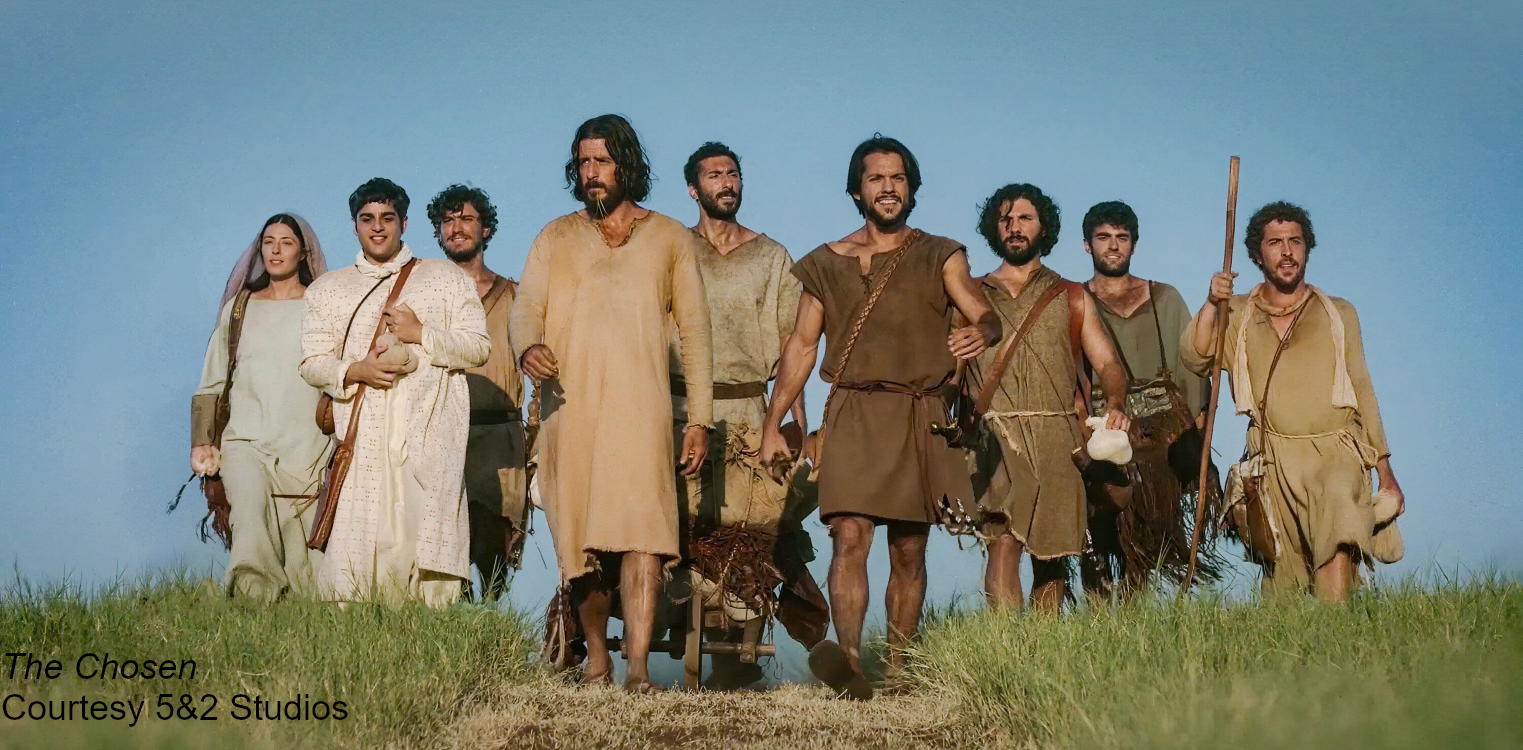
K: No, well, I have to say, I mean, the thing about The Chosen, which is kind of, it’s fun, I think, for me. Because what it did, I think it’s actually a pretty good, well-paced story as far as storytelling goes. There’s some decisions in the film, or in this series, that the makers made that I actually really appreciate just as an example. And for anyone who doesn’t know, it’s a retelling of the life of Jesus, but it’s really strongly… He is the main character in it, but it’s still also really… strongly focused on the relationships he has with and the perspective of his close followers, the Twelve Disciples, right, so—so there’s a lot of stuff in the film about them, and it’s all—it’s all very much like Bible in margins kind of thing, where they tell stories about the stories in the Bible, right, so you know there’s there’s stories from the—the text of the New Testament but they’re kind of expanded to, “Well, what’s going on over here when Jesus is delivering the Sermon on the Mount, right? What was the prep? What was the days and days of prep like?” You know, the delivery of the Sermon on the Mount, which was really weirdly absurdly set, like—like Jesus is, like—like, he was—he was—he was launching an IP or something, you know? It was, you know, it was this—was like the—this was going to be like the—the flag that sort of, the—the inauguration of his—of his ministry. So he spent days getting ready and preparing this sermon. It was going to be the greatest sermon anyone had ever delivered, right? Super weird stuff like that, behind the scenes kind of things, right? Which is, you know… It’s silly, but some of it I think is kind of interesting.
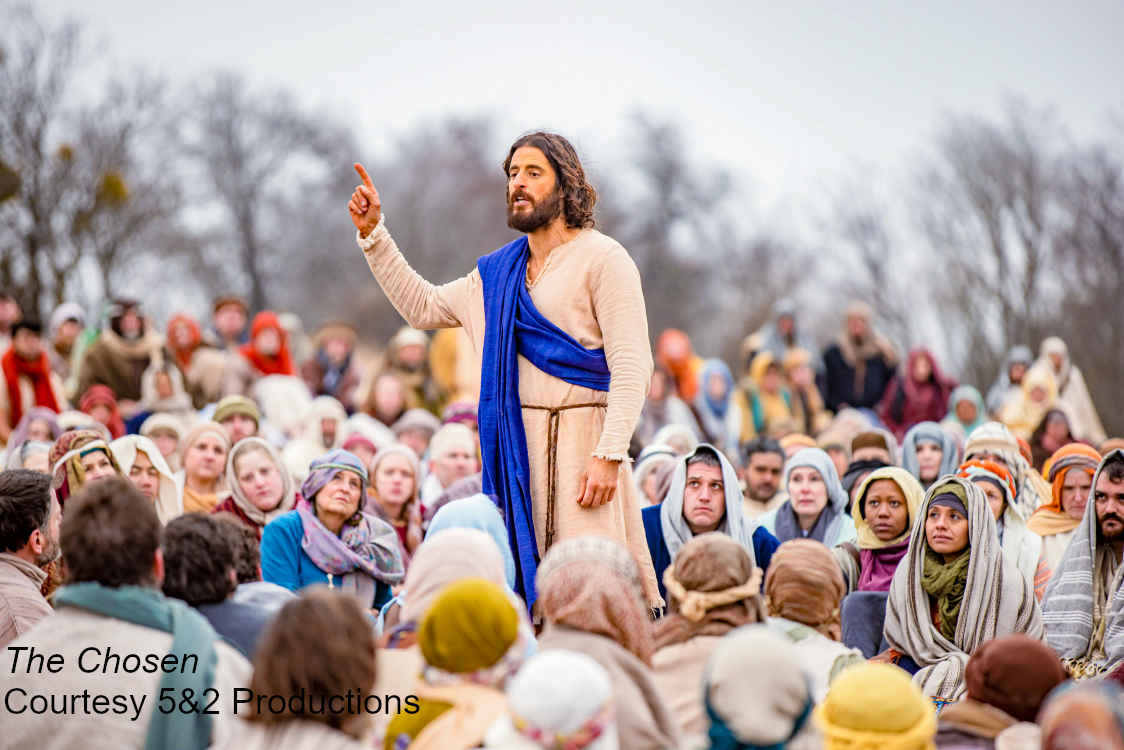
For example, maybe one of my favorite scenes is, and this is just kind of a riff on some of those blurbs within the Gospels about how many people would constantly flock to Jesus to hear him speak and to be healed by him. So they did an entire episode of the disciples all sitting around a campfire late at night recovering from this hellaciously long day of Jesus’ ministry to people. He’s not in the episode at all. It’s just them talking about this. And they’re also still kind of going back and forth. They’re entering and exiting the scene. Because Jesus is still working, right? There’s still tons of people who are coming to see him. So there’s crowd control, and there’s stuff to organize. There’s logistical sorts of things that they still have to continue to do. And they’re talking about life, and they’re complaining about their day, and they’re… they’re reflecting on, you know, just—just stuff that’s going on, which I think is, it’s an interesting idea. Right. But honestly, like the—the—the episode ends with—with Jesus basically finally finishing, and walking, we see him come into the scene. And he doesn’t even come and say hi to his friends. He smiles and waves and just keeps going right to his tent and then just falls into his tent. And his mother is there to help him, you know, take his shoes off and stuff and—and I, you know as a way to just emphasize how goddamn hard this guy is working, and, yeah, you know it all sort of puts them in their place with—or with their complaints and their petty, you know, I—I—I think it’s a—it’s a really effective way of—of storytelling, right, and I—I think it’s pretty well done, but that aside some of the other stuff that—that is in The Chosen, and I hope that I, you know, I—I don’t think most of its audience are sophisticated enough to pick up on this, I’m afraid to say, but I think that if people—one of the things that I appreciate about The Chosen is that if people can come to the point of appreciating how a story like this actually fits within, you know, the history and the reality of first century Roman Palestine, then they can only walk away with the strong impression that it’s an impossible story, that it has to be a fictional story. And it’s just because the filmmakers have worked so hard to make it realistic, I think because they recognize you have to see how unrealistic the Gospel stories are in the first place, you know, you leap to absurdities in order to salvage whatever believability you can from something like this. So one of my favorite elements of the entire series is how hard they lean into, and you can see it’s deliberate, how hard they lean into the fact that this is a hyper-literate culture. Everyone can, of course, yeah, all of us, all of us learned to read when we were at the Beit Midrashim. Children, you know, can read, because—and I mean Jesus actually writes a letter to a child that opens with—a little girl, as a matter of fact that—opens with I’m writing this to you because I know you can read. Like, does it get more on the nose than that?
E: Yeah. Yeah.
K: But here’s the thing, right? The filmmakers have done this because they at least recognize this is the only way this story works as presented in the Gospels. And it’s an absurd fiction. The Chosen.
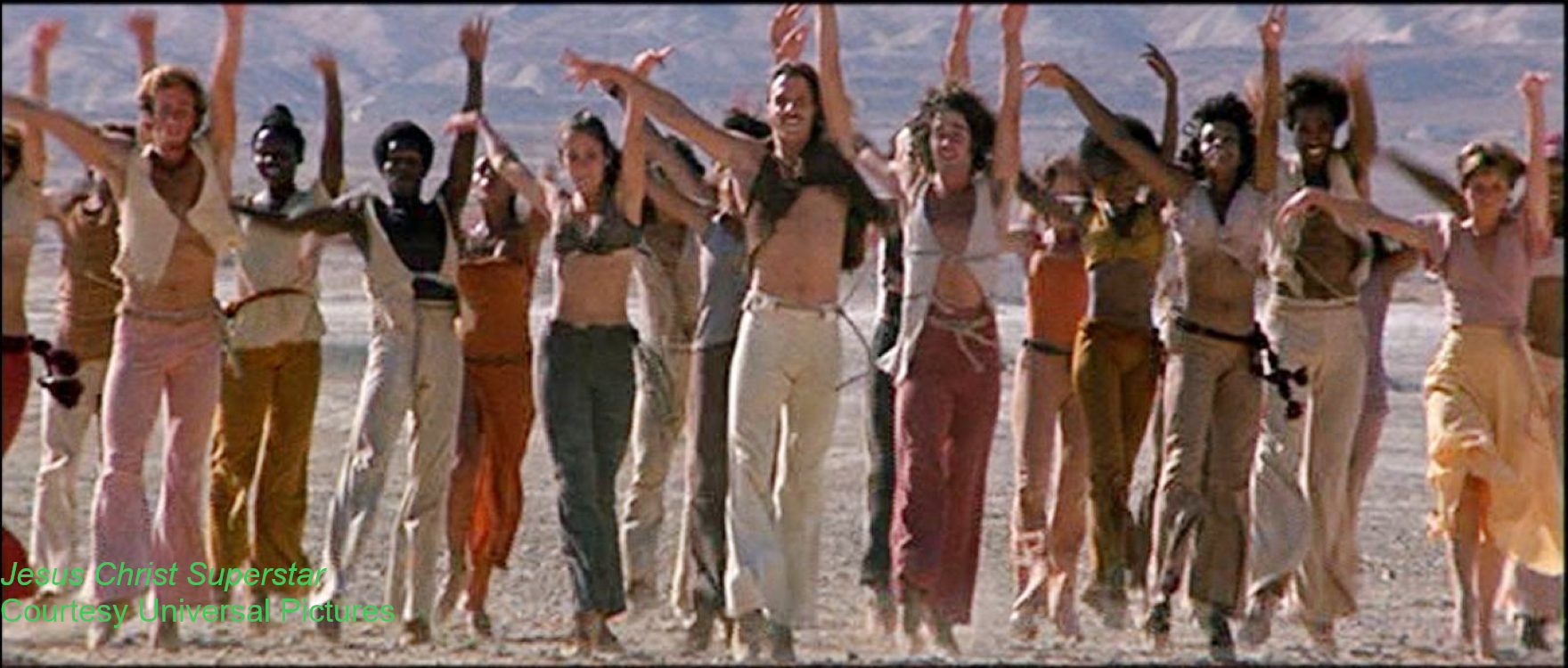
E: Well, you know, one of my favorites—I’m opposed to the concept of guilty pleasure unless there’s a legitimate reason to feel guilty about liking something. But if I had guilty pleasures, one of mine, and I watch it every year for Easter, would be Jesus Christ Superstar.
K: Oh, yeah.
E: The 1970s version. Which, you know, clearly completely colorblind casting. Let’s have Surfer Jesus and Black Judas and Chinese Mary Magdalene and let’s just go nuts with this. Patti LuPone’s brother is in it. I think he plays Simon Zealot or someone.
K: Right. Wow.
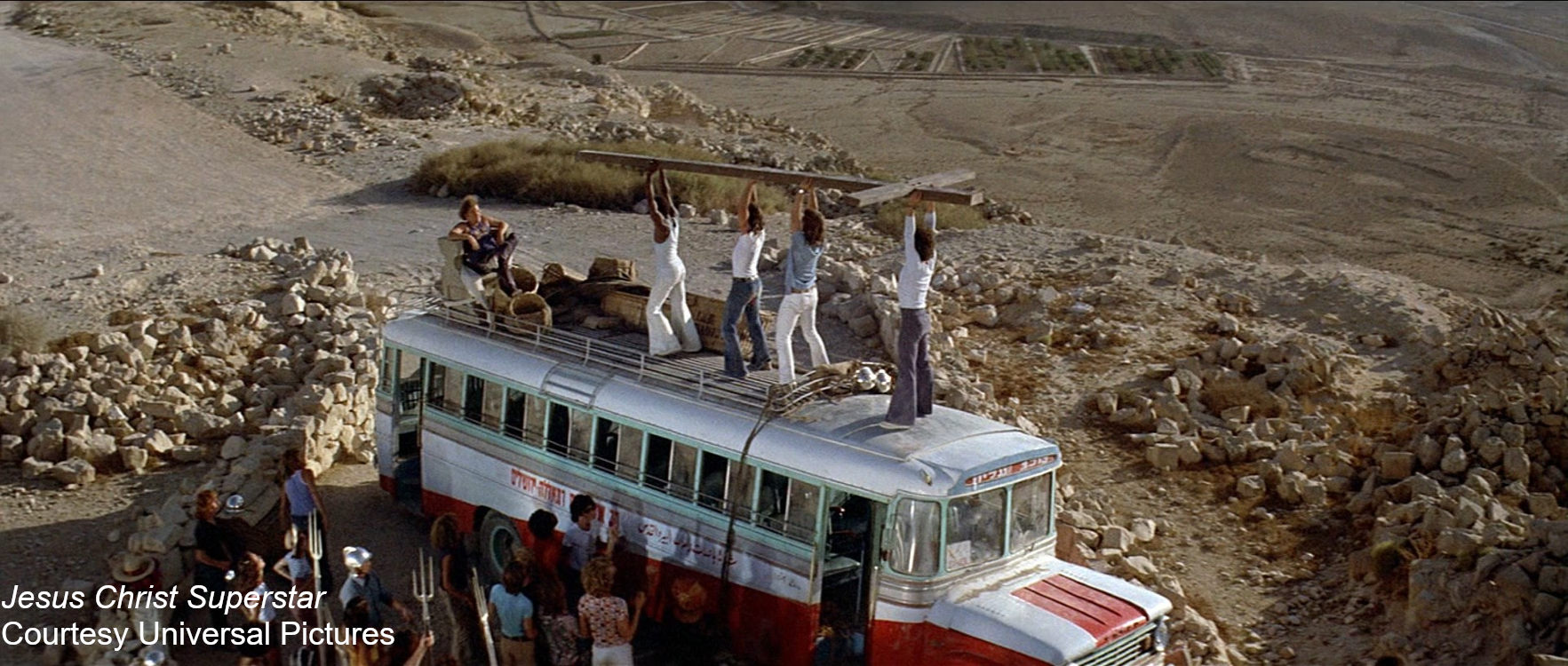
E: It is just the most bonkers choices made for that movie, and the running joke with my group of friends for years has been that what’s actually written on the side of that bus in Hebrew and Arabic is, “Don’t shoot us, we’re just making a movie.”
K: Yeah. I don’t remember. But do we know? Do you know?
E: It probably just says Jesus Christ Superstar.
K: That’s probably it. Yes, that’s true. But you’re right. It’s, yeah, hilarious. And I think…
E: The most Seventies take on Jesus possible.
K: Oh, yes. Yes. Did you ever see Jesus from Montreal?
E: No. No, I’ve not seen that. I’m familiar with it, but I haven’t seen it yet.
K: That was pretty good. But, you know, it’s also French.
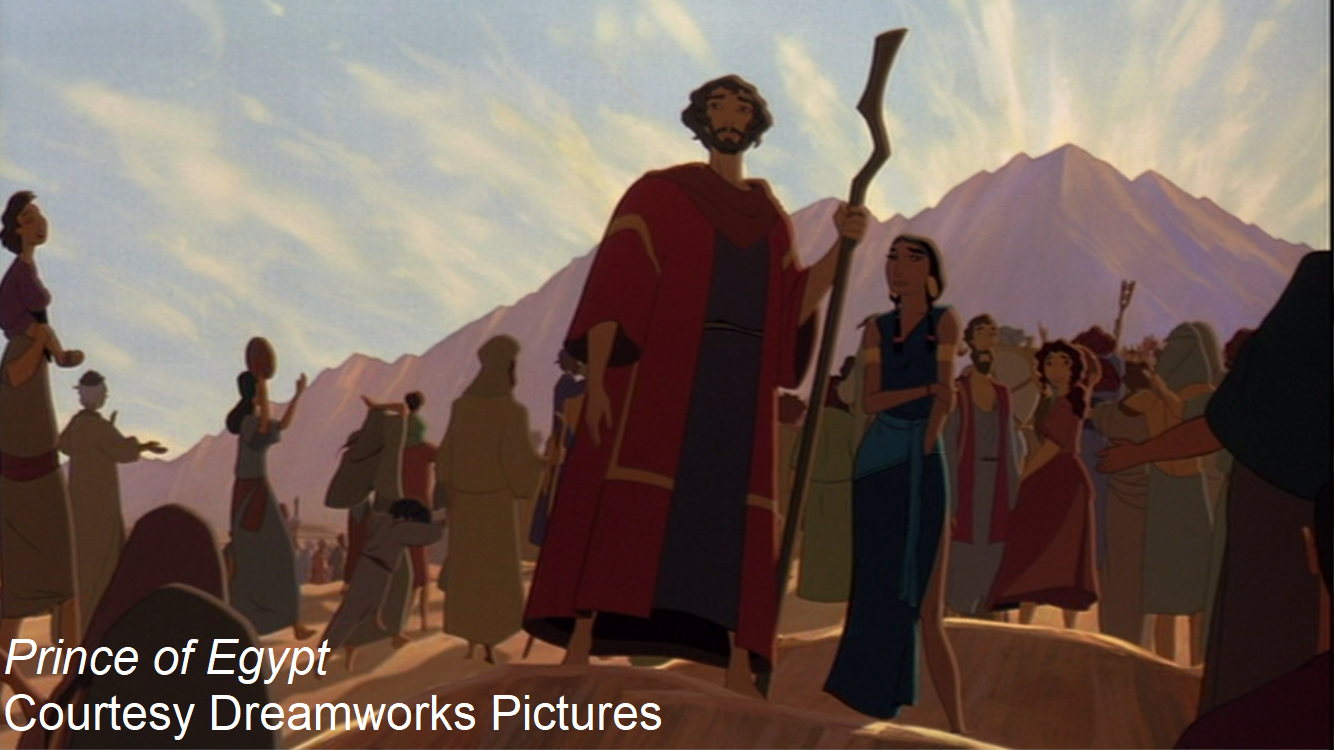
E: Yeah, well. The other Bible movie I really like, and this one I saw in the theater. I think it’s the only Bible movie I’ve ever seen in the theater, was Prince of Egypt.
K: Oh yes. Yes. We didn’t talk about that one, did we?
E: No.
K: Yeah. So, you know, and I, there’s a lot that I like in that one too. And I—and let’s, let’s just I—I think it’s—it’s fair to say and—and I also really appreciate that this is—this is probably easily the most Jewishly sensitive telling of—of that story in film, which I think is great. And, I mean, duh, Spielberg.
E: It’s like it was produced by Steven Spielberg or something.
K: Totally, totally, right? So, and apart from the music and the visuals, which are just phenomenal.
E: Oh, yeah.
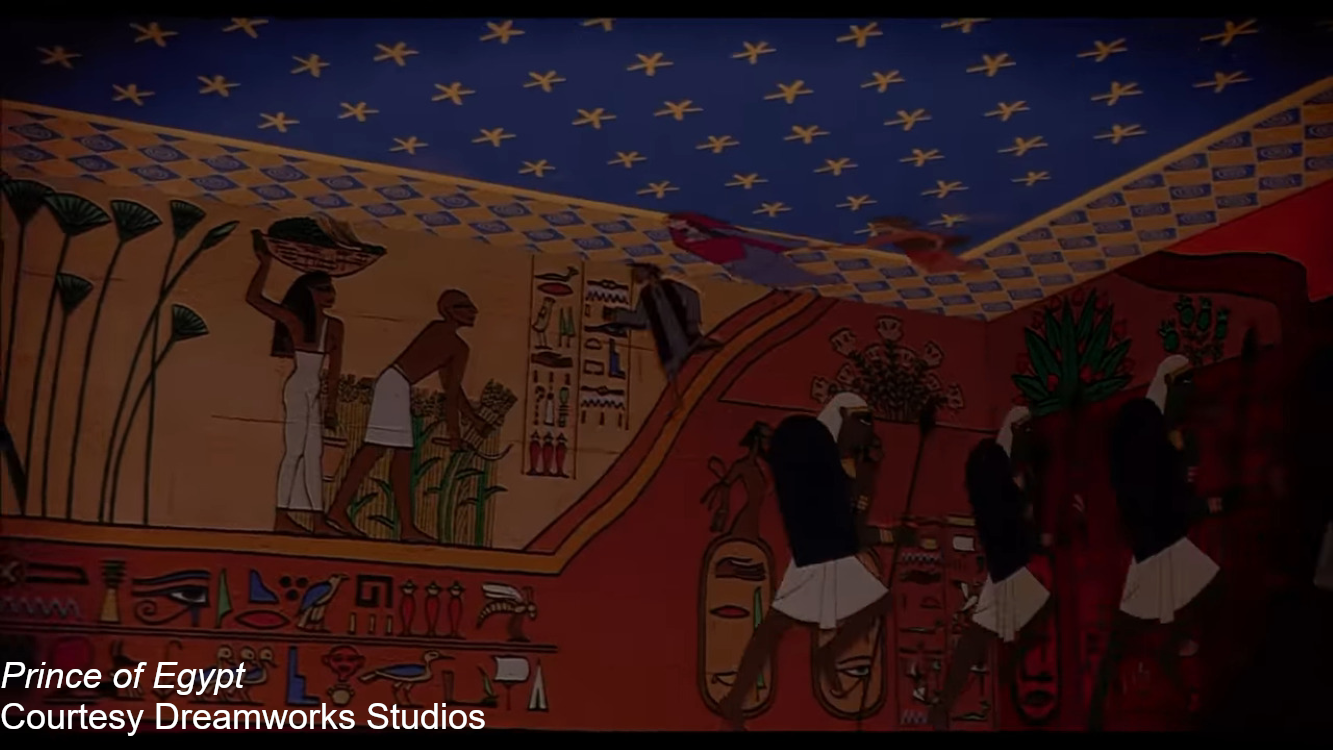
K: There’s parts of it, too. Like, I think one of my favorite scenes in that version is when Moses finds out about his heritage, and he’s in one of the great temples that are—with all of the hieroglyphs and the pictograms, pictographs, sorry, on the walls, and they become animated to tell the story of—it’s incredible. It’s so good. And I like the spin on that one, too, on the relationship between Moses and Ramses. As much as I love Smug Yul Brynner, you know,this was the arc—the character arc in—in Ramses and in in The Prince of Egypt is—is really—
E: Yeah.
K: It’s—it’s really, really good, and I—I think it makes it a—a—a much more human story, but yeah, no, it’s—it’s a great film. And I mean, Jeff Goldblum is just, you know—
E: If you want to really work at making your film more Jewish, cast Jeff Goldblum.
K: That’s right. Yes.
E: And I mean, he’s doing solid work as Aaron, who is like, our life is miserable. You’re not helping.
K: Yeah.
E: Which I feel would be a fairly good complaint.
K: Yeah, and I wouldn’t doubt it. I don’t know anything about the actual writing and recording for that, but I wouldn’t doubt that a lot of that stuff was Jeff Goldblum improvving his way through Spielberg’s script, right?
E: I think so.
K: It sort of feels like that.
E: Yeah, no, and I mean, the casting on that movie is just so amazing. You know, Val Kilmer, of course, as Moses. And you’ve got Patrick Stewart and Michelle Pfeiffer and Ralph Fiennes and Sandra Bullock, who I would not have cast in that movie, but she’s doing really good work.
K: Right? Yes. I know. So, yeah. Yeah, of course, of course, Ralph Fiennes.
E: You know, I saw that one in the theater with my older sister, who also obviously raised Catholic. And we—
K: So how long ago is that now? That’s—
E: Oh gosh, that would have been in the—
K: Nineties.
E: Ninety-eight. Late nineties, yeah.
K: Yeah, we saw that one in the theater too. Didn’t have kids yet, but yeah, but we were, yeah, it was after a few years after we’d been married already. But yeah, no, it’s excellent. And I think there’s also some important attention to textual and historical details that Spielberg took care to ensure that he got right. And I always appreciate that too.
E: That is one of those movies that did have religious consultants.
K: Yeah.
E: And I think it shows. And I also think it’s interesting that it shows the time between leaving Pharaoh’s court and let my people go.
K: Yes.
E: Like, more than just the burning bush. Like, he has a whole life.
K: Yes.
E: And then there’s the burning bush, and he’s like, oh, well, I guess I’m doing this now.
K: Yeah. Yeah. No, it’s very good. And I, you know, in terms of I should, Val Kilmer should get some props for his, for the casting, I think, and then his portrayal as Moses. And I think the reason why it works really well is because of, you know, he’s a pretty soft-spoken guy in the first place in most of his roles. He’s kind of this unassuming A-lister, right?
E: Yeah.
K: But, you know, I think he carries that into that role, which I think also, in such a way that, like, it’s like, and again, I think this is part of the big difference between filmmaking in the nineteen fifties compared to the nineteen nineties, right?
E: Yeah.
K: Where in the nineteen fifties your your male lead had to had to be a superhero, and so, like, Charlton Heston is—is like the man’s man in every sense of the term. In every scene. And then even more. And then even more so. When he gets the—when he gets the Ten Commandments. And amps it up to—to fifty two. Like. Yeah. It’s just. It’s like. Did you guys actually read? Did you read this story before?
E: Charlton Heston did not know what subtle was.
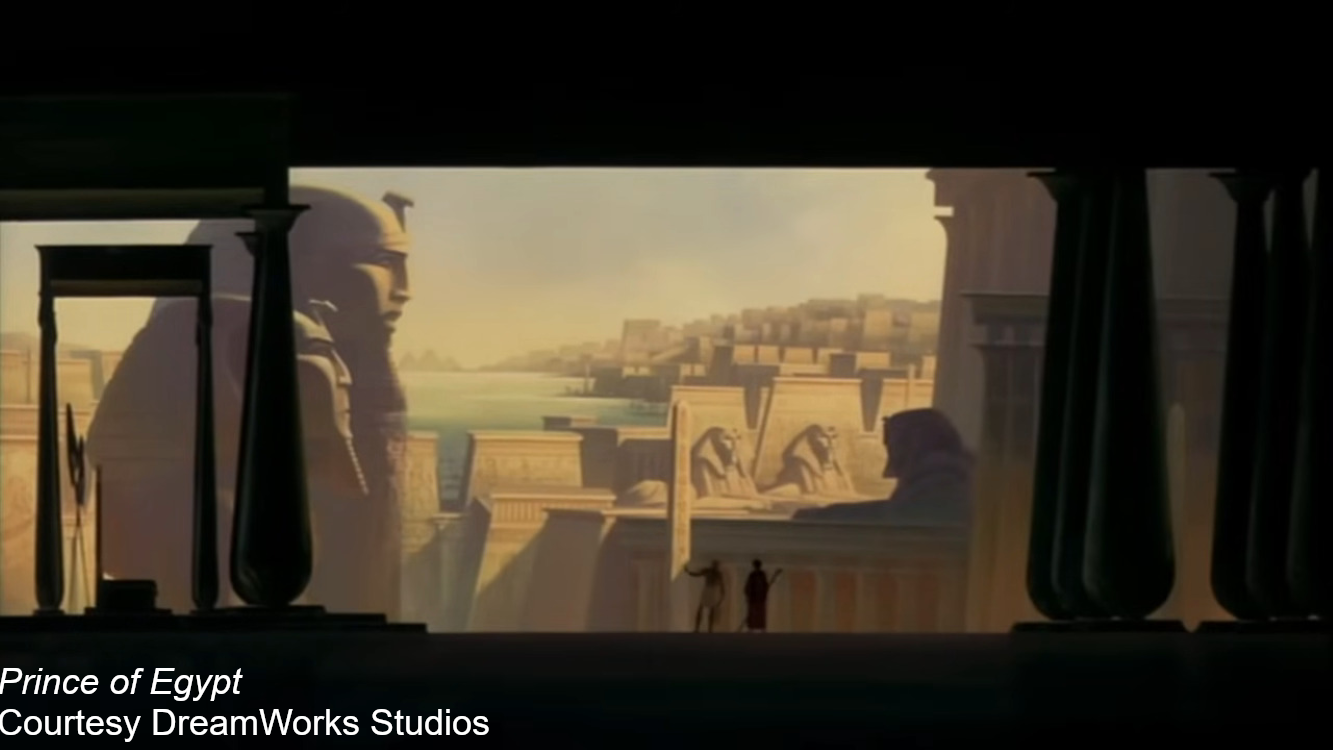
K: No, no. Yeah, it just—this is, this is true. But I, yeah, I think, I think Val Kilmer kind of knocks it out of the park there. In that—and, and, and Ralph Fiennes, too, as, as kind of this, you know, the transformation is so dramatic. But he’s such a likable character in the early stages. And I think in large part because of his reluctance, right? His reluctance and his friendship with Moses and his anxiety about filling the shoes of… of his father. It just all, of this stuff just—
E: They actually give him a motive—
K: Yes.
E: For his actions. It’s not just “and then God hardened his heart.” It’s “here is all of the weight behind him and why he’s acting the way he is,” and it makes the story make more sense.
K: Yeah, no, it certainly does, especially if you’re going to try and, you know, historicize it on any level. You have to do those sorts of things, right? And I think, I don’t know, I feel like as much as I didn’t like Gods and Kings, they learned those lessons at least from Spielberg’s film and tried to replicate some of that, right, which was—which was good but not just—yeah, it’s just—it doesn’t hold a candle to it, though, so.
E: Yeah. So I don’t think there are a lot of movies that deal with what you do for a living. I think the closest you really get is the Dan Brown stuff.
K: Oh my god, I was gonna… The professor of religious, what is it, religious symbolism at Harvard? Symbology at Harvard?
E: Yeah, just no.
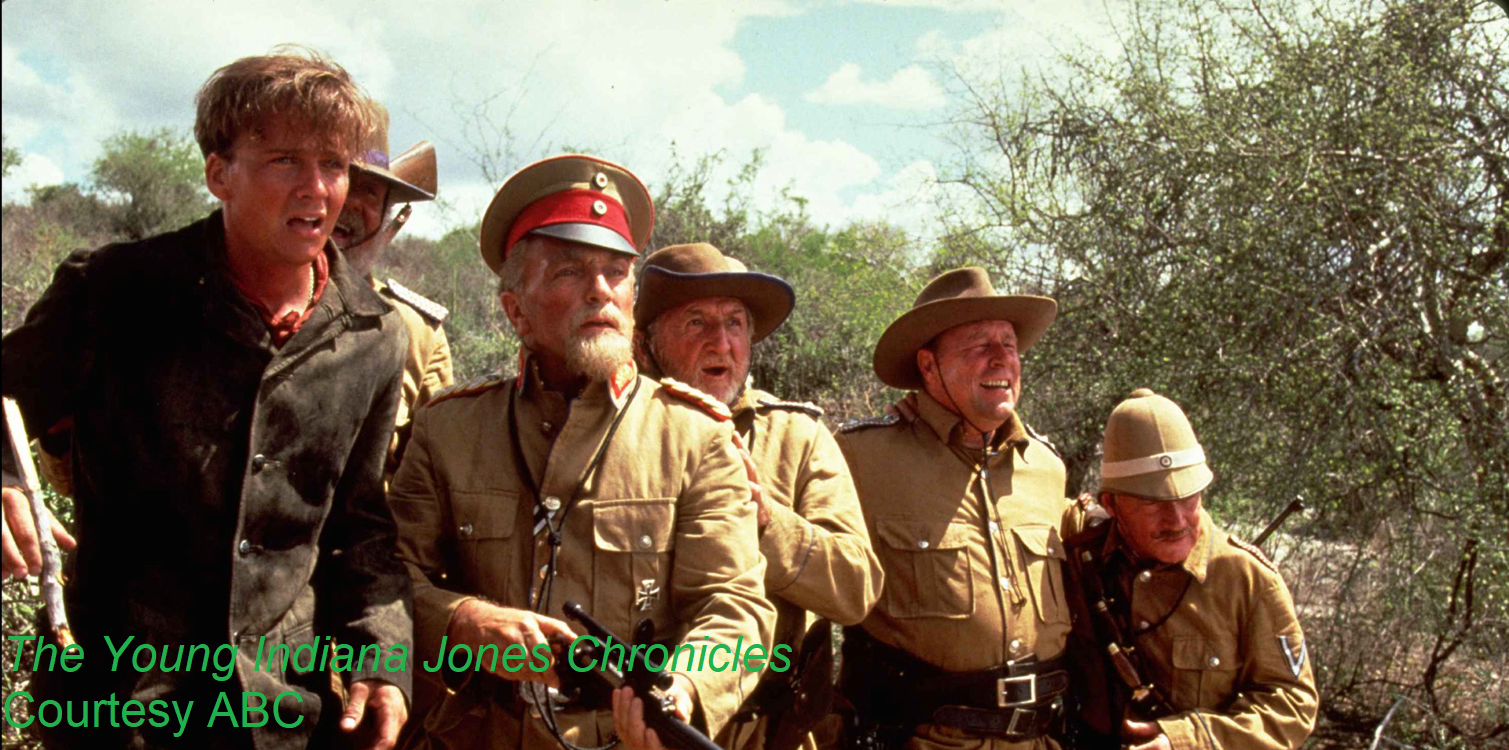
K: Okay, yeah, that’s the thing. No, there is not. And I’m actually, in my head, I’m thinking, so did you ever see any of The Young Indiana Jones Chronicles?
E: I saw a little, a long—like when it was on the air, I saw an episode or two.
K: I actually have VHS tapes of a bunch of those too.
E: Oh, fantastic.
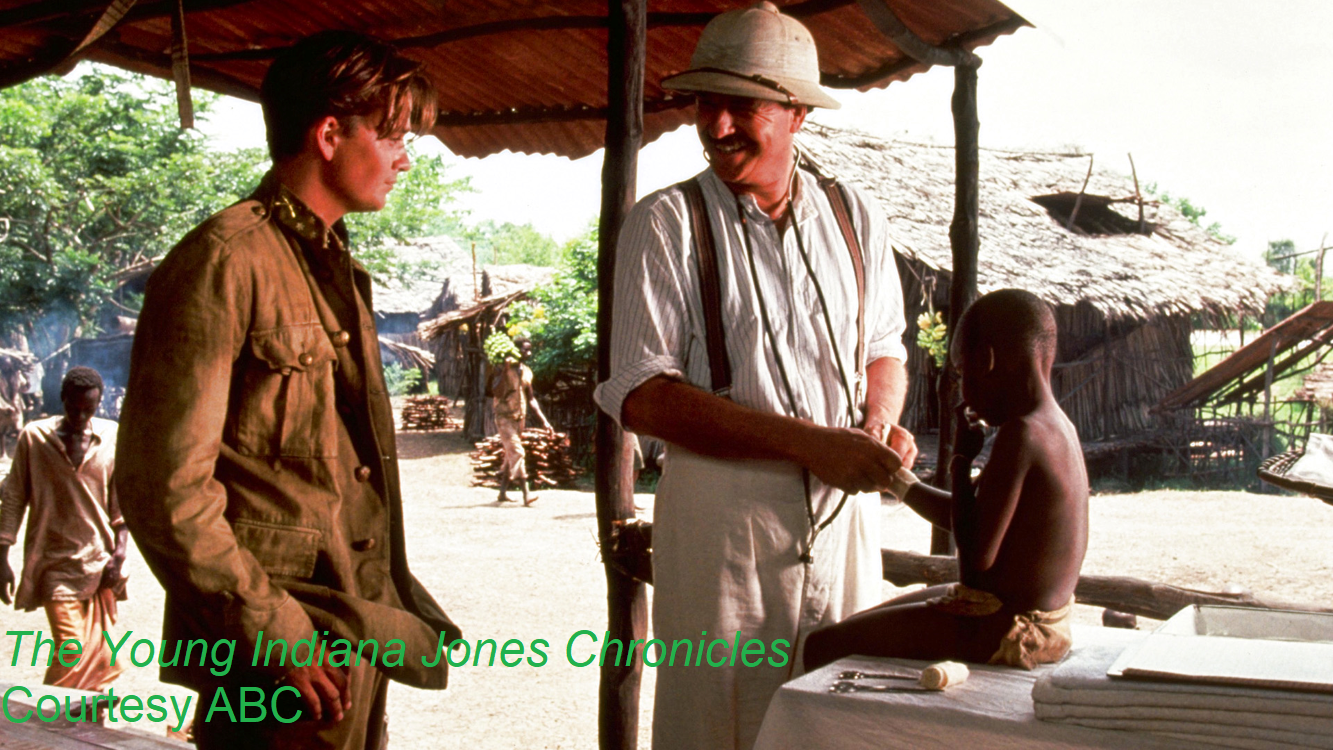
E: They’re so good. They’re just so good. But… I think the closest you can get is one episode that was made about an encounter that, and for anyone who doesn’t know, this was a Lucas-Spielberg production for television. That lasted two seasons, and I’m still angry at the fact that it was just too much for network TV, because it was stories about Indiana Jones as a child, but then mostly as a young adult. There’s a handful of these stories from his childhood, but then as a young adult. As a child, he traveled extensively with his father, who was a professor of literature in the US, and they went all over the world. And so as a boy, young Indiana Jones got to, he met these, you know, interesting people in, you know, the late eight, late nineteenth, early twentieth century all over the world, right? And then as a young adult, he runs away from home and he joins the French Foreign Legion and ends up in the First World War. And so most of the stories are of him fighting with the French army in the First World War, but still going to all of these amazing places and meeting all of these people. It’s—it’s just an incredible show. But in one of the—in one of the episodes as a child, pretty sure—now I have to think about that. Yeah, I think it’s as a child he actually meets Albert Schweitzer, who was doing Lutheran missions in Africa.
E: Yes.
K: Which is a real thing that he did. And they talk about Jesus. In this—in this episode, which is—and—and for anyone who—who doesn’t know, Albert Schweitzer was also a—a widely celebrated Biblical scholar who basically revolutionized the study of the historical Jesus and was one of the first to promote the—the—the well, the deeply entrenched idea now and still kind of default scholarly idea of the historical Jesus as an apocalyptic Jewish prophet. So I think that’s kind of the closest, right, that you get unless you’re watching Dan Brown bullshit. So… And I don’t know, I, you know, I’ve done, I can’t say I’ve had anything close to the sorts of encounters that Dan Brown’s character had, but I’ve, you know, I’ve worked a little bit in this world of artifacts and—and black markets and private dealers and antiquities authorities and conspiratorial thinking religious institutions, but it’s—none of it’s nearly nearly nearly as dramatic as it appears in—
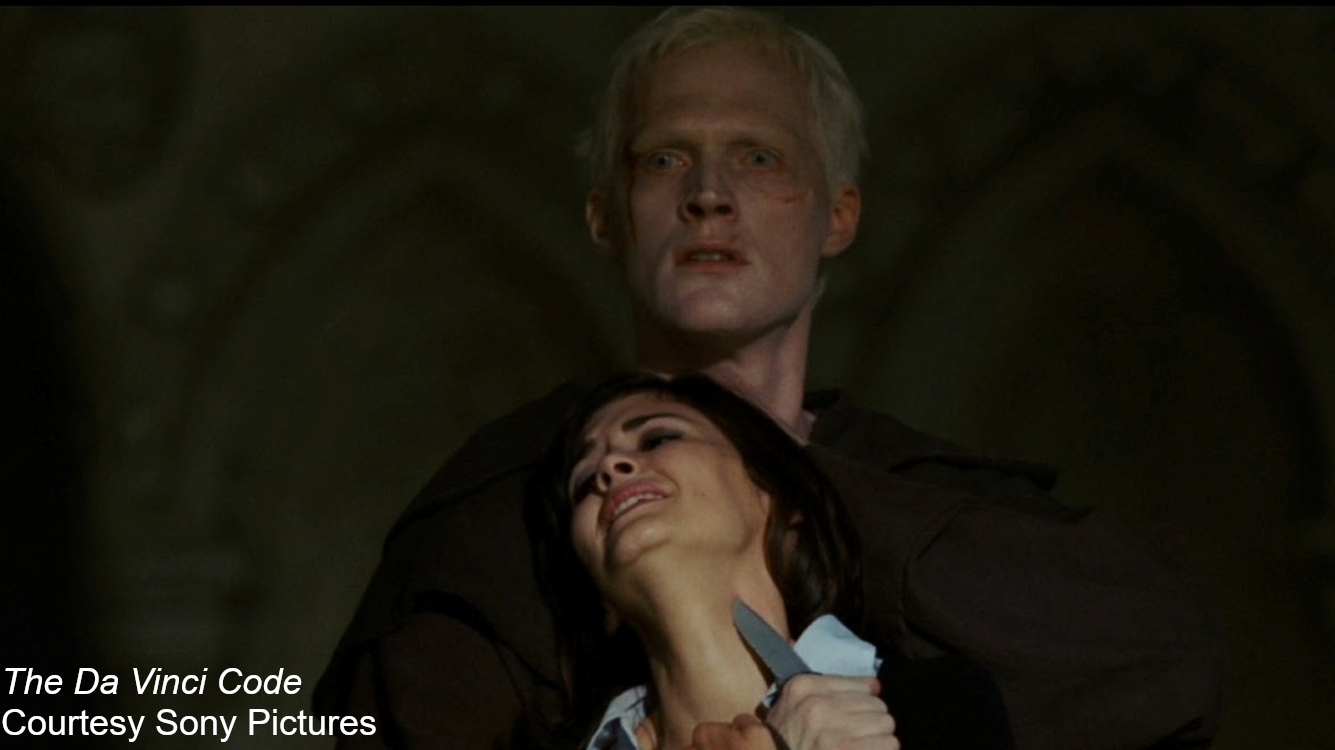
E: No albino monks trying to kill you or whatever.
K: No, that—that—that—that has never happened to me, and—and also no—no weird billionaire philanthropist types who—who—who collect artifacts to—to—to help me, you know, solve the mysteries of my—of my profession, but—
E: That’s a shame; it’s probably kind of a sweet gig.
K: It probably would be, yeah, so, but I as far as I know there’s none of those out there. But yeah, no, yeah, I—I can’t—I can’t think of anything—anything else that—that—that comes close, so aspiring filmmakers out there you know go—go tell some stories about about biblical scholarship.
E: I suspect that that’s not going to hit the traditional audience for religious movies.
K: Probably not.
E: Certainly the newer ones do not seem to be made for people who know things about the Bible.
K: No, definitely not. Even those—even those pretending to be for people that know things about the Bible are definitely—definitely not, so yeah, but I—I don’t know. I kind of get it, too, because you know most most all of the people—all of my friends—all the people I work with, we’re just a bunch of weird nerds who don’t lead especially eventful lives.
E: I have a feeling that’s going to be a theme with this series. The next person I have lined up to talk to is an actual archaeologist.
K: Oh, yeah, there you go, right? Yeah.
E: It turns out that, you know, very few… very few times has my friend clung to the side of a submarine as it’s gone through the Mediterranean.
K: I bet that hasn’t happened much. Listen, it’s really telling. I think this is really telling, Gillian, that there are archaeologists out there who, you know, who mostly are working with evangelical or conservative Christian institutions like the Associates for Biblical Research, or, you know, who attach themselves to more, slightly more, no, definitely more respectable, but still kind of eh, outfits like the Biblical Archaeology Society. And these guys have this tendency to lean into the trope, right? And they’re also the guys who are probably not shy about going and just digging at places without proper legal authorization. Or about encouraging the looting and transit of illicit transit of cultural heritage from other places. They’re the guys who wear fedoras because they think it looks cool in all their PR pictures. I don’t know how many times I have heard an evangelical Christian apologist describe himself as a real-life Indiana Jones, but guess what, actual archaeologists aren’t doing that.
E: No, they’re—no, we—after my son was born, we spent an extra day in the hospital because he was a c-section and they make you do that. And bonding with your kid is great, but it kind of, when the kid’s asleep, and, you know. So we turned on the TV, and USA was playing Raiders of the Lost Ark. So that was my son’s first movie, was Raiders of the Lost Ark.
K: Brilliant.
E: And my archaeologist friend is one of his godparents, and was like, well, I hope you told him that that’s inaccurate. I’m like, I don’t think he took in the lesson, but yes, we told him.
K: Hopefully he didn’t.
E: He was twenty-four hours old, but yes, we told him.
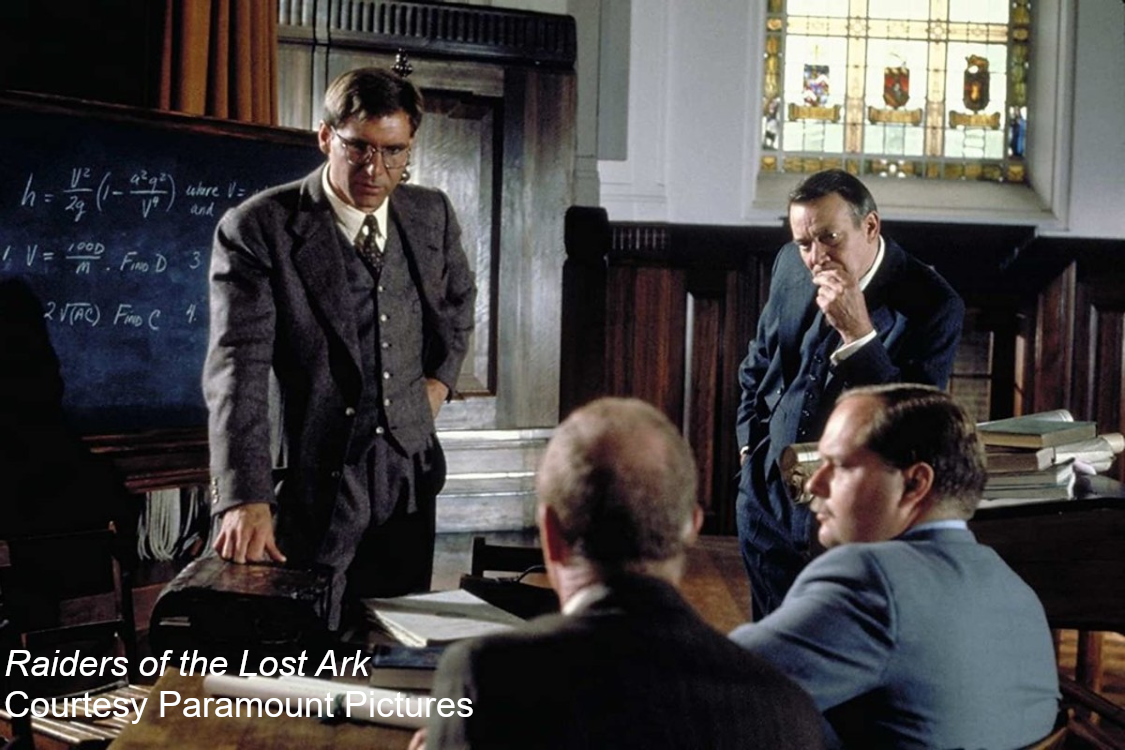
K: I think it’s on the same level, right? Indiana Jones, the Hollywood version, the Hollywood fictionalized version of an archaeologist is not actually an archaeologist. He’s a weird, grave-robbing, looting, renegade, ancient aliens, kind of wooey—I don’t know what else to say. He’s not the most—he’s not the most sophisticated thinking person. He seems like he might be a little bit credulous at times.
E: I mean, I guess it helps that he’s in a world where all that sort of stuff is real.
K: I guess so. I guess that’s the takeaway, right? Here’s the thing, though. Even in the early portrayal of him in that first movie, those early scenes, like the one scene where the government agents come to talk to him about a variety of things related to the Ark of the Covenant, and he opens up like a big—a big Bible that has pictures in it, and somebody asks him about what’s that, you know, it’s what’s that, that ray of light coming out of the Ark, and he’s like, the—you know, who knows, the power of God. You know, like, you know, and he’s sort of, they’re building up this, like, early going of this guy who’s, you know, skeptical of this sort of thing. And yet, this is the first thing he comes up with, right?
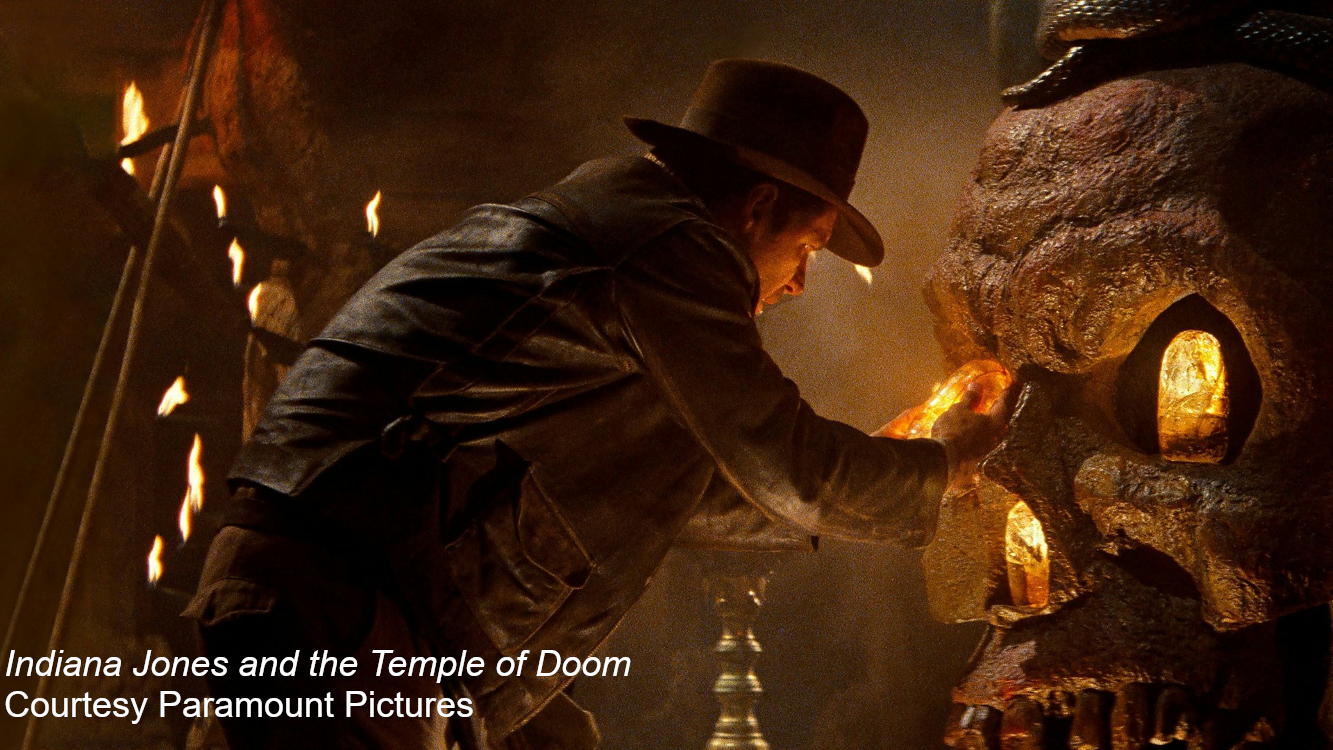
E: I mean, the two points I would make is, number one, Temple of Doom is a prequel. So he has seen the power of God.
K: That’s fair, yes.
E: And number two, you know, that’s what it’s portrayed as being. Is it real? Eh, you know, that’s… What do they think it was?
K: I just don’t know anyone who even goes, eh. Like…
E: Yeah. Well, clearly, what did they think this thing was? Well, it was the power of God. Was it real? That’s a different question.
K: Yes.
E: Yeah.
K: Listen, if government agents ever came to speak to me about such things and asked that question, my answer would be, well, no. I mean, come on, guys. You work for the government. Like, you know what you’re doing, right?
E: It’s exposition. They have to fit it in there.
K: How did you get this job? Right. Yeah. So…
E: Yeah, no, and I mean, the movies are boys’ adventure novels. That’s what those movies are.
K: Yeah, they are.
E: And you gotta take them on that level. Dan Brown has less of an excuse. Those are theoretically for grown-ups.
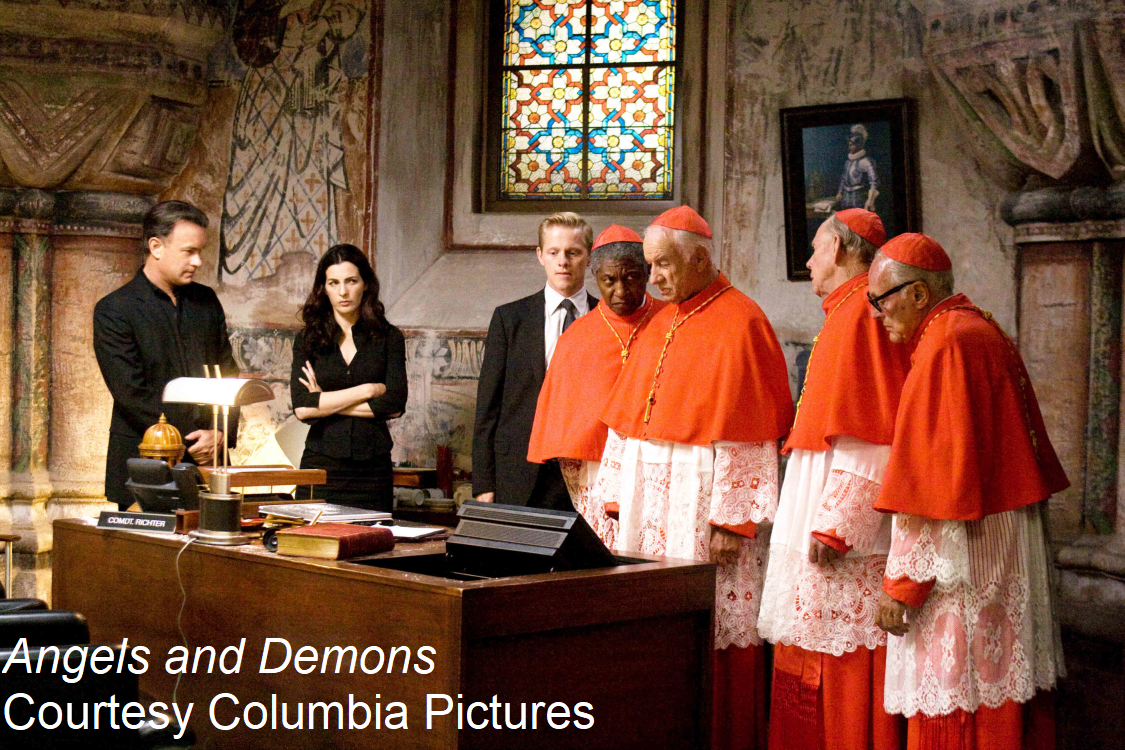
K: Yeah, yeah. And they’re, I don’t know, I didn’t particularly like the books. I liked the movies… about as much as I like the books. I think I might have liked Angels and Demons more than The Da Vinci Code. It’s probably mostly just because the entire premise of The Da Vinci Code is just annoying. Yes.
E: Yes. Yeah, I’ve never read The Da Vinci Code, but I do have Bart Ehrlich’s book about The Da Vinci Code.
K: See, I read Da Vinci Code, and then I read the book by, oh, what’s the name? Baigent, and the book, the non-fiction book that Dan Brown’s The Da Vinci Code is based on.
E: Yeah.
K: Which was hella boring. I—I couldn’t—I couldn’t get through it, because it was so damn boring, so credit to Dan Brown for—for getting through it, I guess, right, but yeah.
E: So clearly the next big Indiana Jones type movie needs to involve more Biblical scholarship.
K: That would help. Legitimate Biblical scholarship.
E: Hire you as a consultant.
K: Pardon?
E: Hire you as a consultant.
K: Oh, that’d be great. Yeah. Yes, it would be interesting to see how that went, but yeah, we’re probably—I’m looking at your time, here. How much time did it—did—
E: Just—just a couple of minutes left, here, so I think we’ll—we’ll, you know, call it here. It’s been a lot of fun.
K: Yeah.
E: Thank you for joining me.
K: Absolutely. And I’m excited to see what you do with this. And I will continue to see you skulking around on all the same channels that I watch.
E: Yes. Well, thank you very much for your time.
K: Absolutely.
E: I’ll shoot you the links when everything is set up. And we will… I don’t have a sign out. I keep saying I need to make one up.
K: You need to just do like what Ricky used to do. Where he would just hit the end button. You know, without actually ending the show.
E: There you go.
K: Right? Yeah. Yeah.
E: Cool.
K: Okay.
E: Thank you.
K: It was fun talking. So we’ll see you around.
E: Yep. Bye.
What a great series concept, and I like how far ranging the subject of biblically related films are when you get rolling here. I hope this becomes a regular feature.
You’ll be pleased to know I already have an archaeologist and a virologist/evolutionary biologist lined up to talk with me, and I’m in talks with a physicist and a meteorologist. I won’t say it’s going to be regular, as it relies on things like “making editing software work,” but definitely it will be recurring.