I’m a sucker for an anthology show, especially the traditional kind where every episode tells a different, self-contained story. Inside No. 9 (2014-2024) is my favorite contemporary example, so since I’m helming the Thursday TV article for a change, I thought I’d take this chance to spotlight nine episodes that demonstrate its range and could serve as an informal starter pack. There are also bonus recommendations scattered throughout, because I couldn’t help myself.
Inside No. 9 has few unifying elements: all you can count on, as a rule, is that each episode will generally stick to a single #9 location (but even then, there are a few tricky exceptions) and that (nearly1) every episode will feature the show’s creators and writers, Steve Pemberton and Reece Shearsmith2. (This show surely did a lot to keep Britain’s wig industry afloat.) Oh, and there’s always a hare hidden somewhere on the set: the most familiar version is the bronze prop3 that eventually plays a starring role in “Tempting Fate,” but it may also appear as a silhouette or illustration. You’ll also consistently see tight writing and a cast of some of Britain’s best comedic and dramatic talent, but that probably doesn’t count.
I’ve erred towards the earlier installments because, when torn between which episode to use to illustrate a particular IN9 strength or genre, I often let chronological order be the tie-breaker.4
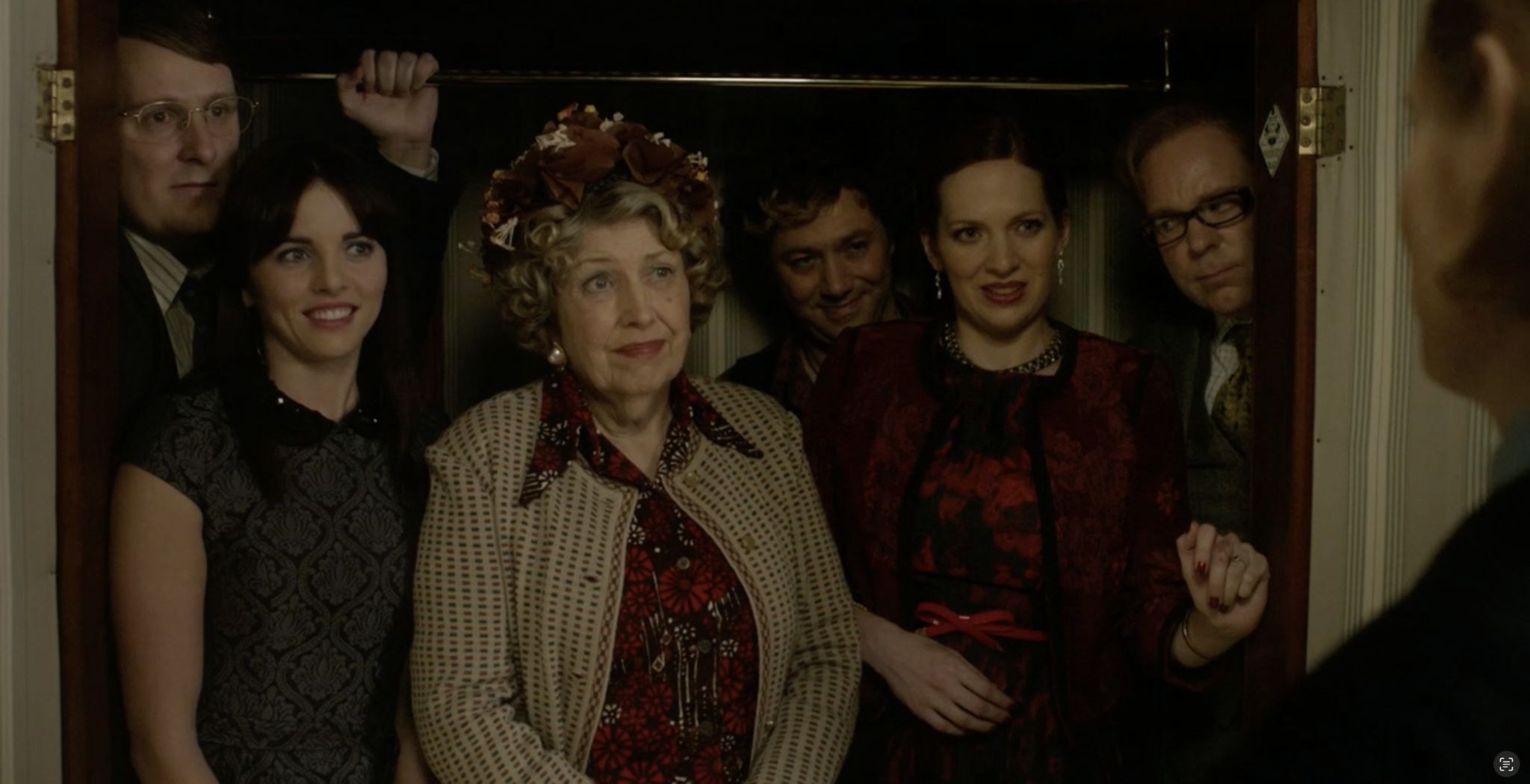
“Sardines”
This acerbic black comedy of manners centers on a game of sardines at an engagement party. As guest after guest piles into an antique wardrobe, tension ratchets up.
This is one of my favorite pilots ever: tense, funny, and ruthless. The cast is perfect (this instantly made me a fan of Tim Key for life). The episode also demonstrates the strength of the show’s tight 30-minute runtime–all this is clearly building up to something, but almost every moment that invites speculation is followed by enough jokes and concise subplot development that the audience doesn’t take the time to mull. And for another superlative, this also features one of my favorite final images in the show. And a line that’s become my go-to for a particular writing move (“Oh, well-seeded”).
If you liked that, try: This is my ideal starting point, so watch it and then pick another off the list.
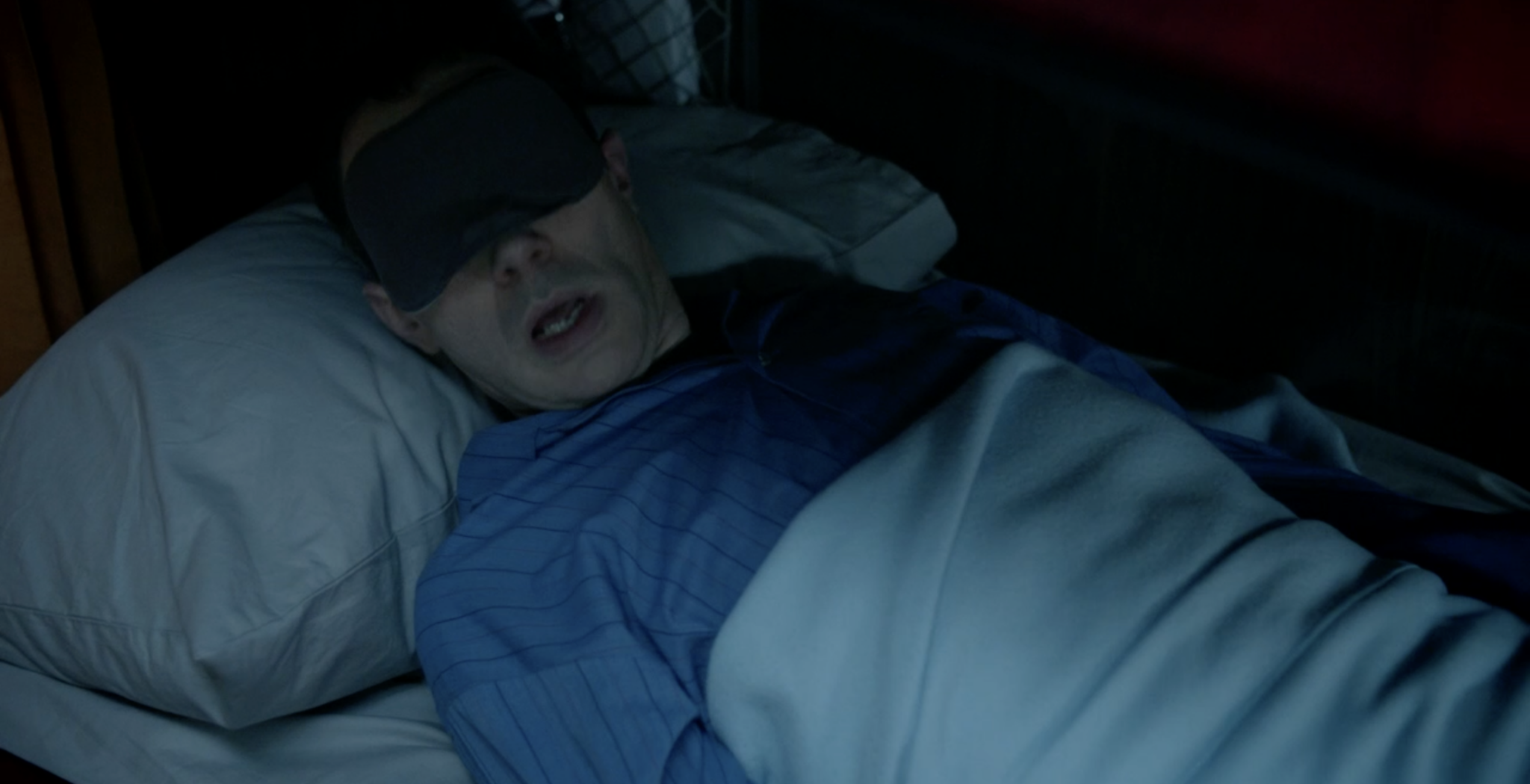
“La Couchette”
One sleeper compartment on a train traveling through France has a busy night when the passengers find that one of their number is dead.
It was quite a struggle to pick a representative “pure” comedy episode. (Comedy is a near-constant presence in the show, of course, but not every episode is this devoted to providing almost wall-to-wall laughs.) I went with “La Couchette” because it’s maybe the best to show off the creators’ occasional exuberant lowbrow streak: this is a smart show, but it’s also not afraid of creating absolute pile-up of chaos that culminates in a man having explosive diarrhea in a shoebox. As a bonus, it’s also the first episode directed by Guillem Morales, who will be a frequent flyer and show a natural flair for bringing out laughs and thrills and making use of dark, claustrophobic settings.
I also admire how this episode starts off with a cast of characters who often border on comedic grotesquerie and gradually brings out their humanity–even when they’re debating ignoring a man’s death for their own convenience. But if the diarrhea is too much of a dealbreaker, see below.
If you liked that, try: “The Bill” (mayhem ensues as a group of friends can’t decide who gets to treat the others to a tapas meal; it physically pained me to leave this off the main list, so it gets to provide the header image) or “The Referee’s a W***er” (David Morrissey plays a referee whose last game before retirement goes to hell).

“Cold Comfort”
A new volunteer at a mental health helpline takes an upsetting call that has even more troubling ripple effects.
In terms of representing IN9’s strengths, this technically checks off two boxes–“unusual filming technique” (the episode is all CCTV footage from the helpline’s offices) and “thriller” (with a few moments so tense and creepy that I’ve been tempted to categorize it as horror instead). And as a bonus, it also boasts one of the show’s best and most exquisitely paced endings. It’s the first of a handful of cases where Pemberton and Shearsmith direct, as well, and it’s nice to see what they do behind the camera to make the intentionally limited physical setup here shine. This makes splendidly unnerving use of a camera trained on a hallway, for example.
If you liked that, try: “To Have and to Hold” (a miserable marriage turns out to have more, and darker, things going on beneath the surface), “Lip Service” (a miniature paranoid thriller where a man hires a lip reader to long-distance eavesdrop on his possibly unfaithful wife), “Simon Says” (a showrunner still dealing with backlash from a famously bad finale vs. a stalker fan with a little too much leverage on him), or “The Stakeout” (as one character will tell you, it’s a trope of cop stories that the new partner always dies).

“Nana’s Party”
A family birthday party in the suburbs goes wrong.
IN9 can also turn out a particular kind of nuanced, well-realized comedy-drama that feels like it’s descended from the films of Mike Leigh. “Nana’s Party” inclines more toward comedy than one of the alternate episodes I’ll mention below, but it’s also got some sharp class observations and a jaundiced (but certainly not wholly cynical) eye for domestic life. And this is as good a time as any to note that the show always rewards rewatching: while this is a subtler and less plot-driven example, I’ve loved going back to it and seeing how unobtrusively key characterization details are set up.
Shearsmith turns in one of my favorite performances of the show here as Pat, who begins as a corny, nails-on-the-chalkboard annoyance and develops tremendous heart as he reveals himself to be more aware than you might first think.
If you liked that, try: “Love’s Great Adventure” (beautiful slice-of-life that follows one working-class family through the holidays) or “Empty Orchestra” (an office karaoke party, complete with constant music, serves up a few professional and interpersonal revelations).
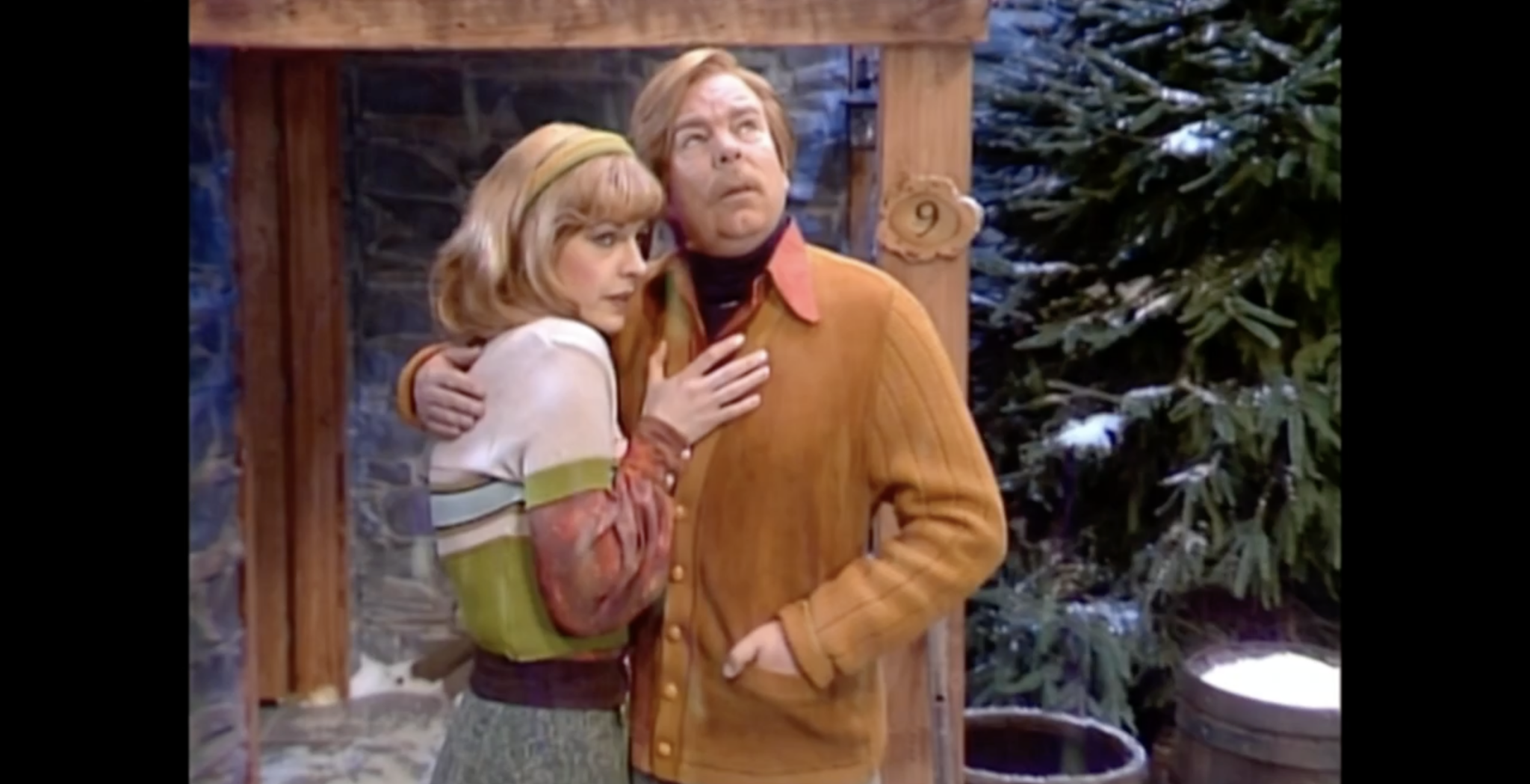
“The Devil of Christmas”
A director offers commentary over footage of his ‘70s film, the Krampus tale The Devil of Christmas.
This is another twofer: not only horror but stylistic pastiche. If you’re a fan of atmospheric but cheesy low-budget film and TV from this era5, it’s a treat to settle in and listen to a rueful Derek Jacobi bemoan missed marks, rushed lines, and rearranged props; the actors also have a blast with the more bombastic, theatrical style (I can laugh just thinking about Pemberton bellowing, “We’re LEAVING,” complete with dramatic pose). But while I’m avoiding spoilers here wherever possible, I have to note that this is also most noteworthy for providing an especially (and unexpectedly) brutal conclusion. It’s like you’re admiring how lovingly Pemberton and Shearsmith have recreated an antique bonbon wrapper, and then you bite in and find it’s full of barbed wire and arsenic. Consider this an entry point to the show’s darker side.
If you liked that, try: “The Riddle of the Sphinx” (a late-night tutorial in cryptic crosswords becomes a Greek tragedy), “The Harrowing” (a House of the Devil riff where the over-the-top Gothic is funny until it’s not), “Dead Line” (the show’s planned live episode goes supernaturally awry), or “The Last Weekend” (a couple’s nine-year anniversary vs. the shadow of tragedy).
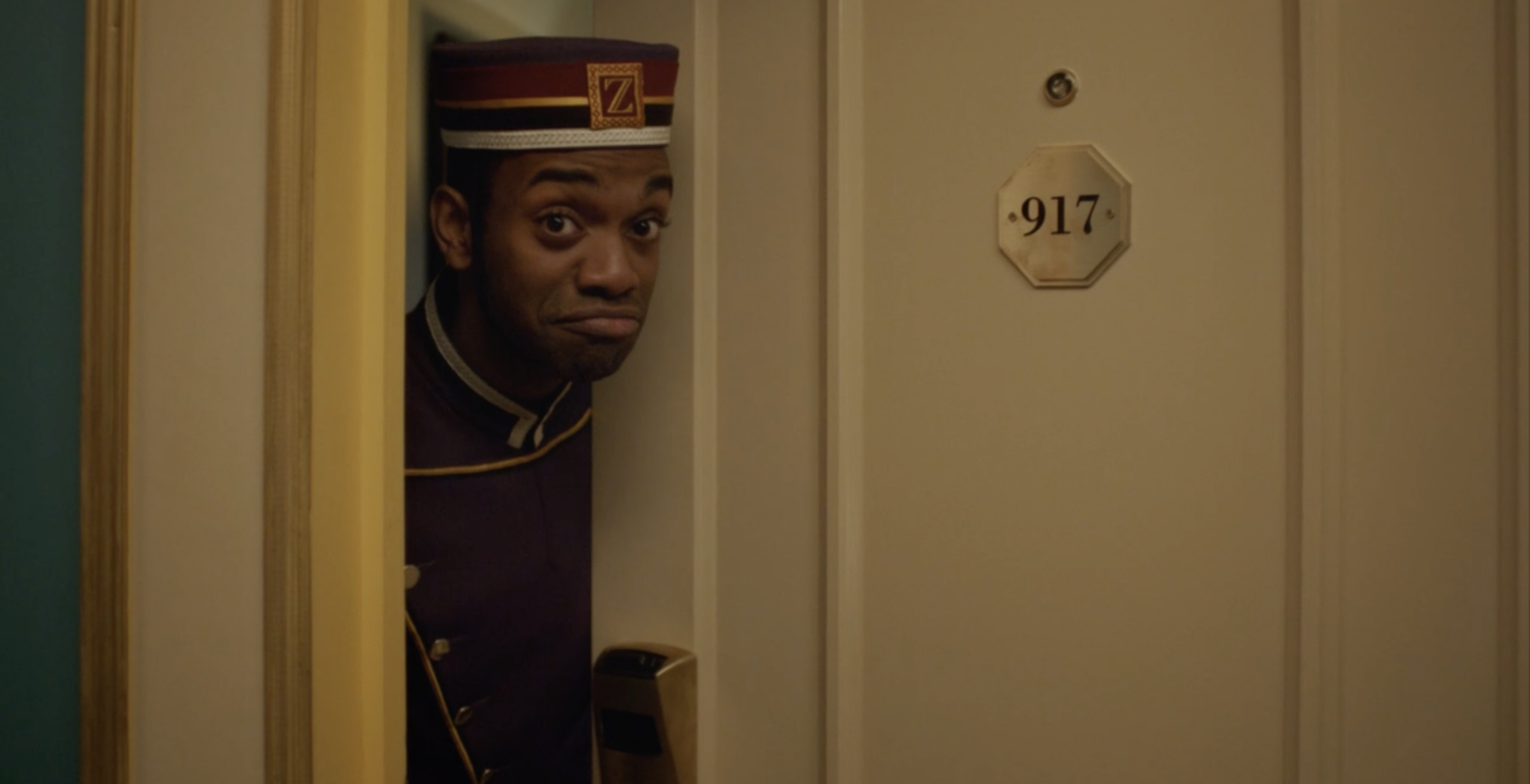
“Zanzibar”
A modern-day Shakespearean comedy, complete with iambic pentameter, mistaken identity, an endangered prince, and dirty jokes, unfolds in a hotel hallway.
This is simply a very charming confection. Fine, yes, it’s also an example of the duo’s formal and stylistic verve–it takes both chutzpah and chops to “do” Shakespeare like this–but my intellectual appreciation of the details (the transitions in and out of iambic pentameter; the Twelfth Night-accurate watersports jokes) pales in comparison to my sheer delight at this farce’s fizzy, bawdy energy. If nothing else, this may be history’s best use of the slang “a bit of how’s-your-father.”
If you liked that, try: “Wuthering Heist” (a Reservoir Dogs-style before-and-after heist plot done as fourth-wall-breaking Commedia dell’arte) or “The Trial of Elizabeth Gadge” (a Puritan witch trial with moral weight but also a lot of perfectly executed historical gags).
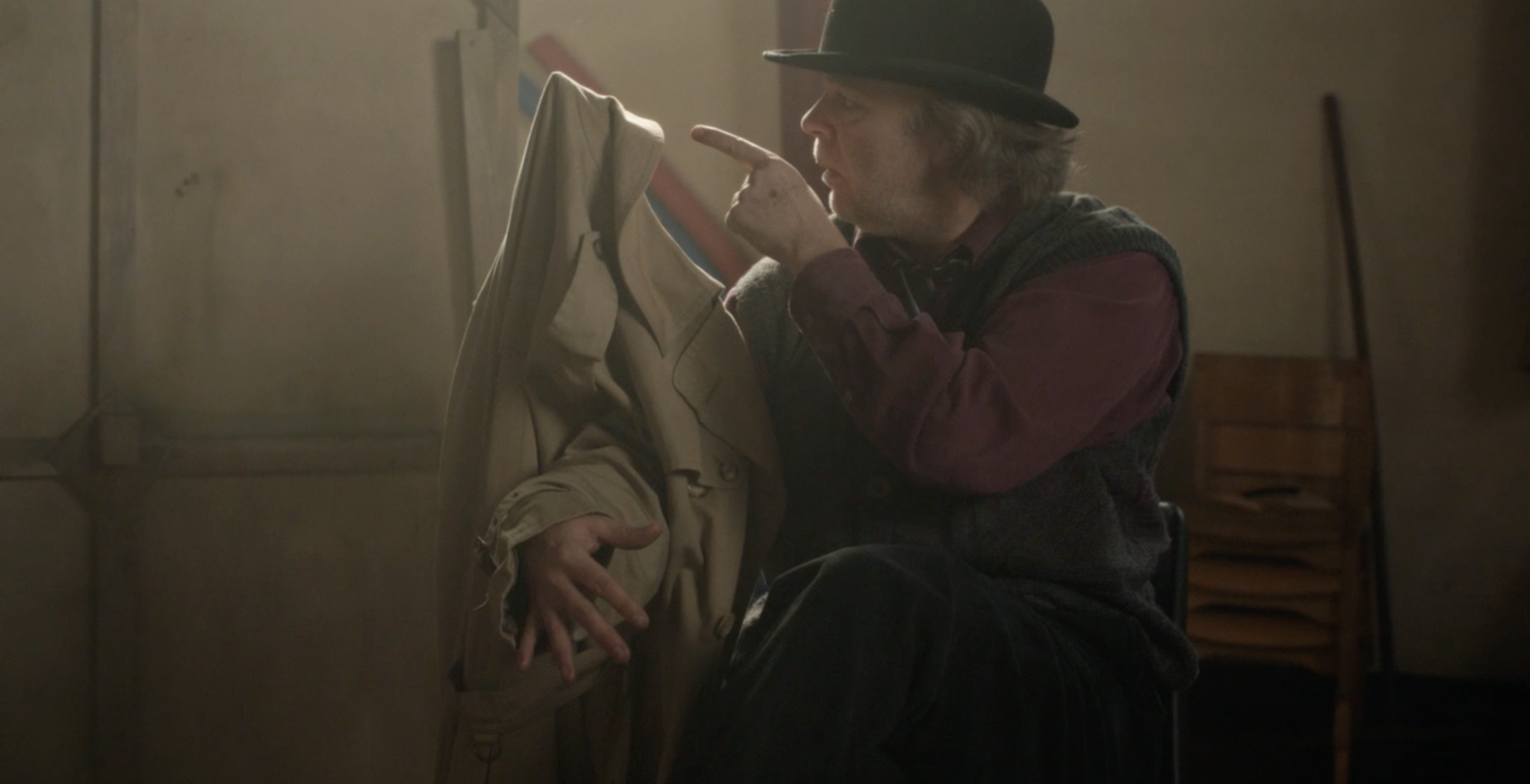
“Bernie Clifton’s Dressing Room”
A never-was stage comedy double act reunites after thirty years apart, but it could all fall apart due to hurt feelings and old bitterness.
Every now and then, Inside No. 9 goes for the heartstrings, and for me, “Bernie Clifton’s Dressing Room” is the example, serving up all the emotional ambivalence of an old, close friendship gone sour, dealing with personal loss, and throwing in a smart (and delicately meta) treatment of comedy’s changing norms just as a kind of lagniappe. As good as this episode is on its own, it’s even better when you come to it after already having developed some affection for Pemberton and Shearsmith and their long-term collaboration and friendship6, simply because it’s then even more gutting to watch them play shadow versions of themselves who never made it and have since fallen out. But that’s only a bonus: this is excellent even when you come to it fresh.
If you liked that, try: “The 12 Days of Christine”7 (a woman’s life is revealed through memories of twelve different days, some of which start bleeding together), “Merrily, Merrily” (three university friends–and one friend’s new girlfriend–take a pedalo ride for a reunion with a sad twist), or “Wise Owl” (a damaged man deals with lingering trauma, partly expressed through recurring memories of his father’s voicing of an animated PSA series).
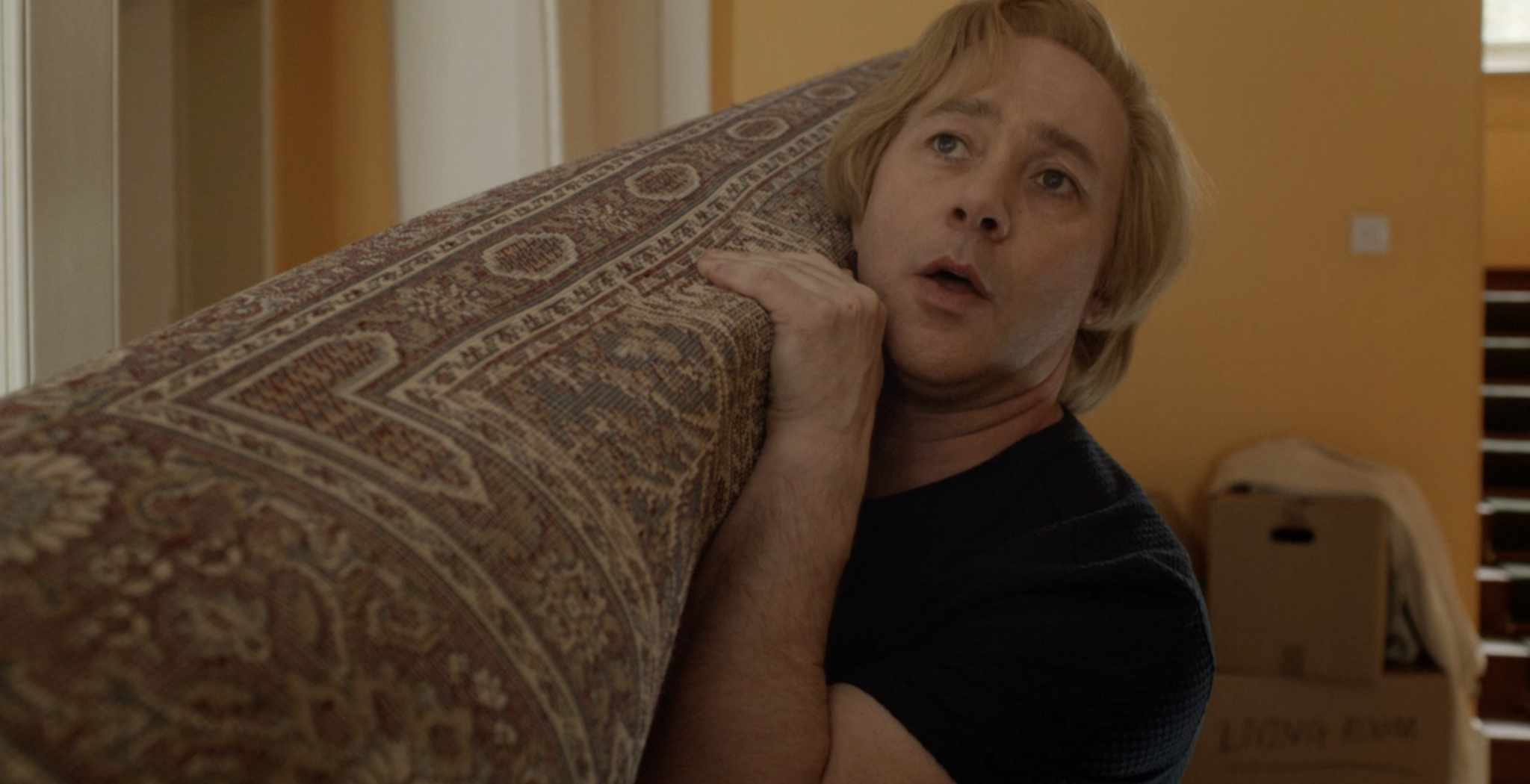
“Once Removed”
One rural home. Several dead bodies. A tale told in reverse, Memento-style.
This may be my wife’s personal favorite episode, and she’d never forgive me for leaving it off. Nor should she, since it’s a clever, twisty thriller with an absolutely spectacular final bit of payoff–and many, many other casually fun bits of payoff scattered throughout (why the bathroom has a mat poking out from beneath the door, for example). With “Once Removed,” unlike “Sardines,” openly inviting speculation is part of the fun, but that doesn’t mean a shortage of comedy, from the broad–Shearsmith in a hot pink dressing down and dual oven mitts and Pemberton as the world’s most desperate real estate agent; an old man who mistakenly thinks he’s Andrew Lloyd Webber–to the dark laughs of someone fighting for their life with bubble wrap.
If you liked that, try: “Kid/Nap” (a split-screen comic thriller), “Diddle Diddle Dumpling” (a man becomes obsessed with finding the owner of a lost single shoe), “Misdirection” (a tale of magicians and murder), or “Mulberry Close” (a true crime-esque story of death in the suburbs plays out via a doorbell cam).

“Boo to a Goose”
It’s late, a London Underground train has just broken down in a tunnel, and a kindly nurse’s bag has gone missing. Who is responsible, and what’s to be done about it?
Usually, IN9 touches on politics only obliquely, but “Boo to a Goose” has not only a point of view but a blistering force. It distills its issues to something more fundamental (and more merciless) than party membership, and it does so in a way that leaves my jaw on the floor. This was the first episode in the ninth and final series, and it makes it clear the show went out with its power and ambitions intact. Some haunting final reaction shots here.
If you liked that, try: “Last Night of the Proms” (another Twilight Zone-esque episode involving the treatment of a stranger on the margins, this one digging into a bitter nationalism and xenophobia that goes past Brexit) or “How Do You Plead?” (a home health aide tries to talk the devil into sparing a dying barrister’s bargained-away soul).
- Shearsmith isn’t in “The Last Gasp,” Pemberton isn’t in “The Harrowing,” and neither of them are in the “originally aired pretending it was a new game show” episode “3 x 3.” ↩︎
- Previously best known for The League of Gentlemen and Psychoville. ↩︎
- My wife gave me a copy of it for our last anniversary! I also have all the script books and the behind-the-scenes guide. Woe to me for falling for this series right as the stage show finally closed. ↩︎
- And even with nine episodes and several “if you liked this” bonus recommendations, there are still so many choices it pains me to leave out, but I had to stop somewhere. Why couldn’t I figure out where to put “The Curse of the Ninth,” for example? ↩︎
- I’m especially a fan of the light trails around the candles. ↩︎
- This means that the only episode you really can’t start with is the show’s finale, “Plodding On,” which is entirely about a fictionalized version of their real celebrity selves: it’s an episode built on you having watched and cared about these guys for at least nine years, if not more. ↩︎
- Shearsmith is reportedly very tired of hearing about how everyone loves this one in particular, so for his sake, I’m only bringing it up in this section. ↩︎
I think I’ve only seen the first two of these (and I’m only REALLY confident about “Sardines”) so I really do need to follow this constant peer pressure and dip back into this how, haha.
Clearly my long-running master plan to badger you into watching various anthology shows is really paying off!
What did we watch?
Thief – local cinema is doing a Heist Season including the 4k restoration of this one, which means I’ve been able to see two of the iconic Tangerine Dream-scored films at the cinema so far this year. More of this, please! I love to sit in a cool dark room in the height of summer and listen to pulsing synthesizers!
I’ve seen this one before and it didn’t totally win me over first time, but I’m not really sure why. It definitely worked for me this time, the detailed process for the robberies is very satisfying and there are some great character moments between them. I was particularly tickled by James Caan’s new patron offering to just obtain him a human baby, would my boss do this? I think NOT. The “burn it all down” finale is great too. Elevating this to “top-tier Mann”.
An all time favorite. American workers should demand that their bosses get them human babies.
Love that ending. Going to threaten my life? ((((((SPOILERS)))))))) Well what if I RUIN that life to the point there’s nothing to threaten? You want it now, tough guy? Oh wait, I killed you an hour ago.
Honestly, this may beat out Heat by a hair to be my favorite Mann film.
Heat was the first film in the heist season, annoyingly couldn’t make it as that one really needs a rewatch too. Collateral is my other top Mann but he does seem to be a director where I need a second viewing to really figure things out
It’s fascinating to watch De Niro and Brenneman in Heat vs Caan and Weld in Thief and how Mann handles them — the first pair is full of feeling that they only let out cautiously and sometimes abstractly, the emotions flow through vibe as much as anything (and Foxx and Li in Miami Vice do this even more intensely); but the diner scene in Thief is as open as Mann ever gets (and even then certain stuff is only alluded to, like Caan being raped in prison) and it is remarkable. Caan in particular is so good here, he has finally reached a place where his really very simple wants (a family) can be realized and he is going for it; he has not realized that his existence will never let him have those things.
“I am out…of time” has started to make me cry which is a new development watching the movie.
Frankie and Johnny – The heartwarming story of how Al Pacino pestered and badgered and bullied Michelle Pfeiffer into falling for him even after she turned him down twice and tells him not to come with her to bowling night. I am not much for romcoms to start with, but a romance build on stalker-levels of persistence does not do it for me at all. There could have been a good story here about broken, lonely people in NYC and about the need to find someone, anyone, and the need for broader community. But that is not what we get. I wish in fact we had gotten more of Michelle’s friendship with gay neighbor Nathan Lane, who has the best comic timing of anyone here and better chemistry with Pfeiffer than Pacino, who is very much in run of the mill Pacino mode.
Elementary, “Terra Pericolosa” – The title is a term from old maps meaning “dangerous land,” and the theft of a 17th century map of Virginia is dangerous for a guard at a library and for the thief. Is this about black market sales of rare maps, or does it have something to do with modern day real estate? A nice solid mystery though it’s sort of clear who the mastermind will be. Meanwhile, Sherlock interferes in Kitty’s burgeoning social life, and Joan pushes back, only it turns out he is doing this to help protect her, and that Kitty appreciates that Sherlock cares that much. But Sherlock sees that Kitty does need her own life. How the ment0r-apprentice relationship has unfolded is really quite sweet and never feels creepy.
Based on what other people have said, this is totally a play/movie that’s (understandably) victim to changing societal norms. I think David Sims calls it the “But I love you” subgenre.
M*A*S*H, Season Four, Episode Ten, “Quo Vadis, Captain Chandler?”
“Better look sharp, Father. We’ve got a friend of yours in surgery.”
“Oh lord. Sorry, wasn’t talking to you.”
“Did you say ‘why’?!”
“Wasn’t him, it must be me.”
I like this because it’s a great example of the show’s more low-key wit. Later, you also have Potter calmly saying “If you’ll look closely, you’ll see I’m not laughing.”
“One man decides he’s not gonna fight, it catches on. Next thing, you know what you got on your hands?”
“Peace?”
“On the other hand, if Flagg wasn’t mean, rotten, and crazy, he’d have no personality at all.”
I love that this causes Sydney to laugh. It feels like Alda improvised and caught Allan Arbus off-guard.
So this is the one with the guy who thinks he’s Jesus. This is all worth it just for the scene where we get to watch Sidney Freedman work; he’s such a calming, non-judgemental presence, and he feels like the purest expression of the empathetic side of the show in how he allows even someone as strange as Captain Chandler the space to be himself. For the first time, I noticed that during the famous “Sometimes he says no” line, Chandler is actually crying.
Klinger claiming to be Moses at the end is obvious, but funny.
Only had energy to rewatch the Reggie Dinkins finale, very funny. On rewatch Precious Way’s reactions and expressions as Brina even in the background are always very funny; good example of the Fey/Carlock approach of every actor giving 100 percent to the character and creating specificity as a result. “I’ve never been to the bus stop before! What do you wear?” That and her YouTube prankster ex-boyfriend convincing her she was pregnant with a Chucky. (“PREGNANCY SCARE!”) I hope there are more cutaways to increasingly diabolical pranks from this guy next season.
The Last Temptation of Christ – The Summer of Scorsese continues!
What if we focused on the fact that Jesus was mortal? And also what if the disciples were just a buncha mooks, ya know?
A fascinating and in many ways essential reimagining of the gospels, making Jesus as relatable as could be to anyone: he’s so like us he even doubts Himself. We all agree that Jesus was a man. And when you spend time with a man you see his contradictions, even if they’re just reflections of yours. You can be annoyed by a man, you can get him dirty, you can argue with him. You can then be awed by his real power when it shows itself.
The controversy of the film’s release is its own parallel narrative. And while I can understand organizations being protective of their favorite IP (imagine the protests if the upcoming Spider-man movie has him pull his own heart of his chest), I think rejecting this movie outright is the move of a type of faith that I can’t jive with.
There are corners of Christianity where you’re not allowed to feel conflicted about Jesus who was, and in this estimation He was a revolutionary who somehow also followed all the rules. A powerful individual who now uses his clout to protect the status quo. I appreciate this movie is looking at the man as a true revolutionary among us muddy beings, and doesn’t flinch from uncomfortable aspects that might include.
The Epic Religious Ones aren’t my favourite Scorsese mode but I did enjoy this one quite a bit. Maybe I just found it a little easier to get on the right wavelength here than Kundun and Silence, due to general familiarity with the story? Mostly from the Spider-Man movies.
Widow’s Bay, “Lodging”
Very strong episode, especially when it comes to the horror: William’s legs appearing in the lit-up opening to the crawlspace, with his voice floating in and not sounding quite right, already had goosebumps rising up even before he scurried in in full clown makeup. (Also, BJ! Hi again!) Love how the informational video in the inn cycles from hilarious (I called immediately that we were just going to be watching this guy slowly walk all the way down the long curve of the beach, and it was amazing) to eerie.
And now, some catch-up of things I forgot to write up before:
Lifeboat
This really works for me, and if it doesn’t have Hitch’s usual stylistic flair, that means we get more time to sit with characters and watch them develop. Characterization is not usually a Hitchcockian strong point–and it has to be noted with regret that the one Black character here undeniably gets the short end of the stick in that regard–but Tallulah Bankhead’s society writer may be my favorite in anything he’s ever done. And her “tattooing” Kovac with her lipstick is one of the hottest things in any Hitchcock movie, for that matter. The two really have phenomenal chemistry.
This apparently caught some flack for the perceived politics involved in the Allied characters having, to put it mildly, feet of clay in their vicious mob execution of the Nazi U-boat captain, but I don’t think it’s a both-sides-ing so much as a warning that no one, right side or not, is safely exempt from succumbing to their own forms of violence. (Something needed to happen with this guy, but this was obviously not a considered reaction.) Now, you could argue that this wasn’t a warning that needed to be prioritized in 1944–and in fact, when we actually got the Nazis at our mercy, we gave them cushy jobs more than we gave them red-in-tooth-and-claw execution, so maybe we needed a very different warning, in fact–but I still don’t think Hitch was up to anything shady here. And on a pure storytelling level, there’s a brutal catharsis to having the Nazi’s smugness and intellectual self-satisfaction taken apart on such a primal level. Again, though, unusual for Hitchcock: a lot rawer in its emotions.
The Trouble with Harry
This, on the other hand, is all style and artificiality and superficiality, to the point where a lot of its very likable characters who are all making friends with each other can seem a touch sociopathic in their complete disregard for the fact that the man they’re burying and unburying was, you know, a person. (I’ll excuse this from Miss Gravely, who was accosted by him when he was concussed and confused, but Jennifer’s biggest complaint is that he didn’t really want to sleep with her, and even before anyone knows any of this, they’re indifferent to whether or not Harry had, say, a family who might be bothered by his inexplicable disappearance.) Gorgeous New England autumn.
This all sounds like I didn’t like it, but in fact I thought it was a pretty good time, even if there’s absolutely no there there. Entertaining froth.
Open Range
A 2003 Western that could’ve been made at any time: very traditionally satisfying in an old-fashioned way, with a close-knit band of independent-minded outsiders (headed up by Duvall and Costner, with a baby Diego Luna in tow) vs. brutal, controlling, capitalistic lords of cattle industry. Beautiful landscapes, good performances. (Michael Gambon plays the antagonist, and he and Duvall might be the standouts here, but everybody’s doing good work.) Perfectly scratches the dad movie-shaped itch that is always secretly with me.
The Moon Is Down
This deserves some more attention. As far as “Norwegians rebelling against Nazi occupation” movies go, it’s not quite up there with the ownage-filled, absolutely not-optional Edge of Darkness, but it’s excellent in its own more delicate way, with a rare starring role from Henry Travers as a white-haired, slightly schlubby mayor who is nonetheless not willing to yield an inch: when he says at the end that even if the Nazis somehow force him to beg the townspeople to stop their sabotage and resistance, even if they made it clear he’ll be executed if the townspeople don’t, he thinks and hopes it won’t make a difference and the town will, with all love for him, go right on ahead as they should, it’s a fantastic, quiet kind of awesomeness.
This is another Steinbeck adaptation, so between this and Lifeboat, I had a very “John Steinbeck vs. Nazis” week.
Trouble with Harry was one of those “less beloved Hitchcocks that ended up being a pleasant surprise” for me, it’s so funny and I love the autumnal colours. I do remember it running out of steam a little though.
Had the same response to Trouble with Harry, funny idea with weak execution/weird morality. It did make me miss New England.
So not a satire of the British Prime Minister’s press team in the key of Yes Minister.
I’ve seen the showrunners joke that the “obvious” sequel would be Inside No. 10, following weird happenings in the government.
Each episode could feature a different, brand new, Prime Minister! (Talk about low hanging fruit. Or lettuce.)
The only recurring character is Larry the Cat.