This essay contains extensive spoilers for The Wicker Man and assumes you know the ending.
“We are a deeply religious people,” Lord Summerisle (Christopher Lee) tells Sergeant Howie (Edward Woodward).
It’s attached to a profound lie (“We do not commit murder here”). It’s meant to bait and upset the devoutly Christian sergeant, and it succeeds, reducing Howie to incredulous sputters and, inevitably, to an implicit claim that’s nonsensical in any religious debate: mine’s better than yours. Mine makes more sense than yours. Lord Summerisle—ironic, amused, sure of his own power—has the rhetorical upper hand here. He’s watching the beetle trundle along, winding himself tighter and tighter to the nail. He enjoys it, as he enjoys most things. The whole conversation—the whole movie—is an exercise in manipulation and cruelty, savored with a smile.
But it’s true. He means it. They are a deeply religious people, the folk of Summerisle. The film wouldn’t work without their religion, just as it wouldn’t work if Sergeant Howie did not believe so fiercely in his own.
Robin Hardy’s The Wicker Man is more complex and resonant than the vast majority of religious horror because it lets its religion feel like religion. Most religious horror, including folk horror, demystifies and makes explicit. The crucifix wards off evil. The goddess is imprisoned in the tree roots. Whatever the nature of the worshiped power, it’s there, and only a fool would deny it.
In The Wicker Man, it takes a fool, if perhaps a holy fool, to believe it. Lord Summerisle admits that his grandfather, an enterprising biological tinkerer in search of farmland and cheerfully feudal laborers, installed Paganism on the island to boost morale. It was a cynical move to pep up his workforce, like if the Walmart cheer had free love and better music. It’s boosted from the past, yes, but it had been dead for years; to use our Lord Summerisle’s words against him, “[it] had [its] chance and, in modern parlance, ‘blew it.’” This variety of it, like the island’s apples, is a corrupted strain.
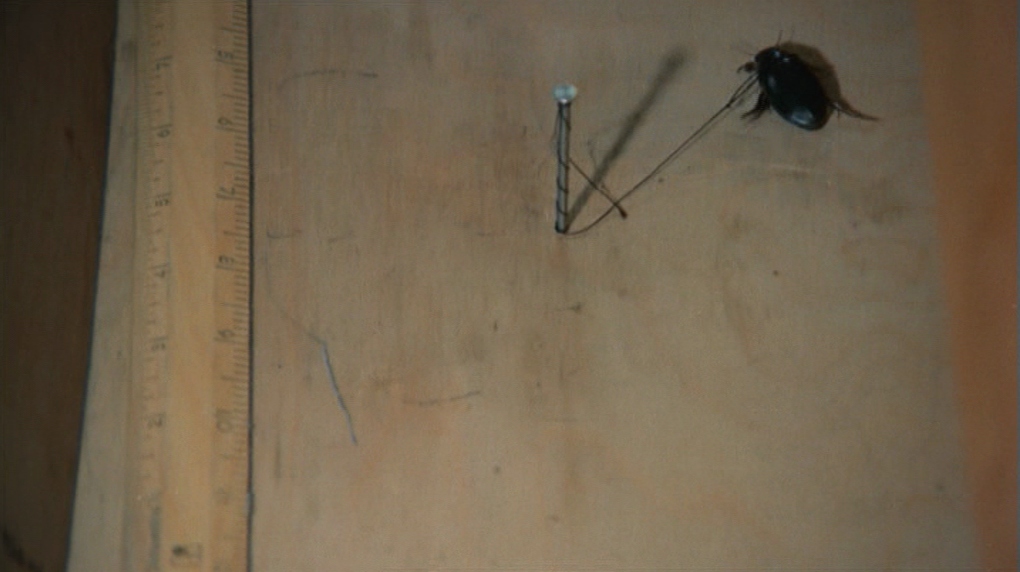
But, also like the apples, it’s delicious. It’s popular. The islanders believe it; Lee’s Summerisle claims to choose the religion too, to love it, and though there’s room to doubt him, I won’t. He may not believe in the strictest sense, but orthopraxy—correct conduct—is as much a religious cornerstone as orthodoxy—correct belief.
It’s so new, though. Christianity was practiced on the island almost within living memory. The church is now derelict, but it still stands. Families pass down stories. Even if Lord Summerisle is the only person on the island who knows that their local religion started as a ploy, he’s not the only one who knows its revival was sudden and artificial. Why believe in something your granddad’s boss taught him? Why leap naked over a fire, singing for the god of the flames to kindle a child in your belly, when everyone knows that it never takes unless the “acne-scarred artisan” flickers between your legs too?
Because why believe anything? Howie decries the “fake biology, fake religion” of the girls’ dance over the fire, but, as Lord Summerisle is quick to note, his own beliefs are strange too: “[Jesus is] Himself the son of a virgin, impregnated, I believe, by a ghost.” Howie has none of Lord Summerisle’s irony, he is achingly sincere all the way to his backbone, but sincere is not the same as simple; you can absolutely be a sincere hypocrite, and he is. He knows and accepts—the extended cut of the film, in a strangely touching prologue, makes this clear—that this sincerity is not universal, but he still takes comfort in how the function of his beliefs, if not his form of them, undergird the England he knows. It lets his assumptions become normal, become invisible.
What he finds most viscerally upsetting on Summerisle, what he’s moved to fix immediately and on his own, is not the island’s flagrant “sexual immorality” but the disrepair of its trash-ridden graves. He’s bothered by the open-air orgy field, but he passes by without trying to tear the couples apart. Extramarital sex is a sin to him, but it’s a sin he knows, a recognized break with order for a recognized reason. To leave broken apple crates scattered all through a churchyard where, to him, the dead lie awaiting resurrection—it’s a break with reality itself, a dislocation of a support beam he never even had to think about before. He cleans the clutter off a stone, fashions a crude cross, and leaves it there. He can’t not.
He sees that as a necessity, not “bad biology,” but of course there’s no proof that the dead are aware of such things. Logically, they aren’t. They can’t be.
So again, why care?1
The islanders have one reason, and Sergeant Howie has another. And as I said, The Wicker Man keeps both answers true to human experience: these are values religion has in the real world; these are demonstrable effects it can have on those who follow it.
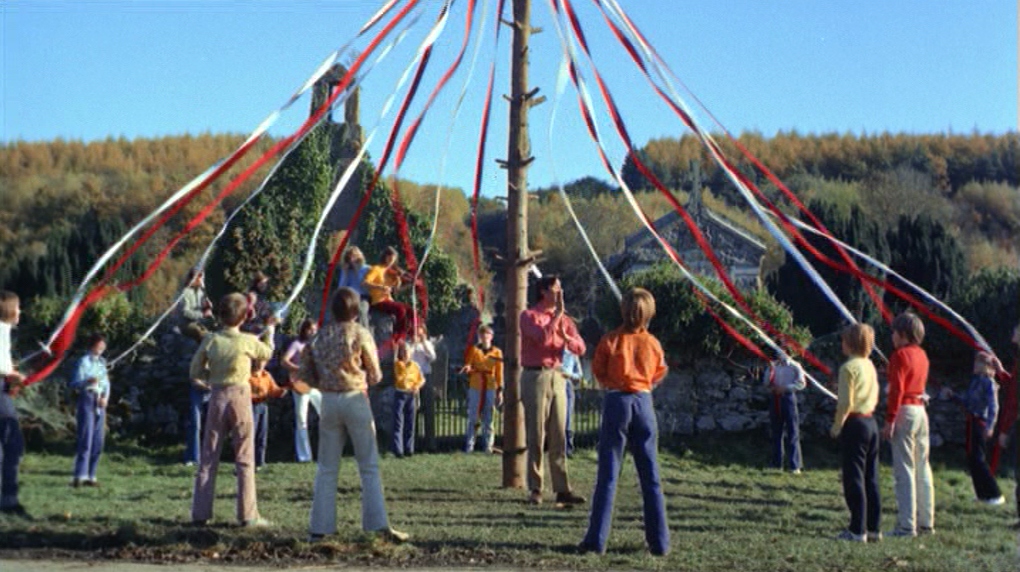
The religion on Summerisle is practiced in community, and the strengths and benefits of it that we see are communal strengths. This folk horror film is also a folk musical, and almost all the songs are diegetic and sung by islanders; while only some of the music is explicitly Pagan (“Fire Leap”), it’s all in line with the tenor of the local religion, showing an openness about sex (“The Landlord’s Daughter,” “Gently Johnny,”) a hopeful view of death as only one step in an endless progression of life (“Maypole”), and an exuberant embrace of one’s place in nature (“Summer Is Icumen In”). Not all these songs feel like hymns in the strictest sense, but they’re all chances to mutually affirm the community’s shared values and identity. The public performances feel different than “Willow’s Song” and “The Tinker of Rye,” which are private seductions: “The Landlord’s Daughter” is a communal celebration of the fact that they can do this, that they can openly romp with the lovely Willow free of jealousy and shame, that their religious obligation to be natural has turned out to be such a pleasure; “Gently Johnny” is a hushed tribute to the ceremonial loss of virginity, the rite of passage happening above their heads. These are songs of observance, even if their gods don’t make an appearance.
The music is a joyous collaboration, and the parties and festivals are the same way. These people enjoy each other. Look how trustingly Rowan runs to Lord Summerisle’s open arms, how happy she is to have pleased him; listen to how everyone laughs as another one of their number passes through the chop-chop game. They enjoy their crafts: their masks and their costumes. They dance. They frolic. Their religion structures all of this, providing both established pleasures they can anticipate and new opportunities to stretch their skills. Their rites are as good as games: “They do love their divinity lessons,” Lord Summerisle says of the naked girls leaping about on his lawn.
If there’s private religious observance on Summerisle, the closest thing we see to it is a child painting a picture of a hare; for the most part, this is a collective endeavor. And it not a reflective one: May Day has less than a minute of what might pass for a sermon, and the rest is all party and group singalong. Arguably, this is even set up to discourage reflection. When you’re burning a man to death—when he’s screaming in agony and terror—it’s best to keep singing, keep swaying, keep together. This contrast is part of the ending’s horror, but it’s part of Summerisle’s offering to its people, too. There is fun; they’re having fun. They’re having fun under circumstances that would be grim for anyone else. The rough edges of their lives have been sanded away. They have no doubts. Their souls are merry, for religion can grant a sense of peace, a confirmation that all is well, an assurance that your actions are right.
That is where Howie and Summerisle meet, at this intersection of the public, communal faith and the private, individual faith. Because while a few early, restored scenes provide a snapshot of Neil Howie at his church—he’s happy there, smiling as he shares a hymnal with his fiancée, moving comfortable between being part of the congregation and taking a brief leadership role—most of what we see of Howie’s religiosity comes from Howie practicing it alone.
That’s true even off Summerisle. He knows his subordinates at the station mock his squeaky-clean, churchgoing virginity, and though he doesn’t like it, he grimly tolerates it. He needs a space for worship, but—in one of the most curious touches in the restored cut—he doesn’t approve of that space spreading out to encompass everyone. When someone spray-paints JESUS SAVES on a public wall, you take it off: “There’s a time and place for everything. Get it removed.” He doesn’t need a booster shot of faith encouraging him on his way to work; he carries it with him, alone, and he’s fine with that. Summerisle’s flagrant Paganism—coupled, to be fair, with his belief that they’re smiling all through the murder of a child—breaks him, but when the film starts, he makes a distinction between his private beliefs and his public life, a public life he shares with everyone else.
Then he enters Summerisle’s public life, and his private beliefs are all he can take with him. And we see that it does him good.
That may sound ironic, given his fate, but though Howie’s Christianity matters immensely to the film, it doesn’t make one jot of difference to the plot except to rationalize his virginity. And, in point of fact, the islanders can’t know for sure that he’s a virgin. They must have heard rumors of it in their search for the perfect sacrifice, but all they know is that he doesn’t sleep with Willow—and a key reason he doesn’t is that he’s engaged. His exact feelings about it are surely inflected by his beliefs, but monogamy is not the exclusive province of Christianity; “refused to cheat on a partner even in the face of considerable temptation” is a general, if not universal, virtue.
And everything outside of his virginity is irrelevant to this islanders. Howie is a self-righteous, unreflective dick about his convictions, and I’m sure he amused and alienated almost everyone he met on Summerisle, but it doesn’t matter. They were going to kill him anyway. He was only there so they could kill him.
Surrounded, then, by people who are inimical to him from the start, Howie’s religion has to be good for him alone. He’s stripped of community—no one knows his songs (when he sings, as he’s dying, he sings alone), and no one celebrates his holidays (he mistakes May Morrison’s chocolate hares for chocolate rabbits, for Easter, and is snubbed when he ventures to compliment her on them)—and left to his own devices. He’s able to act ethically, risking his life to try to save a child he not-implausibly thinks is in grave danger, but, aside from fashioning that cross for the dead, his presumed Christian duty blurs into his definite legal duty. Both demand that he do his best to rescue Rowan Morrison, so if he rages about heathens, he does it during the investigation, not as a sideline from it. It’s never a true distraction; if he’s somewhere, it’s because the case led him there, not because he’s there to complain. With the clock ticking down to May Day, he’s always working, right up until the end. It’s hard to tell, throughout all that, what his beliefs are doing for him, specifically, besides making him loud and a bit unpleasant.
Then comes the end. It is time to keep his appointment with the Wicker Man.
No matter what Howie does, from the moment he comes out of the caves with Rowan Morrison, he is going to die in agony. The Wicker Man goes up too quickly for the smoke to finish him: he burns. And, caged, listening to the other sacrificial animals bleat in distress, he has to wait for it to happen; he has to think about it. It’s not an unimaginable horror—all the worse, when he has so long to imagine it—but it is an unendurable one.
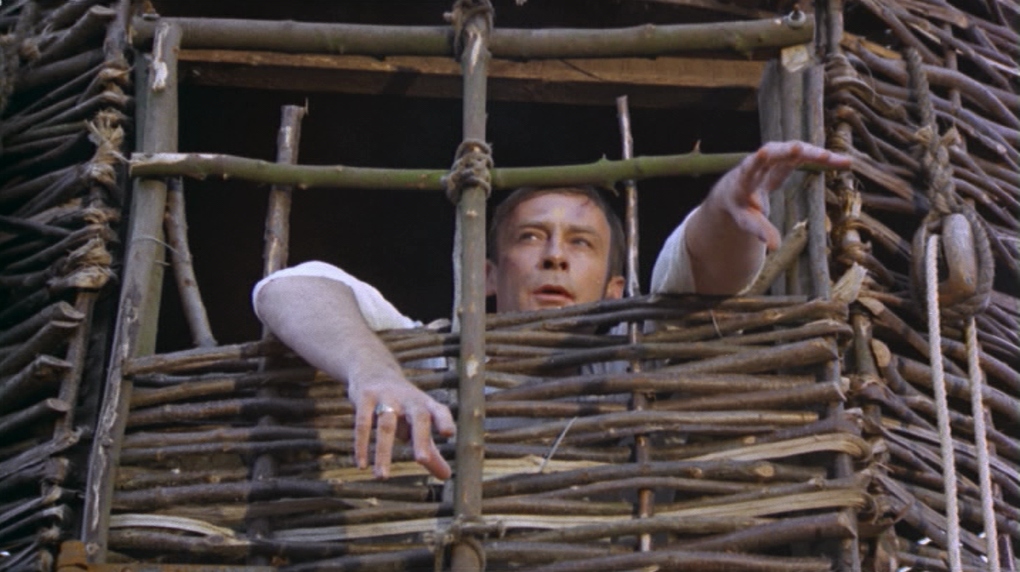
This is where, at long last, we see the consolations of religious belief as well as religious practices. Howie does not believe the hand of God will come down and pluck him to safety; he prays for the salvation of his soul, not his body. He preaches God’s holy vengeance, but it’s a manic shadow of what he more calmly said on the ground, before he saw where he would spend his last minutes on earth, and that was, if anything, practical and scientific, truly good biology at last: the strains have failed. The strains will always fail. This is the end of Summerisle. His vicious hope is that it will take the islanders too long to rely on science, that they’ll try this again: “Don’t you understand that if the crops fail this year, next year you’re going to have to have another blood sacrifice? And next year, no one else than the King of Summerisle himself will do! When the crops fail, Summerisle, next year your people will kill you on May Day!”
His sermon from the Wicker Man is nothing compared to that—compared to the stillness it gets from Lord Summerisle, the obvious refusal to think about what comes next—and on some level, he knows it. He calls for blood and thunder, but—as he did in church—does not remain at the pulpit. As he does in church, he sings, crying out the words to Psalm 23 as if he can drown out the voices outside. As he does in church, he prays. He tries to be calm enough to deliver himself to God.
That, it seems, is the final answer to this grounded look at what religion is good for. It can comfort and console. It can give an inner peace. “Shocks are so much better absorbed with the knees bent,” Lord Summerisle tells Howie, to condescendingly offer him a chair, but Howie ultimately bends his knees in prayer, and absorbs what he can.
Howie’s use of faith is more moving than the island’s use of it, because it is faith in extremis. It is better to use religion to deal with inevitable horrors than use it to commit them; it is better when your principles inconvenience you—when you refrain from sex despite wanting it very much—than when they inconvenience someone else—when you burn an outsider to keep your paradise alive. These are all agnostic, non-specific faith benefits; a Christian inquisitor could burn a Pagan “heretic” alive and feel warm and fuzzy about it, and the Summerisle Pagan could find comfort in the notion of a tree growing from his grave. So many horror films give answers. The Wicker Man does not. This is how faith feels; this is how we observe it. There’s no cheat.
But there is revelation. All the ordinary consolations of faith end. Howie preaches, then sings, then prays, then screams. Oh God. Oh Jesus Christ. Jesus, Jesus. The meaning empties out of the words. No one believes anything when they’re on fire.
Lord Summerisle freezes when Howie says he’ll be next year’s sacrifice. It’s the one time he loses control, the one time he approaches Howie’s shouting. He will not face the possibility of this turning back on him, and he certainly won’t embrace it. He believes enough to kill, but not to die.
“You’ll simply never understand the true nature of sacrifice,” May Morrison tells Howie. What he thinks she’s saying—I will kill my own daughter for the greater good—makes more sense than what she’s actually saying—I will kill you, a man I barely know and rather dislike, for the greater good. So much more sense, in fact, that it can’t even be double-talk; it’s a deliberate misdirect, meant to make him think exactly what he does think.
You can’t sacrifice what you don’t care about. The island burns Sergeant Howie alive, and it’s for nothing. Not believing in their gods, he knows it’s for nothing: fruit simply will not grow here for long. Believing, but only to a point, Lord Summerisle knows it’s for nothing: it’s written all over his face. Believing completely, May Morrison knows, deep down, that it’s for nothing: this is not what sacrifice is. This is only murder.
The consolation fails. The comfort fails. Next year—when the crop fails—the community will fail, and it will burn the man it adores, the man whose only name in the film is inseparable from their name, and then it will know betrayal, and sacrifice, and those things, too, will fail. The Wicker Man knows that.
But when the head of the immense wicker idol falls away, when the flames have burned away the screams, when the singing is drowned out by the crackle and then by the immense silence—all that is left is the sun, boiling away above the sea. It’s too simple to say it’s the symbol on Summerisle’s flag. This belongs to no one. There’s no sign of anything human. We’re past that, into the sublime. Whatever is there—and the film does not profess that there is anything, but it does not deny it, either—is beyond the human. The film comes to the place where faith stops, and it comes to the place where rationalizations about its realistic values stop too. I have come of my own free will to the appointed place.
The Wicker Man is streaming on Kanopy.
- “Care” is, I think, a better word for than “believe.” People often believe in things they don’t care about; the devout of all stripes, on the other hand, often care, and care passionately, even when they find they can no longer believe. ↩︎
What did we watch?
Justified, Season Three, Episode Seven, “The Man Behind The Curtain”
https://theonion.com/report-hey-stephen-tobolowsky-is-in-this-1820408553/
“Way I understand it, they’re payin’ me to do it, not to like it.”
Haha, I was right, Quarles is under someone else. Gotta serve somebody. This isn’t a show about thematics, which makes it all the more remarkable that it can be so good at thematic parallels. The thing is that some things basically work the same way regardless of material conditions; any organisation bigger than ten people is gonna have some nepotism and some wheel-greasing (hell, look at Boyd’s operation, which is smaller than ten people and still has that). My disdain for capitalism comes from it discouraging – at its most extreme, wiping out – the natural human inclination to co-operate, but for the most part, that will happen regardless.
Indeed, we see the equally natural human inclination to dominate in the ostensibly co-operative nature of a government institution in the inter-department friction we see here. At its best, Justified shows the way we all feel the same basic emotions, even if some of us have better houses and better clothes. Sammy in particular is just what Dewey would be like if he were better educated and more privileged; still chasing (with total futility) that Head Motherfucker In Charge energy, though Sammy has the sense to give up at the right time.
Arlo has gone off the rails now his wife is dead. Quarles offering Raylan a job is hilarious on a number of levels. Like I see where he’s coming from, and that is a place of poor information. Hooray, Jim Beaver is back! Conversely, oh no, Gary is back! His scene was worse than some Michael Scott scenes.
Biggest Laugh: “Must be some kind of dick test that all the FBI agents have to pass.”
Biggest Non-Art Laugh: “Know where he’s stayin’?” / “Last I checked… you were a Marshall too. I gotta do everything?” / “Point taken.”
Top Ownage: Physically, Raylan beating the shit out of Johnnie, despite him being in a wheelchair. But top has to go to Ava drinking Arlo’s drink and making him take his meds instead, if only for his stunned reaction.
Various 4k drives through Uruguay
Yesterday was long and sort of brain-frying, so I needed to reboot when I got home. I find these very soothing, both beautiful and comfortable at the same time. They calmed me down until I could do some writing.
Experimented with drives through Iceland and Thailand, but the Thai footage had music piped in–no! I just want the sound of wind and cars!–and the Icelandic drivers had chosen gray, cloudy days and routes without either gorgeous scenery or intimate slice-of-life neighborhood views. I remain devoted to Uruguay.
River
I’ve watched this several times this year because I keep showing it to other people, and last night, I introduced it to another friend and fellow time loop enthusiast. Lovely picture with an interesting blend of the personal and collective. Both “two-minute time loop” and “large group all aware of the loop” are fun, complicating additions to a familiar setup; River leads into the comedy of this, but there are whiffs of a kind of existential horror here, although obviously nothing that approaches the fate of that one poor bastard in The Endless.
MST3K, “The Incredibly Strange Creatures Who Stopped Living and Became Mixed-Up Zombies!!?” – Is this really a movie? OK, it has runtime, and was made using cameras and film and has actors and dialogue. But as much as I try to applaud any efforts to turn any sort of vision into a movie, this is just a series of loosely connected events tied together by musical acts and dances and nothing really resembling a plot. It’s just bad. And while there are a fair number of strong riffs, this one is clearly in the “so bad Best Brains can’t do anything with it” bucket. Plus there is a running gag about how one fairly plain woman in the cast looks like a man, and this has not aged even a little well. (Fun facts: 1) The title was supposed to be closer to a riff on Dr. Strangelove, and Columbia Pictures sued! 2) the camera team included Joseph V. Mascelli, who wrote the influential “Five C’s of Cinematography: Motion Picture Filming Techniques;” Oscar winner Vilmos Zsigmond; and László Kovács, who worked on such classics as What’s Up Doc and Ghostbusters.)
The Practice, “Lawyers, Reporters and Cockroaches” – The title refers to a suit brought by a restaurateur against a TV station that promised to do a feature on him but instead did a hatchet job about the bugs in the kitchen. Clearly, between this and the criminal trial for a TV producer connected to an assisted suicide, David E. Kelley really had it in for the media. The jury decides for the plaintiff, but I agree with Judge Joseph Campanella that the case has no merit. Len Carious is the defense attorney here, and is a much better closer than anyone from the regular cast. Meanwhile, Helen is moved to tears by the killing of a beloved cat and convinces the judge the killer of the cay should see prison time. Since that’s what prison is for, right? (The notion of prison reform and the like will never show up here.) And Ellenor and Lindsay’s feud leads to the sort of catfight I think was more at home on Ally McBeal.
Frasier, “To Thine Old Self Be True” – Frasier wants to prove to himself (and Donny) that he knows how to throw a proper bachelor party. Leading to, among other things, Frasier being handcuffed to the stripper he’s auditioning. Somehow what could have been one of the cringier episodes works because Frasier is indeed true to himself, and does not try to make any excuses when everything comes to pieces. And also because in a bad situation he treats the stripper like a person and not a piece of meat. Plus Maris is trying to break up Niles and Mel, and in the course of things we learn that she really does love Niles. (There’s also some stuff with Maris getting fat that is not very funny.)
Eyes Without A Face – Second watch and might be an all-timer for me, a mad science movie with the logic and imagery of a fairy tale, especially the dreamy final image. The juxtaposition of procedural (the montage of decaying photographs, for example) and uncanny creates an incredibly powerful effect.
Futurama – Nothing new to say except my cat likes it, I suspect because the animation is colorful and busy. Compared to The Simpsons, there’s much more going on in backgrounds and scenes.
Love Eyes Without a Face. It’s wild how effective it is, and yeah, a huge part of that is its mastery of images. That mask alone is an unbeatable choice.
The Wicker Man — ha Ha! I watched that shit before you Streaming Shuffled in the room! Went off below, I did see the LaBute version years ago and watching this emphasized how badly calculated (and misogynistic) it is, way too much emphasis on the suspense/thriller end instead of the slow burn. And are there even songs in that one?
“A Neil LaBute musical” strikes the soul with a certain terror, but since “striking the soul with a certain terror” is not, so far as I remember, a key feature of his Wicker Man, I’m going to guess no.
Sadly no and I would love to watch Nicolas Cage sing in a bear suit, maybe do a jig.
No songs, and Cage’s cop is explicitly out of his jurisdiction when he goes to the island, which is right up front such a contrast from Howie. It’s just terrible.
Magnificent work, Lauren. I watched this for the first time last night (Tubi has the original, sadly, no Gentle Johnny/explication of Willow’s role) knowing the basics but still being disturbed by how the fun falls away at the end. I got a good laugh early on at the inn, the islanders are clearly singing to fuck with Howie but the vibe shifts to just singing to have a good time, there really is a lot to enjoy here — and Howie stops it well after it stopped being about him, because he’s a Puritanical dick. His religion seems to me to be based on having and clinging to rules more than anything specific about those rules, that Jesus Saves graffiti was not in my version but I totally understand Howie’s reaction against its violation of the letter of the law and not the spirit.
What I don’t understand, and I’ve read a fair amount of writing advocating, is the idea of Summersisle being any better than his rigidity. Beyond the lying and murder (cue Britta gif), which you lay out so well, this is all bullshit. Lee casually dropping that Summersisle was founded by British William Kellogg made me sit upright — dude just threw some behavioral nonsense out to justify his damn farm. (And while the music here is largely quite good the opening corn song sucks and sounds phony as hell in its rhythm/delivery to me, a bad cover from a guy in a coffeehouse — in that way, though, it foreshadows the reveal of the island’s “folk” culture.) It is ultimately empty.
And that is what brought to mind Witchfinder General, which is another movie about the puritannical clashing with the life of the land. To me it is a deeply bleak movie because of the implication not that Price is acting in God’s name, but that God doesn’t exist to stop him and no one else (very pointedly not Oliver Cromwell) cares to stop him either. You don’t believe in anything when you’re on fire. The sun sets on Summersisle indifferent to the foolishness the men and women got up to below. It’s going to set no matter what they do to each other.
Anyway, this is a great, great analysis, especially after all those simplistic readings. There is a lot going on here and your writing is worthy of the film.
Thank you! Yeah, the sunny take some people have on the islanders has never made sense to me, outside of the general rule of thumb that people are harsher on negative behaviors they’ve actually experienced–Puritanical dickery–whereas ones they haven’t–burning people alive–often get a pass. (Shades of Midsommar here.) I can understand and relate to that in breezier, more comedic films, but the horror and characters both feel too real here for me to get behind it, and I don’t see it as the movie’s POV. It would’ve been so easy, and also interesting, to have the Pagans ask an upright Christian copper to their isolated village because they genuinely want help finding a lot child, and then he’s such a dick that they murder him afterwards, but that’s not what happens here!
But as you said, even aside from the murder, etc., the island doesn’t have the moral high ground. It’s openly founded on a lie, and the theocratic grip here is way tighter than the Church of England’s. (Also, hilariously, you’re the second person I saw today complain about that opening song.) It’s interesting, in this light, that Lee’s lover here is Miss Rose, the teacher who enjoys taking an academic approach to it all; she wouldn’t care if she found out who it all got started as long as it was still fascinating to her. Together, the two of them have a kind of above-it-all cynicism–you can tell they’re the literal (him) and effective (her) aristocracy.
The Witchfinder General has been on my list for years, especially since watching Woodlands Dark and Days Bewitched, but I hadn’t been able to find a copy before. Now that I just double-checked and saw that it’s available after all, I know what I’m watching this weekend.
“It’s openly founded on a lie, and the theocratic grip here is way tighter than the Church of England’s” — yes! These are people who had one bad harvest and went into murder mode. I think there may be a “well, the Church did this shit for millennia so ha ha that they get it done to them” aspect to the reversal here but that ignores 1. the asymmetry — Howie is not the Church, he is a guy who however much a dick he is came here as a guy trying to help a child, and 2. the larger religious bullshit these people are embracing. I’m not about to pick up on a lot of queer or non-mainstream readings of things, but the islanders do not seem to be on the side of anyone but their own. I can also imagine a lighter version of the film and a more gleefully vicious one that really is “fuck you Howie” and that’s fine, I like seeing dupes get owned. Or perhaps a more explicit horror of reversal, thinking of Skeleton Key here — but that involves buying in on a metaphysical end, on a belief end, and Howie never gives in to his opponents. This is a religious war and it has no winners and no one to align with.
It’s awesome that Witchfinder General is out again, I think I had to resort to Youtube, but while it is an all-timer it is not a fun watch by any means. Make sure your neighbors are OK with lots of screaming on the sound system!
It’s interesting that the godawful (if you’ll pardon the expression) Nic Cage/LaBute remake actually does have the cop act much, much worse, but we’re expected to be even more outraged at the behavior of the bitches, er, women involved. A better director might have made something interesting with it, but alas.
ETA: It may be just because I grew up in “The Lottery” territory, but there’s also, I think, something about small communities in The Wicker Man, where outsiders, no matter their faith, are not always welcome, and where a certain amount of brutal societal enforcement is sometimes just below the surface.
I will applaud the expression.
Yeah, while it’s thankfully been a long time since I’ve seen the remake, that’s how I remember it as well. Misogynistic and full of wasted opportunities. (It occurs to me that maybe a better version of LaBute’s iteration, which would be any version, could actually be James Tiptree Jr.’s “Houston, Houston, Do You Read?”)
It’s a huge missed opportunity that we don’t have more weird Tiptree adaptations, tbh.
Having grown up in American culture (though made several visits to the UK), I’m struck by the lack of distinction, that the film hinges on, between being engaged and married. I’m tempted, even, to file this film under “bachelor party goes unexpectedly.”
Yet, there is also the observation that you made: “when you refrain from sex despite wanting it very much.” Well sex is part of love (body and soul), and the problem that the film presents, if you’re sympathetic to Howie, is that Howie’s perspective is a rather simplified view of the complexities of love.
By the 1970s, it’s a rather weird gambit to dramatize such a problem, one that seems, arguably, to look reactionary. What might be the problem, that’s hiding in plain sight, is that Howie feels unable to explain, if he were to have sex, to explain it to his fiancee. That’s ultimately how I’d interpret the film, as how the cosmos treats cowardice. In other words, Howie cops out, and thus he earns his fate.
Yet, the film does allow us to interpret it as a kind of Christian allegory (lead us not into temptation), but to the film’s credit, by making Howie such a dick, this interpretation is no easier to support — although your thorough debunking of what Summersisle is up to does level the playing field, and the ending sacrifice involves the torturing of animals, and that’s certainly problematic.
Thus a fine analysis of The Wicker Man as an endlessly fascinating film which has multiple interpretations, all tricky in their own ways.
Missed this edit, because time ran out — 2nd paragraph:
Yet, there is also the observation that you made, re. Howie: “when you refrain from sex despite wanting it very much.” Well sex can be both a part of and not part of love, and the problem that the film presents, if you’re sympathetic to Howie, is that Howie’s perspective is a rather simplified view of the complexities of love.
If you mean that Howie has no moral obligation to not sleep with his fiancee before they’re married, I agree, although if they’ve mutually agreed to wait, I don’t see choosing that as a shortcoming or them failing to fully love each other, where we may diverge. (I also don’t see a big difference between engaged and married, frankly, or at least I see it as a difference of degree but not of kind.) But I do think he makes the right call morally when he doesn’t sleep with Willow, even as he very much wants to; considering his fiancee is also, by all accounts, a churchgoing virgin who shares his beliefs, it’s hard to believe she’s given him an all-clear for that or that they have an open or poly relationship. They have an implied emotional agreement, and this isn’t part of it.
I can see your argument that he resists because he knows he can’t explain it to her, but I wouldn’t call that cowardice. People of all stripes have answered that dilemma for centuries with “well, she doesn’t need to know, then!” and moved on to do what they want. (Which I kind of do think is better, at least sometimes, than hurting someone.) If he wants to be honest with his fiancee and avoid hurting her, refraining is the best choice, so I wouldn’t say that he refuses to choose so much as he chooses a long-term, more important priority over a desire for immediate gratification. There are times when “not doing exactly what you want” might strike me as cowardice, but this isn’t one of them, especially since, like I said, he’s still doing a version of what he wants. He’s choosing one desire over another.
(Also, the positioning of “Willow’s Song” is one of the biggest differences between the film versions, really: it comes much, much later in the restored cut. I don’t think people should cheat on their significant others, but I think it’s much worse when they cheat with people they think are going to murder a child in the morning.)
Oh wow, Willow’s Song came (ho HO) on Howie’s first night in the cut I saw, which has a bunch of weird public orgy stuff right beforehand too. Is that also supposed be on the second night? In any case, it works very well as an isolated scene of temptation but it does seem to ramp up really fast. I believe the edit I saw doesn’t make it clear Howie is engaged and a virgin until after that scene as well, so it plays much more like a guy who doesn’t want to betray his religion as opposed to a particular person. I’m with you that that adds a significant wrinkle.
Fantastic write-up.
One of the things that has always struck me is how much they allowed Howie to ‘choose’ his fate: if he’d been less rigid, they might have brought a new sacrifice to the island (or perhaps not). His code is so rigid to be stifling, but it’s the only anchor he can hold onto by the end.
I think there is something to the question of if we treat something differently simply because it’s newly created: I’ve seen people turn up their noses at neo-Pagans because their ritual is re-constructed or newly constructed, and I think that’s kind of silly, too. Let people find meaning in what they choose to find meaning in, right? Unless they start building wicker cages and burning people alive in them, but I don’t think the older faiths should get to do that either. Does it matter if the Guanyin statue is from India? (To some faiths, it does!)
I really need to see the longer cut.
Thank you!
I do wonder how much he gets to choose and what his options were. Lord Summerisle has a line about how they controlled his every thought and action since he arrived, leading him with their trail of breadcrumbs–but neither he nor we can see an alternate version. And how much flexibility did they have, for that matter? Do they believe the sacrifice must be done on May Day or it’s pointless? A cool concept for a remake could almost be to do a more tragic version of this, where Howie’s more amiable and they don’t want to kill him but genuinely feel it’s their only option.
(Speaking of the islanders more generally, I really want a distant Wicker Man sequel set years after the apples have failed again and Lord Summerisle has burned–or fled–and the island’s residents have scattered. Then we follow a family or two living in a more ordinary English village, carrying some old rituals and picking up new ones, and maybe having a clash with their neighbors ….)
That’s an excellent point about the newness, and I agree. The artificiality and feudalism behind how Summerisle’s Paganism got there makes it stand out–though it’s certainly not without historical precedent; I’m thinking of Emperor Constantine, but I’m sure there are other examples–but as far as simple recency goes, well, every religion was new at some point and, to borrow from one in particular, none of them should cast the first stone. I’m always interested in how and where people find meaning (obviously).
The longer cut is really interesting, especially for the opening material that fleshes Howie out a little more. There are some other new snippets scattered throughout–Lord Summerisle trolls via Walt Whitman! This movie makes me miss Christopher Lee so much–and at least one major scene is shifted around in time, but that opening is the largest contained chunk of “new” footage.
Christopher Lee was just fantastic. It’s a shame he got put in so many movies that weren’t half this fun.
A cool concept for a remake could almost be to do a more tragic version of this, where Howie’s more amiable and they don’t want to kill him but genuinely feel it’s their only option.
That would be good. I think part of the trap working is just that he’s so rigid; the more inflexible you are the easier you are to lead around. (I am finishing the Grandmaster of Demonic Cultivation novel and there are two chessmaster-ish characters and it’s notable how much they just use people’s expectations against them.)