There’s a lot of dialogue these days about the concept of nontoxic masculinity. As the parent of an eleven-year-old boy going into his last week of sixth grade, I think this is a really important conversation to have. Masculinity is a fluid concept that has changed throughout human history, of course, but the point is that there are men who identify as men and represent male traits while at the same time not representing traits such as jealousy, sexism, or emotional repression. Think LeVar Burton or Steve Rogers. But even though the conversation is new, you can find lots of men from earlier generations who are important to it.
Famously, I am not a fan of a lot of the media of the 1970s. One of the main reasons for that is what gets euphemistically called “the feminist backlash,” as though that makes it okay. This means there are a lot of toxic men in the media of the decade. Men who abuse their wives or girlfriends—or, often, just any woman who crosses their path. Men whose only expressed emotion is anger. Men who would never think of hurting anyone but who also take it for granted that men are better than women and that straight men are better than gay men, who just might as well be women.
However, there are examples of better men. Supportive men. Compassionate men. The obvious example here is Fred Rogers, who already had his show by then. (Bob Ross wouldn’t start on TV until the ‘80s.) Which means a lot of us grew up with Mr. Rogers, not to mention Gordon and Bob and Mr. Hooper and so forth from Sesame Street. I don’t remember Captain Kangaroo terribly clearly, but I wouldn’t be surprised to know that he fits into that as well. (And here is where I share the information that from-what-I-know-nontoxic icon Tony Hawk had his TV debut there.) These were men teaching children about it.
But outside the realm of children’s television, what about in wider pop culture? I would argue that Disney movies are full of examples. Oh, there are a lot of movies that don’t have them—I’m looking at you, The Million-Dollar Duck—but it’s not exactly difficult to pick out ones that do. Take Candleshoe, for example, as I keep suggesting you do. A young Jodie Foster has no positive role models at all in her streetwise LA upbringing, but when she arrives at Candleshoe, waiting for her there is David Niven as Priory. He is kind and gentle. He is compassionate. He doesn’t know everything, but he is willing to learn what he has to. Maybe he’d have a hard time finding a new employer at his age, but he’s also treating someone who means a lot to him as well as he can.
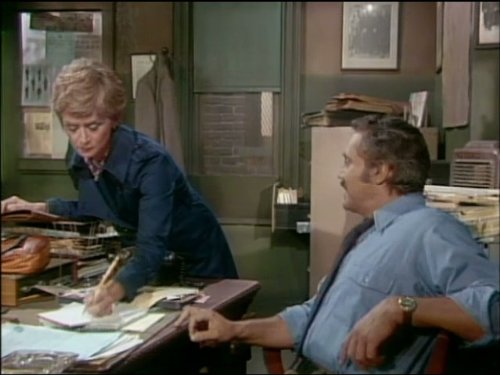
Still too child-oriented for you? Okay. How about the eponymous Barney Miller? He’s a New York cop. Okay, he has trouble with how dangerous his wife’s job is, and it arguably ends his marriage, but he’s smart and savvy and loyal. He’s compassionate to the gay recurring character. There’s also Roy DeSoto from Emergency! This is a show not everyone knows, but I grew up watching Roy be equipped for pretty much any situation and a hell of a lot less sexist than Johnny Gage, his partner.
Still not good enough? Okay. Let me introduce you to two novels that came out in the 1970s. The Stand and The Dead Zone. Stephen King of that era was exhaustingly Freudian—if you don’t believe me, read Danse Macabre, which you should anyway—but these two books at least might as well be about the battle between toxic and nontoxic masculinity. We’ll take our look at Johnny Smith, possibly the nicest Christopher Walken character. He’s a teacher. He’s kind and understanding. He’s got a sense of fun. And, yes, he will risk being the villain to save the world.
There’s a heck of a range from Captain Kangaroo to Captain Trips. (Okay, or Nick and Stu and Glen.) But isn’t part of the plot of The Stand the journey of Larry Underwood from toxic to nontoxic? King himself isn’t perfect, goodness knows, but even in the mid ‘70s, he was savvy enough to recognize the importance on nontoxic masculinity. Maybe that woman who psychoanalyzed him onstage once was being ridiculous when she accused him of writing about something he didn’t even remember all his life, but a vast amount of his career is about trying to be a nontoxic man.
There are others. Even in the ‘70s, there were others. Heck, even Johnny Gage of Emergency!, while not as positive as Roy, had his moments. And of course there’s Hawkeye Pierce, my first childhood crush—Loretta Swit herself said that she’d learned a lot about feminism from Alan Alda, which is sweet if kind of weird. I suppose the whole thing isn’t helped by the toxicity of some of the directors of the time; there are a lot of stories from a lot of sets. But even Mork and Mindy had an episode about Mork getting in touch with his feelings.
Columbo doesn’t strike me as being toxic. Not particularly feminist, but a cop without a gun and who strove to employ kindness to the victims and even to the killers. A wife guy and dog dad. A man who valued thinking over fighting, You can do worse.
Jim Rockford…Beth Davenport says about their past relationship that she broke up with him because he wasn’t emotionally available, so maybe there is a degree of stereotypical male behavior. But just like Hawkeye eventually absorbed Alan Alda’s feminism, Jimbo called a lot of James Garner’s liberalism and was a very vocal supporter of feminism and never seemed even a little threatened by Beth’s utter competence or by strong women. He also avoided carrying a gun – albeit because his gun was illegal – and as much as he ended up in one sided fistfights, he never sought violence. Indeed, he would happy to avoid it without worrying for a second that ducking a fight made him look less manly. But he was really madly in love with his car. Columbo and his ancient Peugeot would not have impressed Jimmy.
We’re going to start posting a series of articles about The Rockford Files at some point, and Jim is . . . so-so. He’s got a very wide streak of sexism that comes up pretty regularly. He’s definitely got expectations of women even if he likes strong women. And Columbo’s a pretty good example, yeah.
Columbo was chivalrous most of the time and sometimes at least had feminist sympathies. Depended somewhat on the episode.
Huh, I always thought of the ’70s as a pretty good decade for nontoxic masculinity on the page and screen, albeit not without some glaring exceptions–partly because I read Susan Faludi’s Backlash (which isn’t without its problems) when I was pretty young, and it frames the ’80s as being a backlash against the feminist gains of the ’70s, including gains in pop culture. In all cases, it probably depends on where you’re looking and what you take as the norm/trendsetter vs. the exception. (MASH the movie vs. MASH the show would give you two very different impressions of the era, for example.) Either way, it’s interesting to see alternate views on that.
But there are definitely a lot of fictional ’70s men I like, and you named a few of them already! (Side-note: that’s a great point about Larry Underwood going from toxic to nontoxic, and on that note, it’s interesting that it’s two separate confrontations with two separate women–his mother and the Bronx dental hygienist–who help set him on that path.)
Some others that stand out to me are Starsky and Hutch, who excelled at painting male friendship–and even potential gay romance, since the actors were famously fine with people thinking their characters were gay–as something that could be tender and emotionally expressive; the series also had an episode that dealt with Starsky discovering an old mentor of his was gay, and Matt Baume did a great video on it:
https://www.youtube.com/watch?v=VgAHn3SilhQ
Hooper and Brody in Jaws always stood out to me too (movie, not book), and I always felt like it was notable that they make it through when the brasher, more aggressively macho Quint doesn’t. The film also obviously takes the point that hey, sometimes the person telling you “don’t do this stupid, dangerous thing” is right, not a cowardly killjoy; you can be brave enough to go out after a killer shark and sensible enough to want to close the beaches and tell people that overloading their boat will get them killed. I’ll totally take that version of masculinity.
A lot of the New Hollywood films have fairly awful male characters. And don’t get me started on Animal House, even the characters that are supposed to be Good Guys. And even on Barney Miller, you get Fish–who I like, and who was played by Abe Vigoda of sainted memory–who hates his wife and refuses to even admit he has feelings.
A lot of ’70s pop songs bring out the concept of the “sensitive” male, willing to risk exposing a degree of vulnerability and sincerity when faced with the possibility of romance. Some of these, to be honest, like Mac Davis’ “Baby, Don’t Get Hooked On Me” do come off as a bit gaslighty, but I wonder if potential irony was on the radar. The very act of expressing oneself through melodic poetry fits into the era’s therapeutic ethos, in which diminishing toxic masculinity was a stated goal.
I just heard that Harris Yulin died. He should be best known for playing Lew Archer, perhaps the least toxic literary private eye out there in some celebrated radio play readings of Ross McDonald novels. Otherwise his roles pretty much meet the 70s norm, particularly as the smarmy aesthete in NIGHT MOVES, whose “new masculinity” lines pretty much serve as a ruse to seduce unhappily married women. His portrayal of Stuart Smiley’s emotionally distant alcoholic father in STUART SAVES HIS FAMILY rings this bell pretty heavily too.